

Antioxidants: Their Essential Role in Beauty (2026 Guide)
Antioxidants are everywhere on beauty shelves, promised as the miracle solution against aging, dark spots, and dull skin. Yet, the scientific reality is far more nuanced. Not all antioxidants are created equal; their effectiveness depends on their formulation, concentration, and how you use them. This guide gives you the keys to understanding what these active ingredients really do to your skin, which ones are worth your attention, and how to intelligently incorporate them into your beauty routine.
Table of Contents
- What is an antioxidant and why is it important for the skin?
- Focus on the star antioxidants in cosmetic skincare
- Limitations and myths about the effectiveness of antioxidants
- Antioxidants in your beauty routine: best practices and applications
- Should you prioritize diet, supplements, or topical application?
- Discover our beauty solutions rich in antioxidants
- Frequently asked questions about antioxidants in beauty
Key Points
| Point | Details |
|---|---|
| Essential synergy | Maximum effectiveness is achieved by combining several antioxidants with a healthy lifestyle. |
| No single miracle | No antioxidant is magical on its own; the result depends on the complete routine and lifestyle. |
| Prioritize topical application | Topical applications on the skin offer the best visible beauty benefits. |
| Beware of excess | Too many antioxidants can be harmful; a measured approach remains the safest. |
| Consistency above all | A regular, well-targeted routine adapted to your skin gives the best results. |
What is an antioxidant and why is it important for the skin?
An antioxidant is a molecule capable of neutralizing free radicals, those unstable fragments that attack your skin cells. Free radicals form naturally during exposure to the sun, pollution, stress, or even during cellular respiration. When they accumulate, this is what we call oxidative stress, an imbalance that accelerates skin aging.
The visible consequences of oxidative stress are well known: premature wrinkles, dark spots, loss of firmness, dull complexion. Antioxidants act as a shield by interrupting the chain of reactions that damage collagen and cellular DNA. Understanding dermocosmetics and healthy skin helps you better understand why these active ingredients have become essential.
The main antioxidants in cosmetics act through several mechanisms:
- Direct neutralization of free radicals
- Regeneration of other antioxidants (vitamin E regenerates vitamin C)
- Stimulation of the skin's natural defenses
- Reduction of low-grade chronic inflammation
Pro tip: Do not look for the product with the greatest number of listed antioxidants. Prioritize the synergy between two or three well-dosed active ingredients rather than a long list of low-concentration ingredients.
Focus on the star antioxidants in cosmetic skincare
After understanding the overall role, let's identify the molecules that make the difference in a cosmetic routine.
| Antioxidant | Optimal concentration | Main role |
|---|---|---|
| Vitamin C | 5 to 20% | Radiance, collagen synthesis, depigmentation |
| Vitamin E | 2 to 5% | Membrane protection, hydration |
| Ferulic acid | 0.5 to 1% | Stabilizer, boosts vitamin C and E |
| Coenzyme Q10 | 0.3 to 1% | Cellular energy, anti-aging |
| Polyphenols | Variable | Anti-inflammatory, UV protection |
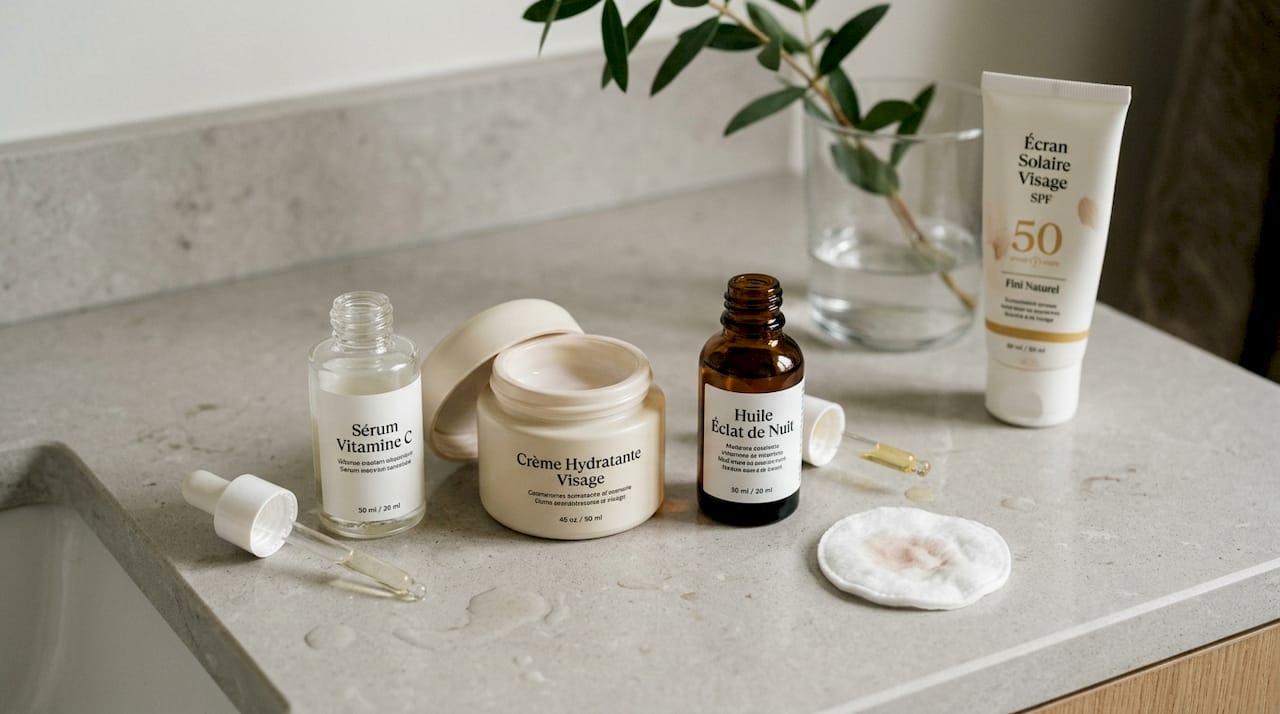
Vitamin C, vitamin E, polyphenols, coenzyme Q10, and ferulic acid are the best-documented active ingredients in cosmetics. Each has a distinct role, but it is their combination that produces the most remarkable effects.
The synergy of vitamin C, E, and ferulic acid is particularly powerful for photoprotection. Ferulic acid stabilizes vitamin C, which oxidizes quickly in open air, and doubles the effectiveness of vitamin E. Result: enhanced protection against UV damage.
To remember: In vitro studies show a significant increase in collagen synthesis when vitamin C is combined with retinol, which explains why these two active ingredients are often found in the most effective antioxidant facial treatments.
To go further in your overall approach, supplements and antioxidants can complement topical action, but do not replace it.
Limitations and myths about the effectiveness of antioxidants
But not all antioxidants are created equal, and their effectiveness is not absolute.
Vitamin C is one of the most unstable active ingredients in cosmetics. It oxidizes quickly upon contact with air and light, which makes many products ineffective even before use. A serum that has turned orange-yellow has lost much of its active potential.
Studies on variable effectiveness depending on UV and HEV exposure show that antioxidants are indeed effective against UV rays, but their effects against atmospheric pollution or blue light (HEV) remain limited and poorly proven. Cosmetic marketing often amplifies these benefits beyond what science confirms.
Another critical point: the pro-oxidant effect in case of overdose. In excess, some antioxidants can paradoxically promote cellular oxidation. This phenomenon is mainly documented for high-dose dietary supplements, but it reminds us that more is not always better.
Here are the main limitations to know:
- Instability of certain active ingredients (vitamin C, retinol) depending on packaging and formulation
- Limited effectiveness against pollution and blue light despite marketing claims
- Pro-oxidant risk in case of oral overdose or unreasonable accumulation
- Possible interactions with certain medications (anticoagulants, chemotherapy)
- Skin irritation for sensitive skin with high concentrations
The effectiveness and safety of antioxidants depend heavily on the context of use. Combining sunscreen and antioxidants remains the most scientifically sound combination. For the choice of antioxidant products, bet on dermatologically tested formulas.
Pro tip: Before adding a new antioxidant to your routine, check the chemical form used (L-ascorbic acid is the active form of vitamin C), the opaque or airless packaging, and the manufacturing date. These details make all the difference between an active product and an inert product. Also consult natural active ingredients versus antioxidants to compare approaches.
Antioxidants in your beauty routine: best practices and applications
Once armed with theory and limitations, it is time to move to practice to maximize the benefits of antioxidants.
Topical versus oral application and synergies show that the skin route remains a priority to act directly on the skin. Here is how to build an effective antioxidant routine:
- Gentle cleansing in the morning: prepare the skin without stressing it to maximize the penetration of the following active ingredients.
- Antioxidant serum (vitamin C or Q10): apply to clean and slightly damp skin for better absorption.
- Moisturizer with vitamin E: seals in the active ingredients and strengthens the skin barrier.
- SPF 30 minimum: essential, because antioxidants do not replace sunscreen.
- In the evening, opt for retinol or polyphenols: these active ingredients work better at night, without UV exposure.
For a successful antioxidant facial routine, consistency trumps quantity. A daily application of a well-formulated serum surpasses the irregular use of several concentrated products.
Natural oils and antioxidants such as rosehip or argan oil provide a natural dose of vitamin E and polyphenols. They easily integrate at the end of the routine. To go even further, professional skincare products offer optimized concentrations and formulations.
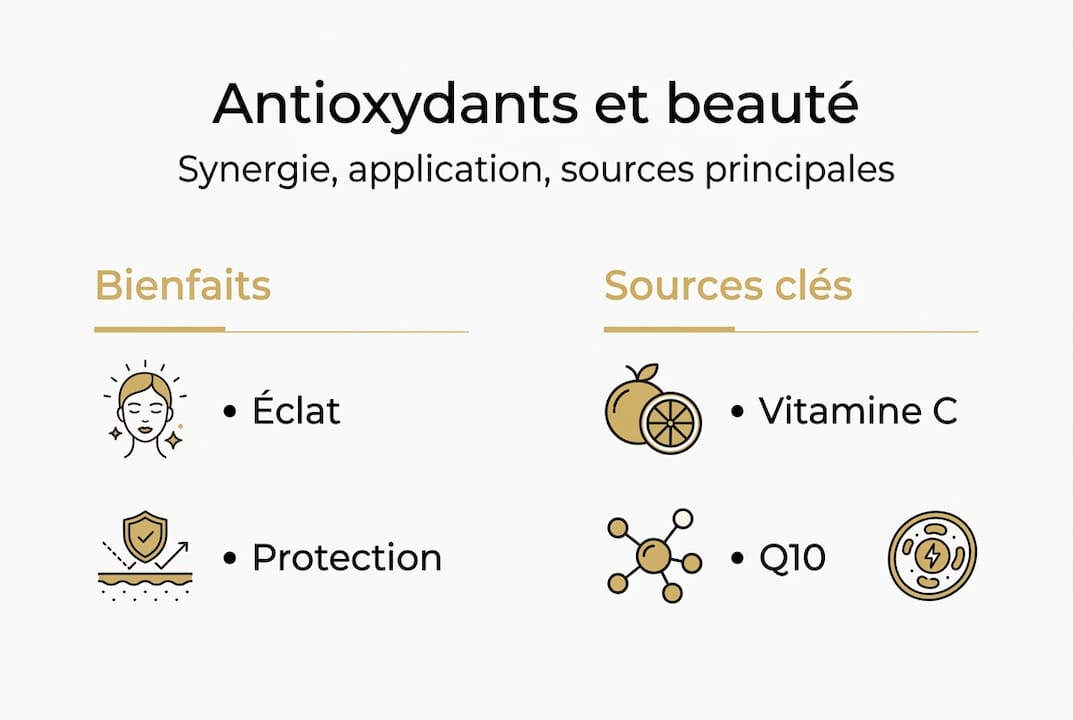
Pro tip: Start with a single antioxidant, observe your skin's reaction for three weeks, then add a second active ingredient if tolerance is good. This progressive approach avoids irritation and allows you to identify what really works for you.
Should you prioritize diet, supplements, or topical application?
The question remains which support to prioritize, and how antioxidants work best, from the plate to the serum.
| Method | Effectiveness on the skin | Side effects | Advantages |
|---|---|---|---|
| Topical application | High and targeted | Possible local irritation | Direct, fast action |
| Varied diet | Moderate, systemic | Almost none | Overall health benefits |
| Dietary supplements | Variable, often overestimated | Pro-oxidant risk in excess | Practical, controlled dosage |
A varied diet combined with topical application represents the most effective duo for the skin. Red fruits, citrus fruits, nuts, and green vegetables provide natural antioxidants that support internal defenses.
Advantages and disadvantages of each method:
- Topical: targeted and fast action on the skin, but requires a stable formulation and good packaging
- Diet: overall health benefits, without the risk of overdose, but indirect action on the skin
- Supplements: useful in case of deficiency or specific need, but to be used with discernment and medical advice
The question of supplements versus topical is not a binary choice. The two approaches complement each other, provided you do not fall into the excess of one or the other.
Discover our beauty solutions rich in antioxidants
If you want to go further and transform your routines, our selections meet the best scientific standards.
At HBPS-Beauty, we have selected products formulated with active, stable, and synergistic antioxidants, so that every step really counts. The complete antioxidant treatment Beauty Focus Multibeauty by Pharmanex combines several key active ingredients for a global action on skin aging.
For targeted action at night, the Q10, collagen, and retinol night treatment works while you sleep to deeply regenerate and protect the skin. These two solutions perfectly illustrate the synergy between antioxidants that we have described throughout this article. Explore the entire HBPS-Beauty range to find the products adapted to your skin type and your beauty goals.
Frequently asked questions about antioxidants in beauty
What are the best antioxidants for the skin?
Vitamin C, vitamin E, ferulic acid, and Q10 are the most scientifically proven antioxidants for the skin. They act in synergy to protect, brighten, and firm the complexion.
Is diet alone enough to have beautiful skin?
A diet rich in fruits and vegetables helps, but topical treatments optimize skin protection. Diet combined with topical application remains the most effective duo.
Can you use too many antioxidants?
Yes, an excess can cause a pro-oxidant effect and unbalance the skin. This risk mainly concerns high-dose supplements, not well-formulated topical treatments.
Do antioxidants protect against all types of external aggressions?
No, they are effective against UV rays, but data on pollution and blue light remains mixed. Marketing often goes beyond what science confirms.
Should you prioritize a serum, a cream, or a supplement?
A well-formulated serum acts locally and deeply. Topical application remains a priority, ideally complemented by a varied diet and, if necessary, a targeted supplement.