

Protecting your skin from the sun: essential steps
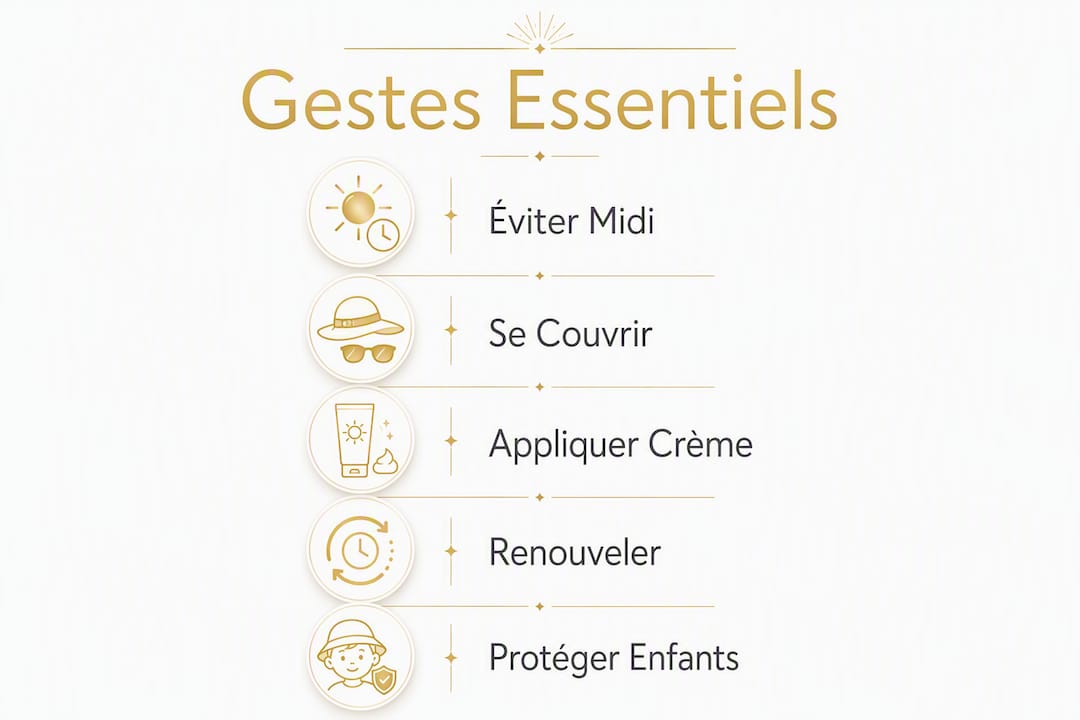
To effectively protect your skin, combine shade, covering clothing, and sunscreen that is correctly applied and reapplied. This is the basic rule, validated by the INCa and relayed by Ameli: none of these three protections is sufficient on its own.
Actions to take immediately:
- Avoid direct exposure between 12 p.m. and 4 p.m. in metropolitan France.
- Apply sunscreen SPF 30 or higher for adults, and SPF 50+ for children and sensitive skin.
- Reapply protection every 2 hours and after every swim or heavy sweating.
- Wear a wide-brimmed hat, covering clothing, and CE-approved sunglasses.
- Seek shade, but be aware that a parasol alone does not block UV rays reflected by sand or water.
Pro tip: Make applying your daily sun protection part of your morning routine, just like brushing your teeth. Consistency matters more than the SPF you choose.
Table of Contents
- Why protect yourself from the sun: immediate risks and long-term consequences
- How to read the UV index and adapt your protection
- What times to avoid and how to find shade effectively
- Clothing, hats, and sunglasses: which physical protections to choose
- Sunscreen: how to choose, apply, and reapply correctly
- How to protect babies, children, and adolescents from the sun
- Medications and photosensitizing products: what to check before exposure
- What does not protect from the sun: misconceptions to correct
- What to do in case of sunburn
- Where to find reliable information on sun protection in France
- Key points
- What usual guides do not say clearly enough
- Sunscreen products selected to meet recommendations
- Official sources and references for this guide
Why protect yourself from the sun: immediate risks and long-term consequences
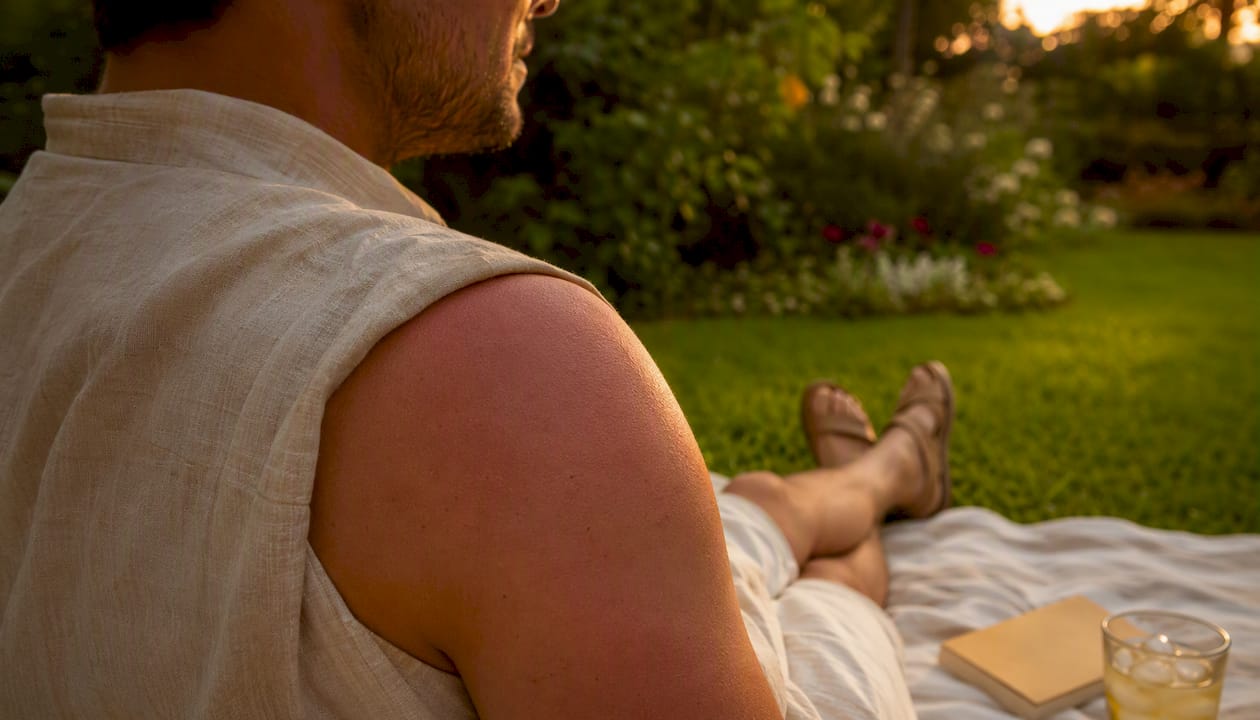
The effects of the sun on the skin occur on two very different timescales. In the short term, excessive exposure causes sunburn, dehydration, and discomfort. In the long term, damage accumulates silently in the DNA of skin cells.
UVB rays are responsible for sunburn: they burn the superficial layers of the skin. UVA rays, on the other hand, penetrate deeper and accelerate skin aging, degrading collagen and elastin. Both types damage DNA and increase the risk of cancer.
- Repeated sunburns: each episode permanently weakens the skin, even without visible burning.
- Premature aging: wrinkles, spots, and loss of elasticity are largely caused by the sun. Anti-aging tips emphasize this point.
- Skin cancers: according to the ARS Auvergne-Rhône-Alpes, more than 80% of skin cancers are linked to excessive UV exposure, often accumulated from childhood.
A tan is not armor. A tanned complexion provides very limited natural protection, equivalent to an SPF between 3 and 13 depending on pigmentation. This never dispenses with external protection, and tanning itself promotes skin aging.
Sunscreen alone is not enough either: shade and clothing remain the most effective protections, with sunscreen only complementing the exposed areas.
How to read the UV index and adapt your protection
The UV index is a standardized measure of the intensity of ultraviolet radiation at a given time and place. Météo-France publishes it every morning for the main French cities. The higher the index, the faster the skin is exposed.
| UV Index | Risk Level | Recommended Protection |
|---|---|---|
| 1–2 | Low | Minimal protection advised |
| 3–5 | Moderate | SPF 30+ sunscreen, hat, sunglasses |
| 6 | High | Avoid 12 p.m.–4 p.m., covering clothing |
| 8–10 | Very High | Maximum protection, shade mandatory |
| 11+ | Extreme | Stay indoors if possible |
Two factors amplify the actual UV index received by your skin, which are often underestimated:
| Factor | Effect on Exposure |
|---|---|
| Altitude (above 2,000 m) | Significantly increased UV intensity; enhanced protection required even in winter |
| Reflection (snow, water, sand) | Multiplies exposure; snow can reflect up to 80% of UV rays |
| Light clouds | Filter little UV; the index remains high in overcast weather |
| Time of Day | UV Intensity in Metropolitan France |
|---|---|
| Before 10 a.m. / after 6 p.m. | Low to moderate |
| 10 a.m.–12 p.m. / 4 p.m.–6 p.m. | Moderate to high |
| 12 p.m.–4 p.m. | Maximum — period to avoid |
What times to avoid and how to find shade effectively
Between 12 p.m. and 4 p.m. in metropolitan France, the sun is at its zenith and UV rays reach their maximum intensity. This is the time slot to avoid as a priority, regardless of the summer season.
- Plan your outdoor activities before 11 a.m. or after 4:30 p.m.
- At the beach, orient your parasol so that it also protects from side reflections coming from the water and sand.
- In the mountains, seek the shade of trees or rocks rather than relying on a hat alone.
- For gardening or outdoor work, split the tasks into two slots: early morning and late afternoon.
Pro tip: Check the local UV index every morning on Météo-France before going out. An index of 6 or more in the morning means that maximum protection is required from 10 a.m.
Pro tip: For outdoor professionals (construction, agriculture, supervised sports), breaks in the shade every 90 minutes significantly reduce the cumulative UV dose over a workday.
Clothing, hats, and sunglasses: which physical protections to choose
Physical barriers are often more reliable than sunscreen because they are not forgotten and do not wear off. A well-chosen garment protects without reapplication.
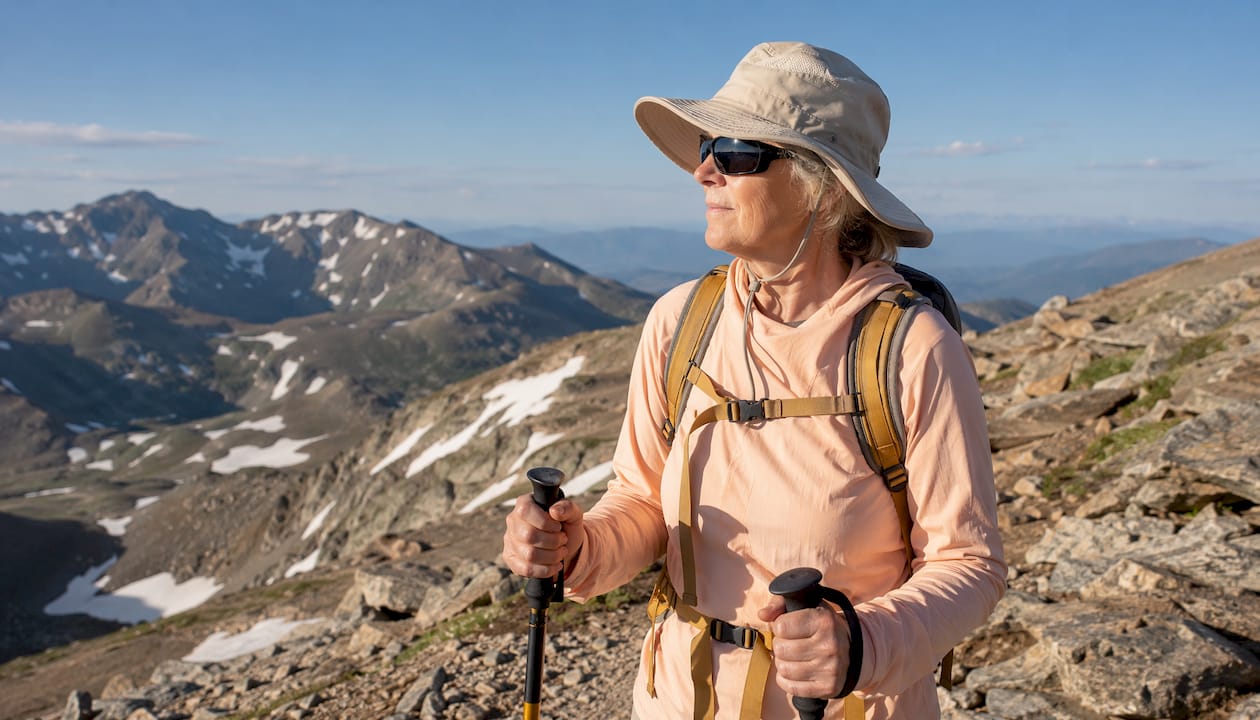
- Fabrics: favor tightly woven materials (polyester, technical nylon, thick cotton). A UPF (ultraviolet protection factor) of 50+ blocks more than 98% of UV rays.
- Colors: dark or bright shades absorb more UV rays than light colors, for the same fabric density.
- Hat: the brims must measure at least 10 cm to effectively protect the face, neck, and ears. Caps leave the back of the neck exposed.
- Sunglasses: require the CE marking and category 3 or 4, with an enveloping frame to block side UV rays. The tint of the lenses does not indicate the level of UV protection.
At altitude or on snow, systematically combine UPF clothing, SPF 50+ sunscreen on exposed areas, and category 4 sunglasses. Reflection on snow can double the UV dose received. To also protect the scalp and hair during prolonged exposure, a protective hair cream with a complete UV filter is a useful addition to the arsenal.
Pro tip: A wet white t-shirt only offers an SPF of about 3. As soon as the fabric is damp, its protection drops drastically. Change or cover yourself with a dry garment.
Sunscreen: how to choose, apply, and reapply correctly
Choosing the SPF is the first decision, but application makes all the difference.
- Choose the right index: SPF ≥ 30 for adults in normal conditions, SPF 50+ for children, sensitive skin, light phototypes, and prolonged exposure.
- Mineral or chemical filters: mineral filters (zinc oxide, titanium dioxide) act on the surface upon application and are suitable for sensitive skin and babies. Chemical filters, lighter in texture, must be absorbed before exposure (allow 20–30 minutes). The choice depends on skin sensitivity and daily use.
- Quantity: the laboratory reference is about 2.5 cm of product per body area. In practice, most people apply two to three times less than necessary, which cuts the actual effectiveness of the SPF in half.
- Forgotten areas: ears, back of the neck, lips (sunscreen stick), backs of hands, scars, and depigmented areas deserve special attention.
- Reapplication: every 2 hours without exception, and immediately after a swim or heavy sweating, even with a "water-resistant" product.
| Situation | Recommended SPF | Reapplication frequency |
|---|---|---|
| Adult, daily activity | ≥ 30 | Every 2 hours |
| Child, sensitive skin | 50+ | Every 2 hours + after swimming |
| Mountain / snow / sea | 50+ | Every 90 minutes |
| Reactive skin, baby | Mineral 50+ | Every 2 hours |
Pro tip: An SPF 50 does not allow you to stay in the sun twice as long as an SPF 25. Protection reduces the intensity received, but reapplication every 2 hours remains essential regardless of the index. To adapt your routine to your phototype, consult this guide on sunscreen according to your skin type.
How to protect babies, children, and adolescents from the sun
The youngest are the most vulnerable, and the habits formed early last a lifetime.
- Infants under 12 months: no direct exposure to the sun. Strict shade, light covering clothing, and a hat at all times outdoors.
- Children from 1 to 12 years: systematic SPF 50+, mineral filters preferred, sunscreen stick for lips. Avoid sprays on young children's faces.
- Adolescents: educate them on reapplication and protecting the lips and ears, areas often neglected.
- Teach children to seek shade spontaneously and to report a burn at the first signs.
According to the ARS, more than 80% of skin cancers are linked to excessive exposure, a significant part of which occurs before age 18. Protecting a child today means reducing their risk for several decades.
Medications and photosensitizing products: what to check before exposure
Some medications and common products make the skin much more reactive to UV rays, sometimes without you knowing.
- Read the package insert of any medication you are currently taking before prolonged exposure. The mention "photosensitizing" or "avoid sun exposure" is explicitly included when the risk exists.
- Consult your pharmacist if you take antibiotics (especially tetracyclines and fluoroquinolones), retinoids, diuretics, or certain anti-inflammatories.
- Check your cosmetics: some perfumes and deodorants contain ingredients that cause spots or burns upon contact with the sun. Apply them in the evening or on covered areas in summer.
- Adopt enhanced measures if you cannot interrupt the treatment: SPF 50+, covering clothing, strict avoidance of risk hours.
Photosensitizing reactions can occur even in cloudy weather. Some medications lower the trigger threshold to UV levels that you would not normally feel. A redness or unusual spot after exposure should raise an alarm and motivate a consultation. Source: Météo-France, prevention and interactions.
What does not protect from the sun: misconceptions to correct
Several widespread beliefs give a false sense of security and lead to risky behaviors.
- Prior tanning: a tanned complexion provides a natural protection equivalent to an SPF between 3 and 13 depending on pigmentation. Insufficient for summer exposure, and the tanning process itself damages skin DNA.
- Self-tanners: they change the color of the skin by chemical reaction with dead cells, without any effect on the transmission of UV rays. Wearing a self-tanner without sunscreen means exposing yourself without protection.
- UV booths: according to the INCa, artificial UV rays add harmful doses without preparing the skin. They are strongly discouraged.
- "Solar" dietary supplements: beta-carotene, lycopene and other antioxidants can support skin resistance, but offer no measurable UV protection. They are not a substitute for sunscreen.
- A high SPF without reapplication: applying SPF 50 in the morning and not reapplying means you are no longer protected after two hours of exposure.
What to do in case of sunburn?
Sunburn is a real burn. Prompt treatment limits damage.
- Get out of the sun immediately and seek a cool place.
- Cool the burned area with cold water compresses (no ice directly on the skin).
- Drink plenty of water to compensate for dehydration.
- After cooling, apply a soothing cream based on aloe vera or panthenol. Avoid oils and greasy ointments while the skin is still hot.
- Avoid any further exposure until fully healed.
Signs requiring medical consultation:
- Extensive blisters or skin peeling
- Fever, chills or vomiting
- Intense pain or signs of infection (spreading redness, localized heat)
- Signs of severe dehydration (dizziness, confusion, absence of urination)
- Sunburn in an infant or young child
Sunburn with blisters is a second-degree burn. Do not pop the blisters, do not cover them with adhesive dressings, and consult a doctor or go to the emergency room if the affected area is large. Source: Ameli / French dermatological recommendations.
Where to find reliable information on sun protection in France?
Official sources to consult regularly:
- Météo-France: daily local UV index, prevention advice by region and season.
- INCa (National Cancer Institute): prevention recommendations, epidemiological data, practical guides.
- Ameli.fr: health insurance-approved advice, guides on summer prevention and sunburn.
- Regional ARS: local alerts, prevention campaigns adapted to each area.
How to use these resources daily:
- Check the Météo-France UV index every morning before going out for an extended period.
- Check the instructions for your medications on Ameli or with your pharmacist before going on vacation.
- In case of a suspicious skin lesion (changing mole, new spot), consult a dermatologist without delay. INCa offers a map of screening consultations.
Key points
Protecting your skin from the sun relies on three inseparable pillars: avoiding peak hours, covering up physically, and applying a suitable sunscreen in sufficient quantity, reapplied every 2 hours.
| Point | Details |
|---|---|
| Peak hours in France | Avoid direct exposure between 12 p.m. and 4 p.m. in mainland France, regardless of the summer season. |
| Suitable SPF and reapplication | SPF ≥ 30 for adults, 50+ for children; reapply every 2 hours and after swimming. |
| Physical barriers first | Hat with brim ≥ 10 cm, high UPF clothing, CE category 3 or 4 sunglasses before any cream. |
| Children and infants | No direct exposure before 12 months; systematic mineral SPF 50+ for children. |
| Hbps-beauty | Offers sun protection products compliant with recommendations (SPF 50+ for the face, after-sun care) available online. |
What usual guides do not say clearly enough
Most articles on sun protection list the right steps. Few emphasize what really makes protection fail in real life: an insufficient amount of cream and lack of reapplication.
Applying SPF 50 in too thin a layer practically results in SPF 10 or 15. It's math. And yet, most prevention campaigns highlight the choice of SPF rather than the application method. Result: people who buy the right product but use it incorrectly, with a false sense of security that pushes them to stay in the sun longer.
The other blind spot is winter and altitude. UV rays do not disappear in December. On ski slopes above 2,000 m, the UV index can exceed 8 even in January, amplified by the reflection of the snow. Sunscreen is not a summer product: it is a year-round daily care, just like a moisturizer.
Finally, physical protection remains systematically underestimated compared to cream. A UPF 50+ garment is not forgotten, does not wear off with sweat, and requires no reapplication. For long exposures, it is simply more reliable. Cream complements it, it does not replace it.
Sunscreen products selected to meet recommendations
Finding a sunscreen compliant with French dermatological recommendations should not be a complicated search. Hbps-beauty offers a selection of sunscreen products designed to meet the criteria outlined in this guide: suitable SPF, formulations for sensitive skin, moisturizing after-sun care.

The Beauté Mediterranea face sunscreen SPF 50+ meets the SPF 50+ criteria recommended for sensitive skin and prolonged exposure. For after-sun care, the La Biosthetique after-sun shampoo takes care of the scalp after exposure. And to support skin resistance from within, the Beauty Focus MultiBeauty Pharmanex supplement combines antioxidants and targeted nutrients for the skin.
Check the ingredients if you have reactive skin, and consult a dermatologist if in doubt. These products are not a substitute for medical advice. Browse the full range on hbps-beauty.com and order directly online.
Official sources and references of this guide
Main sources consulted:
- INCa — How to better protect yourself from the sun?: reference recommendations on peak hours, SPF, reapplication, and protection accessories.
- ARS Auvergne-Rhône-Alpes — Protecting yourself from the sun: epidemiological data on skin cancers and high-altitude exposure.
- Météo-France — UV: simple advice to protect yourself: daily UV index, drug interactions, and prevention.
- National Geographic — How to effectively protect yourself from the sun?: application advice, amount of cream, choice between mineral and chemical filters.
Complementary resources:
- Ameli.fr: practical guides from the French health insurance on summer prevention and first aid.
- Santé publique France: epidemiological surveillance data and prevention campaigns.
- World Health Organization — UV: international UV index scale and global recommendations.
This guide is general information based on the recommendations of French health authorities. It is not a substitute for medical advice. In case of doubt about a skin lesion or a drug interaction, consult a dermatologist or your primary care physician.