

Anti-Aging Skincare Steps: A Guide to an Effective Routine
TL;DR:
- Using several products doesn’t guarantee better results and can irritate the skin.
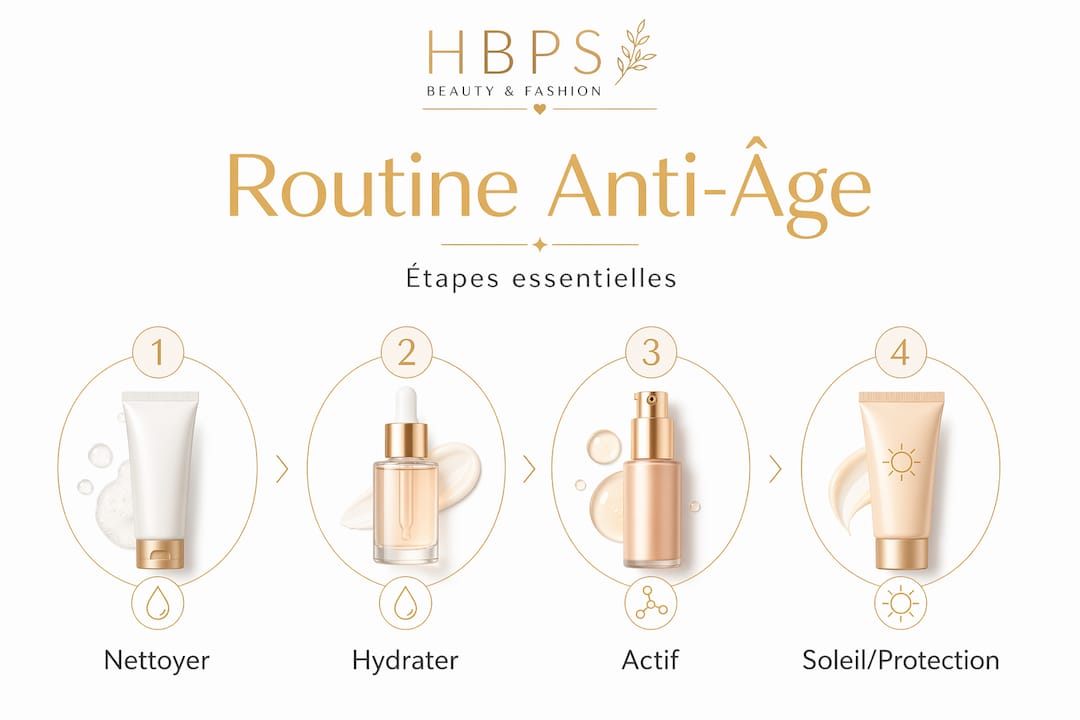
- An effective anti-aging routine has just four main steps, consistently applied in line with dermatological recommendations.
Many people pile product upon product in the hope of getting better results, only to achieve the opposite: irritated skin, a weakened skin barrier, and a drained budget. The most effective steps in an anti-aging skincare routine aren’t the most numerous; they’re the ones best suited to your skin and consistently applied. This guide sets out a clear approach based on what dermatologists actually recommend: specific steps, in the right order, with the right active ingredients. Nothing unnecessary, just the essentials.
Table of Contents
- Preparing Your Anti-Aging Routine: Understanding Your Skin’s Needs
- The Key Steps in a Simple, Effective Anti-Aging Routine
- Getting the Most Out of Your Anti-Aging Skincare: Practical Tips and Mistakes to Avoid
- Additional Treatments and Weekly Steps to Boost Your Anti-Aging Routine
- Why Less Is More: The Skinimalism Approach to Anti-Aging Skincare
- Build an Effective Anti-Aging Routine with HBPS Beauty & Fashion
- Frequently Asked Questions About Anti-Aging Skincare Steps
Key Takeaways
| Key point | Details |
|---|---|
| Simple, targeted routine | An effective anti-aging routine has no more than four key steps in the morning and evening to limit irritation. |
| Daily sun protection | Applying SPF 50+ every day protects collagen and prevents 80% of sun-related signs of aging. |
| Introduce retinol gradually | Starting with a low-strength retinol once or twice a week helps prevent severe irritation. |
| Optimized hydration | Applying hydrating serums to slightly damp skin boosts their effectiveness in plumping the skin. |
| Additional weekly treatments | Gentle exfoliation and hydrating masks support cell renewal and a radiant complexion. |
Preparing Your Anti-Aging Routine: Understanding Your Skin’s Needs
Before building your routine, it’s essential to identify what your skin really needs. Oily and dry skin don’t tolerate the same textures, and sensitive skin at 30 doesn’t react the same way as mature skin at 55. Identifying your skin type is an essential first step toward an effective routine—and one that most people skip.
The four main skin types are oily (excess shine, enlarged pores), dry (tightness, discomfort), combination (oily T-zone, dry cheeks), and sensitive (redness, reactions to temperature changes or active ingredients). Your skin type can change with age, the seasons, or your lifestyle. What your skin could tolerate at 30 may irritate it at 45.
Here are some questions to ask yourself before choosing your skincare products:
- Does your skin feel tight after cleansing? It’s probably dry or dehydrated.
- Are your pores visible on your nose and forehead? Your T-zone is oily.
- Do your cheeks redden easily? Your skin is sensitive or reactive.
- Are you over 25? Sun protection is non-negotiable from now on.
Sun protection from age 25 isn’t a precaution for later. It’s the most powerful preventive measure there is. As for active ingredients, mixing retinol, AHAs, vitamin C, and niacinamide in the same routine without a thoughtful order doesn’t double the results: it creates chemical conflicts and irritation. For a more structured approach, this guide to building an effective beauty routine will give you a solid foundation.
Pro tip: Do a 48-hour patch test on the inside of your wrist before introducing any new active ingredient. It takes two minutes and can save you weeks of skin recovery.
The Key Steps in a Simple, Effective Anti-Aging Routine
Now that you understand the basics, let’s take a closer look at each step. An effective anti-aging routine includes no more than four steps in the morning and evening: gentle cleansing, a targeted serum, moisturizer, and SPF 50+ in the morning. This is the routine dermatologists endorse, and it’s enough to deliver visible results over time.
The Morning Routine
- Gentle cleansing: Use a gel or foam cleanser without harsh sulfates. In the morning, your skin hasn’t been exposed to makeup or pollution, so a light cleanse is enough. Its purpose is to prepare your skin to absorb the products that follow, not to strip it.
- Vitamin C serum (10 to 20%): Applied to slightly damp skin, it protects against free radicals, evens out skin tone, and supports collagen production. It’s the quintessential morning anti-aging active.
- Suitable moisturizer: Choose a lightweight formula if your skin is oily and a richer one if it’s dry. Hyaluronic acid is a useful ingredient for keeping skin hydrated throughout the day.
- SPF 50+: The final, essential step. Not just in summer, and not just on sunny days. Every day, all year round.
The Evening Routine
According to dermatologists and facialists, the evening routine consists of double cleansing, retinol two to three times a week, and a rich moisturizer with peptides and ceramides.
- Double cleansing: First use an oil or balm to dissolve makeup and sunscreen, then rinse with water and follow with a gentle cleanser. Without this step, skincare products are applied to skin that’s still covered in residue.
- Retinol: The anti-aging active ingredient with the most scientific evidence behind it. Start with a low concentration (0.025% to 0.1%), no more than two to three times a week. Learn more about facial anti-aging active ingredients to help you adjust concentrations to your needs.
- Rich moisturizer (peptides and ceramides): Peptides stimulate collagen synthesis, while ceramides restore the skin barrier. This combination helps counteract the potential drying effects of retinol.
| Time | Step | Key ingredient | Main purpose |
|---|---|---|---|
| Morning | Gentle cleansing | Sulfate-free | Prepare the skin |
| Morning | Serum | Vitamin C 10–20% | Antioxidant, radiance |
| Morning | Moisturizer | Hyaluronic acid | Maintain hydration |
| Morning | Sun protection | SPF 50+ | Block UV rays |
| Evening | Double cleansing | Oil + gentle gel cleanser | Remove residue |
| Evening | Treatment | Retinol | Cell renewal |
| Evening | Rich moisturizer | Peptides, ceramides | Repair and firm |
To explore all the available types of anti-aging skincare and tailor your selection, see our dedicated guide.
Getting the Most Out of Your Anti-Aging Skincare: Practical Tips and Mistakes to Avoid
Now that you know the steps, let’s look at how to make them even more effective and avoid the most common pitfalls.
The first pitfall: using retinol too often, too soon. According to Dr. Nina Roos, retinol should be introduced gradually using the sandwich method (moisturizer, retinol, moisturizer) to prevent irritation and peeling. The basic rule is to start with twice a week for a month before increasing the frequency.
The second pitfall: ignoring the sun on cloudy days. 80% of wrinkles are caused by environmental factors such as the sun. UVA rays pass through clouds and glass. Apply your SPF even when working from home near a window.
“Daily sun protection remains the anti-aging step with the most documented results. No serum, however concentrated, can make up for not using SPF.” Dermatologists consulted by Doctissimo
Here are the most common mistakes to avoid in your anti-aging facial skincare routine:
- Combining vitamin C and retinol in the same application: Use vitamin C in the morning and retinol in the evening; they have incompatible pH levels and effects that work against each other.
- Applying serum to completely dry skin: Slightly damp skin allows better absorption of hydrophilic active ingredients such as hyaluronic acid.
- Stopping your routine at the first tingle: Some active ingredients need four to six weeks for your skin to adjust. A slight initial tingling doesn’t necessarily mean you’re having an allergic reaction.
- Skipping your evening double cleanse: It’s the foundation of your entire nighttime routine. If your skin isn’t clean, nothing that follows will work properly.
For more in-depth guidance, HBPS Beauty’s effective beauty routines and effective skincare tips offer practical examples for different skin profiles.
Pro tip: Keep a beauty journal for two months. Make a weekly note of the products you use, any reactions you notice, and your skin’s overall condition. It’s the most reliable way to adjust your routine based on real evidence, not guesswork.
Additional Treatments and Weekly Steps to Boost Your Anti-Aging Routine
Alongside your daily routine, these weekly steps can round out your anti-aging strategy for visible results over time.

Exfoliating with AHAs or PHAs once or twice a week removes dead skin cells and stimulates skin renewal. AHAs (glycolic acid, lactic acid) work on the surface and are ideal for dull or slightly wrinkled skin. PHAs are gentler and suited to sensitive skin. Never exfoliate on the same night as using retinol.
Masks rich in peptides, ceramides, and hyaluronic acid support collagen production and deeply hydrate the skin. Applied after exfoliation, they penetrate much more effectively because dead skin cells have been removed.
Facial massage is often underestimated. Five minutes with your fingers or a gua sha tool improves blood circulation, drains toxins, and tones facial muscles. Practiced regularly, it can help define the face and improve the absorption of skincare products.
| Weekly step | Frequency | Main benefit |
|---|---|---|
| AHA/PHA exfoliation | Once or twice a week | Cell renewal, radiance |
| Hydrating or firming mask | Once or twice a week | Collagen, deep hydration |
| Facial massage | 3 to 5 times a week | Circulation, tone, drainage |
| Occasional serum boost | In a 4-week course | Target wrinkles, dark spots, firmness |
To learn more about the benefits of a beauty routine, these additional steps are easy to incorporate without adding too much to your daily routine.
Why Less Is More: The Skinimalism Approach to Anti-Aging Skincare
Now that we’ve looked at how to build and optimize your routine, let’s ask an uncomfortable question: do more products really mean better results? In our experience and based on the available evidence, the answer is no.
Skinimalism means limiting your routine to no more than four steps to avoid irritation and unnecessary overload. It’s not a passing social media trend. It’s what dermatologists have recommended for years—and what the cosmetics industry has long had an interest in downplaying.
The reality is that skin exposed to too many active ingredients at once doesn’t absorb them better; it fights back. Chronic irritation accelerates aging instead of slowing it down. Your skin barrier is a natural shield. Overloading it is like sabotaging it.
What optimizing beauty business operations teaches industry professionals also applies to your bathroom: cutting out unnecessary steps frees up resources for what really matters. Four well-chosen products applied consistently will always outperform a collection of fifteen products used without a plan.
And if you’re still unsure, here’s what the numbers say: even a routine consisting of cleanser and SPF is highly effective, because 80% of wrinkles are caused by environmental factors, not genetics. Your €180 night cream won’t make a difference if you don’t wear SPF in the morning.
To better understand how the key role of skincare fits into a broader approach, simplicity is always the best starting point.
Build an Effective Anti-Aging Routine with HBPS Beauty & Fashion
To take things further and build an effective routine tailored to your skin, HBPS Beauty & Fashion offers an expert selection of anti-aging skincare designed for all skin types. Whether you’re just starting out with a basic routine or looking to introduce targeted active ingredients like retinol or vitamin C, you’ll find carefully selected products with proven effectiveness.

Our practical beauty routine guide takes you step by step through building a routine without getting lost in the latest trends. And if you’d like to explore the most comprehensive options, our guide to effective anti-aging treatments brings together the best options for youthful, radiant skin at every stage of life.
Frequently asked questions about the steps in an anti-aging skincare routine
At what age should you start an anti-aging skincare routine?
It’s recommended to start at age 25 with daily sun protection and regular moisturizing, as SPF 50+ and moisturizing from age 25 are the most effective long-term preventive measures.
Why is sun protection essential in an anti-aging routine?
80% of wrinkles are caused by the sun, so daily SPF is the most effective anti-aging step there is, far more important than any cosmetic active ingredient.
How can you introduce retinol without irritating your skin?
The key is to introduce retinol gradually, once or twice a week using the sandwich method: moisturizer, retinol, moisturizer, followed by mandatory SPF the next morning.
What are the essential active ingredients in an anti-aging routine?
The three pillars are vitamin C for the morning, retinol for the evening, and hyaluronic acid for hydration, complemented by peptides to support skin firmness.
Is double cleansing really necessary in the evening?
Yes, because evening double cleansing is essential for removing accumulated pollution and sebum without irritating the skin—a necessary condition for all the active ingredients in your routine to penetrate properly.
Recommended reading
- Effective Anti-Aging Treatments: A Complete Guide to Youthful Skin – HBPS Beauty & Fashion
- Anti-Aging Procedures: Effective Routines and Treatments – HBPS Beauty & Fashion
- Skincare Routine: The Key to Radiant Skin – HBPS Beauty & Fashion
- Discover the Types of Anti-Aging Treatments for Radiant Skin – HBPS Beauty & Fashion