

Up to 230°C: find the right heat protectant for your hair at HBPS-Beauty
For most uses, a lightweight heat protectant spray remains the best choice, as it is quick to apply and suitable for both blow-drying and occasional flat ironing. For thick, curly, or textured hair, a richer cream or serum provides better protection while nourishing the hair fiber. On HBPS-Beauty, both categories are available in a variety of formats, with clear indications of temperature and color compatibility to avoid selection errors.
In short:
- Heat protection must be adapted to the maximum temperature supported by your tool, generally less than or equal to 230°C (446°F).
- Thick or textured hair requires a rich cream or serum, while fine hair should favor a lightweight spray.
- Correct application—sectioning and combing before using the iron—is just as important as the choice of product itself.
- Formulas rich in heavy silicones build up with daily use, necessitating regular clarifying shampooing.
- Adjusting the tool’s temperature to your hair texture remains the best way to limit damage, more so than the type of protectant used.
Table of Contents
- Which heat protectant format for your hair type?
- How to choose your formula without making a mistake?
- How to apply a heat protectant based on your device?
- What are the most frequent mistakes and how to avoid them?
- Why trust this guide on heat protectants?
- Why a heat protectant is a true game-changer
- Up to what temperature does a heat protectant really protect?
- Does a heat protectant have risks or side effects?
- Heat protectant, natural oils, or heat-free techniques: what to choose?
- What beauty guides often omit
- Finding the right heat protectant on HBPS-Beauty
- Sources
Which heat protectant format for your hair type?
Sprays, creams, serums, and mousses do not protect in the same way and are not suitable for all hair types. The basic mechanism remains the same for all: the formula deposits a polymeric film on the surface of the fiber, which slows down heat conduction and distributes the temperature better upon contact with the plate or iron, as explained by Davines. What changes from one format to another is the texture, the weight on the hair, and the ability to cover thicker or more porous lengths.
The spray remains the most versatile format. Lightweight and vaporized in seconds, it is suitable for fine or medium-thick hair that fears being weighed down. It is also the format most frequently cited by beauty editors in their top picks, particularly for its ease of daily use—a criterion regularly highlighted by Byrdie in its reviews.
Creams target thick, curly, or afro-textured hair that needs a lipid boost in addition to a thermal barrier. They detangle while protecting, making them a good choice before straightening or blow-drying long hair.
The serum, which is more concentrated, is primarily used as a finishing step: it smooths the cuticle and adds shine after using the iron, without necessarily replacing a spray applied beforehand. The mousse, which is rarer, sits between a spray and a cream, offering a good compromise for mid-length hair with significant volume.
Before purchasing, four points on the label deserve your attention:
- The maximum protected temperature, ideally displayed in degrees (up to 230°C for the best formulas according to Allure reviews).
- The presence of film-forming silicones, which reinforce the heat barrier but can weigh hair down if used in high doses.
- Proteins (keratin, silk) that temporarily strengthen the damaged fiber.
- Oils or hydrating agents, which are useful for dry or porous hair but should be limited for fine hair.
One point few guides mention: formulas rich in heavy silicones eventually build up on the fiber with daily use, resulting in a dull or flat appearance after a few weeks. A clarifying shampoo once every two to three weeks is generally sufficient to return to a clean base, especially if you use your heating tools almost every day.
How to choose your formula without making a mistake?
The right heat protectant is not the one that makes the most promises on the packaging, but the one that precisely matches your tool, your texture, and your frequency of use. A simple checklist can prevent buying the wrong product.
- Check the indicated protection temperature and compare it to that of your tools. A flat iron that heats up to 200°C is useless if used with a product that only protects up to 180°C.
- Choose the texture based on your hair density. Fine and straight: lightweight spray without heavy silicone. Thick, curly, kinky: richer cream or milk.
- Check for color compatibility if your hair is colored or bleached. Some formulas include UV filters or agents that limit color fading accelerated by heat, a criterion regularly highlighted in Allure comparisons.
- Look at the ingredients: proteins and humectants for damaged hair, volatile silicones for a lighter feel.
- Adapt the format to your budget and usage. A travel size makes sense for occasional use; a large bottle becomes more economical if you use your heating tools several times a week.
Before validating a purchase, ask yourself these five questions: What temperature does my most-used tool reach? Is my hair colored or chemically treated? Am I looking for a matte or shiny finish? How many times a week do I expose my hair to heat? Do I already have a product buildup issue on my lengths?
The diversity of offerings—seen, for example, on sites like Ulta with over a hundred references—clearly shows that no universal product exists. It is precisely for this reason that a selection method counts for more than a rigid ranking.
Pro tip: Always test a new heat protectant on a small strand before a full application, especially if your hair is colored or recently chemically treated. Some formulas react differently depending on the hair's pH, and a test strand avoids unpleasant surprises on the entire head.
How to apply a heat protectant based on your device?
The effectiveness of a heat protectant depends as much on the formula as on how you apply it. Good coverage really makes a difference, and major brands insist on this point: sectioning the hair and combing it after application significantly improves product distribution, according to recommendations from L’Oréal Paris.
The procedure changes depending on the tool used.
- Prepare your hair. Wash, towel-dry gently, and detangle before any application to avoid setting knots under the heat.
- Apply at the right time depending on the tool. For a hairdryer or blow-dry, apply the product to damp hair. For a flat iron or curling iron, apply to dry hair just before using the tool, as specified by Davines.
- Maintain a spraying distance of 15 to 20 centimeters for sprays, sectioning the hair strand by strand rather than doing one global spray.
- Comb to distribute evenly, from roots to tips, then let it dry slightly before using the heating tool.
- Reapply to areas needing touch-ups if necessary, without saturating the fiber: a thin, uniform layer protects better than a thick, poorly distributed one.
A dosage benchmark: two to three sprays are enough for mid-length hair, more for long or thick hair. For a cream, a pea-sized amount distributed between your palms before application avoids a plastered effect on the roots. This sectioning and combing step, often neglected, remains one of the simplest ways to turn average protection into truly effective protection.
What are the most frequent mistakes and how to avoid them?
Most heat-related damage does not come from a bad product, but from improper use of the tool. Using too high a temperature out of habit, applying the protectant unevenly, or running a flat iron over hair that is still damp are among the most common mistakes.
Temperature settings should follow the hair's texture, not a fixed habit:
Recommended temperatures vary by hair type, with fine or bleached hair requiring a lower setting, and thick or resistant hair supporting higher temperatures.
Best practices recommend staying under 200°C (400°F) when not necessary, and systematically adjusting the temperature to the hair type rather than using the maximum setting by default, according to Insider Beauty.
A few tips limit cumulative wear in the long run: favor a slow pass at medium temperature rather than a fast, very hot pass, alternate with heat-free styling techniques once or twice a week, and perform regular clarifying cleanses to avoid silicone buildup. A heat protectant reduces damage, but it doesn't cancel it out: the variable that counts most often remains the device's setting, not just the bottle being used.
Why trust this guide on heat protectants?
Hbps-beauty is an online store specializing in beauty and well-being, with a catalog covering hair care, professional styling tools, and major brands in the sector. This dual role—selling products and heating appliances—allows for approaching heat protection from a practical perspective rather than a mere marketing comparison.
This guide was written by JSCC, using an approach based on professional brand recommendations and reference guides for hair care, rather than personal impressions.
To deepen your hair routine, several internal resources complement this guide:
- 7 hair care tips for visible results
- 6 hair care benefits to adopt for healthy hair
- Hair care workflow: optimize your routine step-by-step
This guide does not rely on proprietary clinical studies. The claims are based on public recommendations from professional brands and beauty press titles cited throughout the article, which we invite you to consult directly to delve deeper into a specific point.
Why a heat protectant is a true game-changer
Running a 200°C iron over bare hair is equivalent to exposing keratin to repeated thermal shock, day after day. The heat protectant acts as an intermediate barrier: it does not block the heat, but it slows its conduction and smooths its distribution over the fiber, which reduces the direct assault on the cuticle.
Without this step, damage accumulates visibly faster: split ends, loss of elasticity, dullness, and brittleness. Many people who complain of hair "damaged by straightening" are actually not using any protection, or are applying too little to cover the entire head. It is not a luxury product; it is a step as essential as shampooing for those who regularly use heating tools.
Up to what temperature does a heat protectant really protect?
No heat protectant offers unlimited protection, a point many users overlook. Each formula is designed for a specific temperature range, usually indicated on the packaging, which often goes up to 230°C for the best formulas on the market according to Allure reviews.
Beyond this threshold, the protective film is no longer sufficient to absorb the thermal shock, and the risk of damage increases rapidly, regardless of the quality of the product. This is why the device's setting matters as much as the choice of protectant: an excellent spray used at 230°C on an iron set to 210°C protects effectively, whereas the same product on a device at 250°C loses a large part of its utility. Checking the correspondence between your tool's temperature and the one indicated on the bottle remains the simplest reflex to avoid a false sense of security.
Does a heat protectant have risks or side effects?
A heat protectant remains generally risk-free for most hair, but certain side effects are worth noting. The accumulation of heavy silicones, in the event of daily use without regular clarification, can weigh down the fiber and make it look dull over time.
Some oil-rich formulas can also cause a greasy effect on fine hair if too much is applied. More rarely, mild skin reactions appear in people sensitive to certain fragrances or preservatives, which justifies a test on a small area before a first full application. Finally, a poorly applied protectant—in too thin or irregular a layer—can provide a false sense of security and leave certain areas without real protection against the heat.
Heat protectant, natural oils, or heat-free techniques: what to choose?
Vegetable oils like argan or shea butter provide shine and some suppleness, but they do not offer the same film-forming barrier as a dedicated formula: they nourish the fiber without really slowing down heat conduction. For readers curious about natural options to associate with their routine, resources like this guide on vegetable oils and shea butter detail possible combinations, to be used in addition to a heat protectant rather than in its place.
Heat-free styling techniques (twists, flexi-rods, air-drying) remain the safest method since they completely eliminate the risk. However, they require more time and do not suit all styling preferences. A heat protectant therefore remains the most realistic solution for those who wish to continue using a straightener or curling iron regularly without giving up these tools.
What beauty guides often omit
Most articles on heat protectants simply rank products by price or brand, without ever questioning the variable that truly makes the difference: the setting of your appliances. One can buy the highest-rated formula on the market and still damage their hair if the iron is running at 230°C on fine hair that can only handle 160°C.
The first misconception to correct is that a heat protectant is a fail-safe insurance policy. It is not: it is a damage reducer, not an absolute shield. The priority for most readers should be to first adjust their appliance temperature to their hair texture, and only then choose the formula suited to that range. Many do the opposite and are then surprised when their ends break despite using an expensive bottle.
What I take away most from this topic is that the application technique counts almost as much as the product itself. Sectioning, combing, respecting the spraying distance: these simple habits, often skipped for lack of time, explain much of the performance gap between two people using the exact same spray.
— JSCC
Finding the right heat protectant on HBPS-Beauty
Hbps-beauty gathers heat-protectant sprays, creams, and serums from major brands in a single catalog, with filters by hair type that avoid having to compare fifteen product pages one by one before finding the right texture.
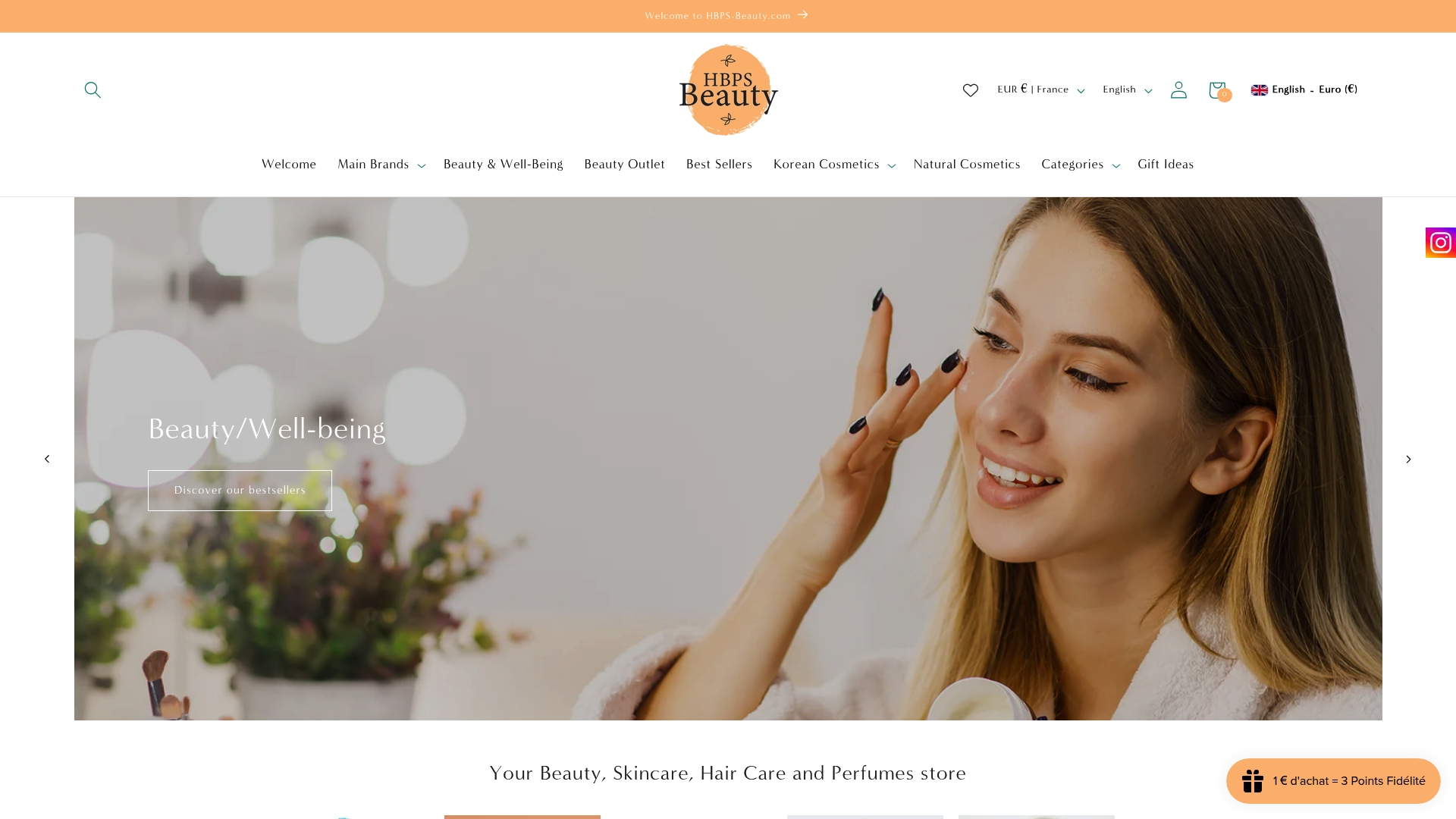
On the shop, each product page specifies the recommended protection temperature and compatibility with color-treated hair, exactly the criteria detailed earlier in this guide. If your hair is fine, the filter directs you toward lightweight sprays; if it is thick or textured, toward richer creams. This approach avoids guesswork and saves real time compared to scattered searches across multiple sites.
To start your selection, head to the HBPS-Beauty shop, where you can compare available formats and identify the one that fits your current styling routine.
Sources
To delve deeper into certain points mentioned in this guide, several external resources offer additional insight. Davines details the mechanism of action of the protective film and best application practices. Insider Beauty reviews temperature settings to be adapted according to hair type. Allure offers a selection of formulas tested up to 230°C, and L’Oréal Paris details the correct application method depending on the tool used.
To extend your hair care routine beyond thermal protection, the internal guides from Hbps-beauty on hair care tips and the workflow for a complete hair care routine usefully complement this topic.
- How to Use Heat Protection Spray - Davines
- 9 Best Heat-Protectant Sprays to Tone Down Damage - Allure
- How To Use Heat Protectant The Right Way | L’Oréal Paris