

How to store your perfume without losing its essence
Store your perfumes in a cool, dark, dry place with a stable temperature: a dresser drawer or a closed cupboard is always better than a windowsill or a bathroom. Always replace the cap and keep the bottle upright. Perfume specialist Anne Serrano-McClain sums up the rule as: dry, dark, stable, and free from temperature fluctuations.
In short:
- Storing your perfume in a dark, cool, and stable place, such as a dresser drawer or a closed cupboard, extends its shelf life.
- Replacing the cap immediately after use and storing the bottle upright limits oxidation and preserves the integrity of the fragrance.
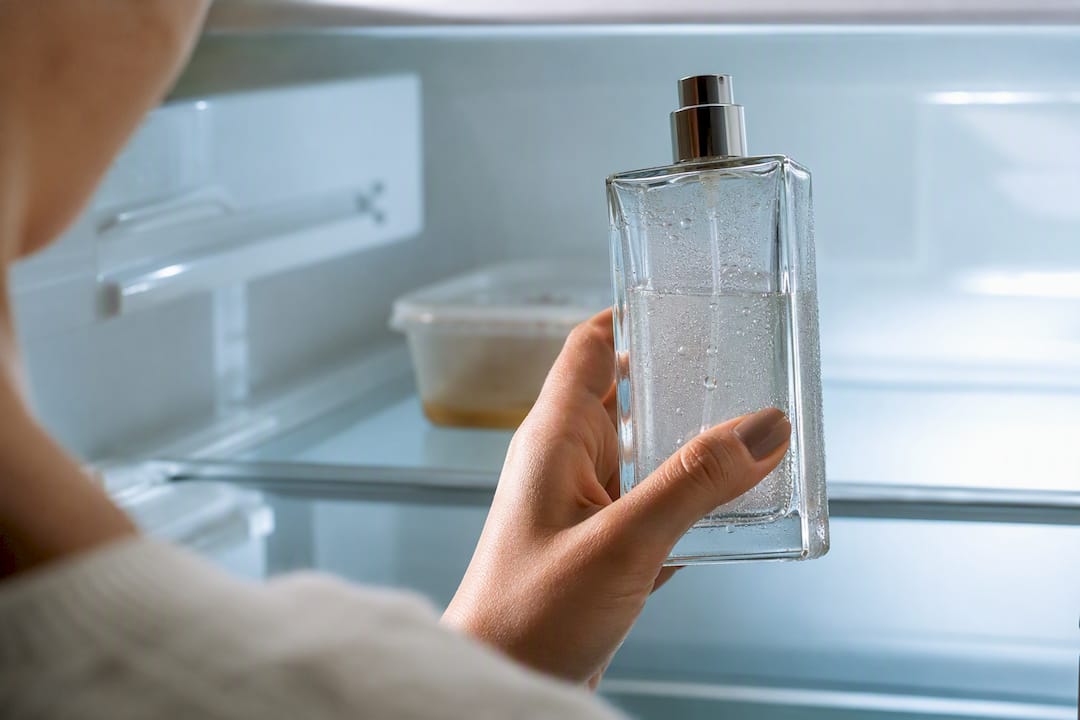
- Refrigeration is only recommended in a dedicated mini-fridge to avoid condensation and food odors.
- The shelf life of an opened perfume is about 3 to 5 years; it should be replaced if the scent turns sour or the color darkens.
- When traveling, use an atomizer or a small bottle, avoiding exposure to heat or direct light in the car or in the cabin.
Table of Contents
- Where to store your perfumes: recommended locations and common mistakes
- Cap closed, bottle upright: habits that protect your fragrance
- The fridge: a good idea or a trap for your perfume?
- How long does perfume last, and how to tell if it has turned
- Traveling with your perfume without damaging it
- A five-step perfume care routine
- Balancing a beautiful vanity with proper storage
- Concrete solutions for better perfume storage and transport
- Sources
Where to store your perfumes: recommended locations and common mistakes
Perfume degrades under the influence of four aggressors: heat, light, sudden temperature changes, and humidity. UV rays break down aromatic molecules, heat accelerates oxidation, and humidity promotes the formation of deposits or alters the color of the juice. This is precisely why the bathroom, despite its practical charm, remains the worst possible place for a bottle: hot showers, steam, and natural light all combine there.
Locations that actually work share three qualities: darkness, coolness, and stability.
- A dresser drawer in a bedroom, far from radiators.
- A closed cupboard, away from a window facing south.
- The original cardboard box, which effectively blocks UV rays even if the bottle sits on a shelf.
- An opaque perfume cabinet, if you own dozens of them.
In a particularly hot climate, or while waiting to find something better, a shaded corner of a closet remains an acceptable temporary solution, provided it doesn't last for months.
Cap closed, bottle upright: habits that protect your fragrance
Perfume does not like air. Every prolonged opening exposes the juice to oxygen, which accelerates the oxidation of top notes, often the first to disappear. Hence the importance of simple actions that become almost automatic once you get into the habit.
- Close the cap immediately after use, never "for later."
- Store the bottle upright: if laid down, the juice stays in permanent contact with the cap, and certain rubber seals may react with the alcohol.
- Avoid shaking the bottle, as this incorporates air into the liquid.
- Spray bottles limit air exposure with each press, unlike splash bottles, where each use opens the neck of the bottle more widely.
Pro tip: If you own an old splash bottle, transfer a small amount into an empty atomizer. You will limit air exposure for the main container, which then stays protected in its drawer.
The fridge: a good idea or a trap for your perfume?
Moderate cold slows down oxidation—that is a chemical fact. However, a standard refrigerator presents two concrete problems: condensation that forms on the bottle each time it is opened, and food odors that can, over time, slightly permeate the cap or the label. According to Anne Serrano-McClain, the fridge is only useful if you have a dedicated mini-fridge, free of food, in a very hot climate where no room in the house stays cool. For the vast majority of enthusiasts, a dark drawer is more than sufficient and avoids these complications.
How long does perfume last, and how to tell if it has turned
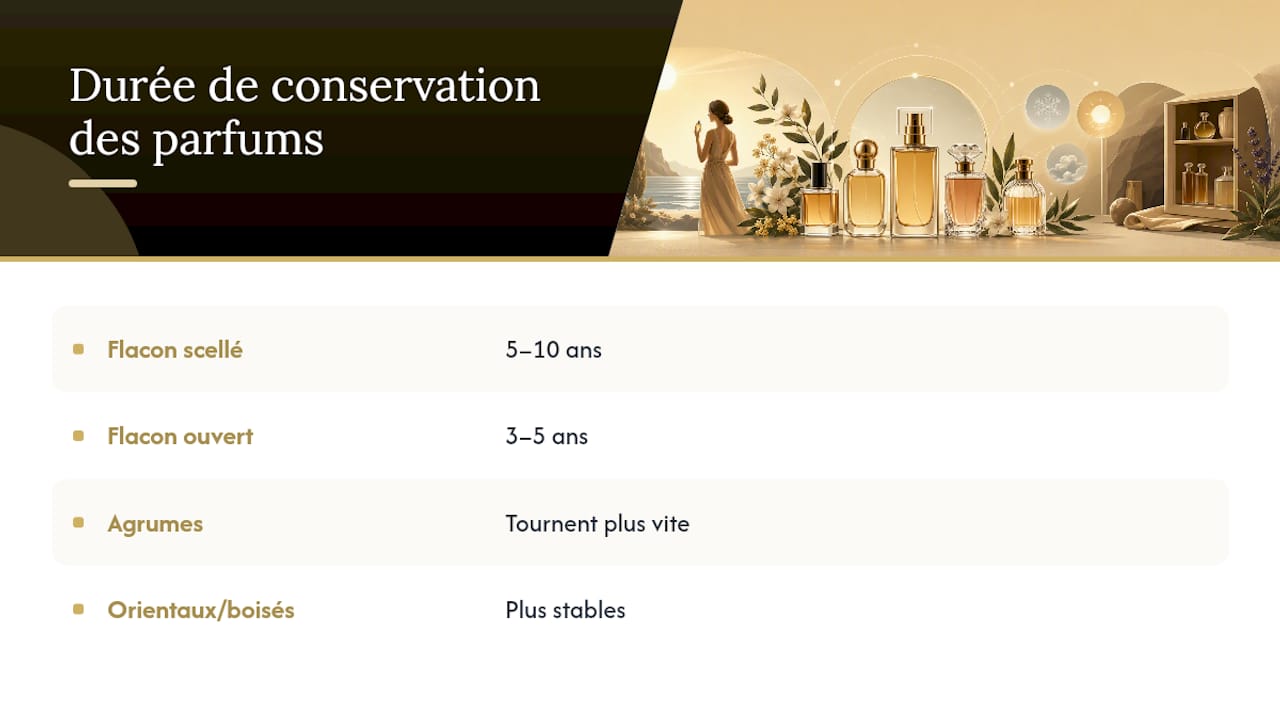
A sealed bottle that has never been opened can be stored for 5 to 10 years under the right conditions. Once opened, count on 3 to 5 years, and this duration varies according to the fragrance family: citrus-dominant Eaux de Cologne often turn faster than orientals or woody scents, which are more stable over time thanks to their heavier molecules.
Three signs betray an altered perfume: a scent that has turned sour or vinegary, a color that has noticeably darkened compared to the original, or juice that has become cloudy. The best test remains simple: spray it on a paper strip or a tissue, wait a few minutes for the drydown to reveal itself, then smell. If the initial scent reminds you more of rubbing alcohol than the original fragrance, it is time to part with it. This test takes two minutes and prevents you from wearing a fragrance that has turned without realizing it.
Traveling with your perfume without damaging it
Taking your signature scent on a trip requires a little method, lest you find it altered upon your return.
- Opt for a travel atomizer or a miniature format rather than the large bottle.
- Only transfer the amount necessary for the duration of the trip, leaving the main bottle safely tucked away at home.
- Never leave a bottle in a car parked in direct sunlight, even for a few hours: the heat rises very quickly and literally cooks the fragrance.
- When flying, keep the bottle in the cabin rather than in checked luggage, where temperature and pressure fluctuations are more pronounced.
A five-step perfume care routine
To reorganize a collection in a few minutes, follow this logical order:
- Identify bottles exposed to light or placed near a window and move them.
- Check that every cap is correctly closed.
- Store bottles upright in their original boxes or in a closed drawer.
- Note the date of purchase or opening on older bottles with a fine-tip marker on the bottom of the box.
- Test perfumes older than three years on paper before wearing them again.
This routine takes no more than ten minutes, even for a collection of twenty bottles.
Balancing a beautiful vanity with proper storage
We understand the desire to display your bottles on a shelf—they are often beautiful to look at. The compromise that works: keep one or two bottles for daily use visible, far from a window, and store the rest of your collection in a drawer or box. At Hbps-beauty, we see this dilemma constantly among the enthusiasts who write to us. Adopt the five-step checklist above; it makes a real difference in the lifespan of a collection.
— JSCC
Concrete solutions for better perfume storage and transport
A good portion of the damage comes from poor containers rather than poor storage. A well-chosen travel atomizer avoids exposing the large bottle to the heat of a bag or a car, and an airtight box protects several miniatures at once.

We offer a selection of atomizers, storage cases, and travel formats designed for this type of use, as well as perfumes from renowned brands. To better choose the concentration suited to your needs, our article on the differences between Eau de Parfum and Eau de Toilette provides useful guidelines. Find all the references on the Hbps-beauty shop and complete your travel kit with your next order.
Sources
- How to Store Perfume: Is It Safe to Keep It in a Bathroom? Best Practices – Scentbird Blog
- The Perfume Storage Mistake You Need To Stop Making, According To An Expert – Southern Living
- How to Store Perfume Properly and Replace It – PerfumerOnline