

Importance of In-Salon Beauty Analysis – Client Retention and Expertise
Finding the right balance between authenticity, personalization, and aesthetic expectations is a daily challenge for every professional in France. A structured beauty assessment places your expertise at the heart of the experience, allowing you to truly understand each client and tailor your recommendations. By building on a thorough and methodical analysis, you transform a traditional service into a strong relationship of trust, which is essential for retaining demanding clients who are concerned about their appearance.
Table of Contents
- Beauty assessment in the salon: definition and fundamental principles
- Why a beauty assessment makes a difference
- The key principles of a professional assessment
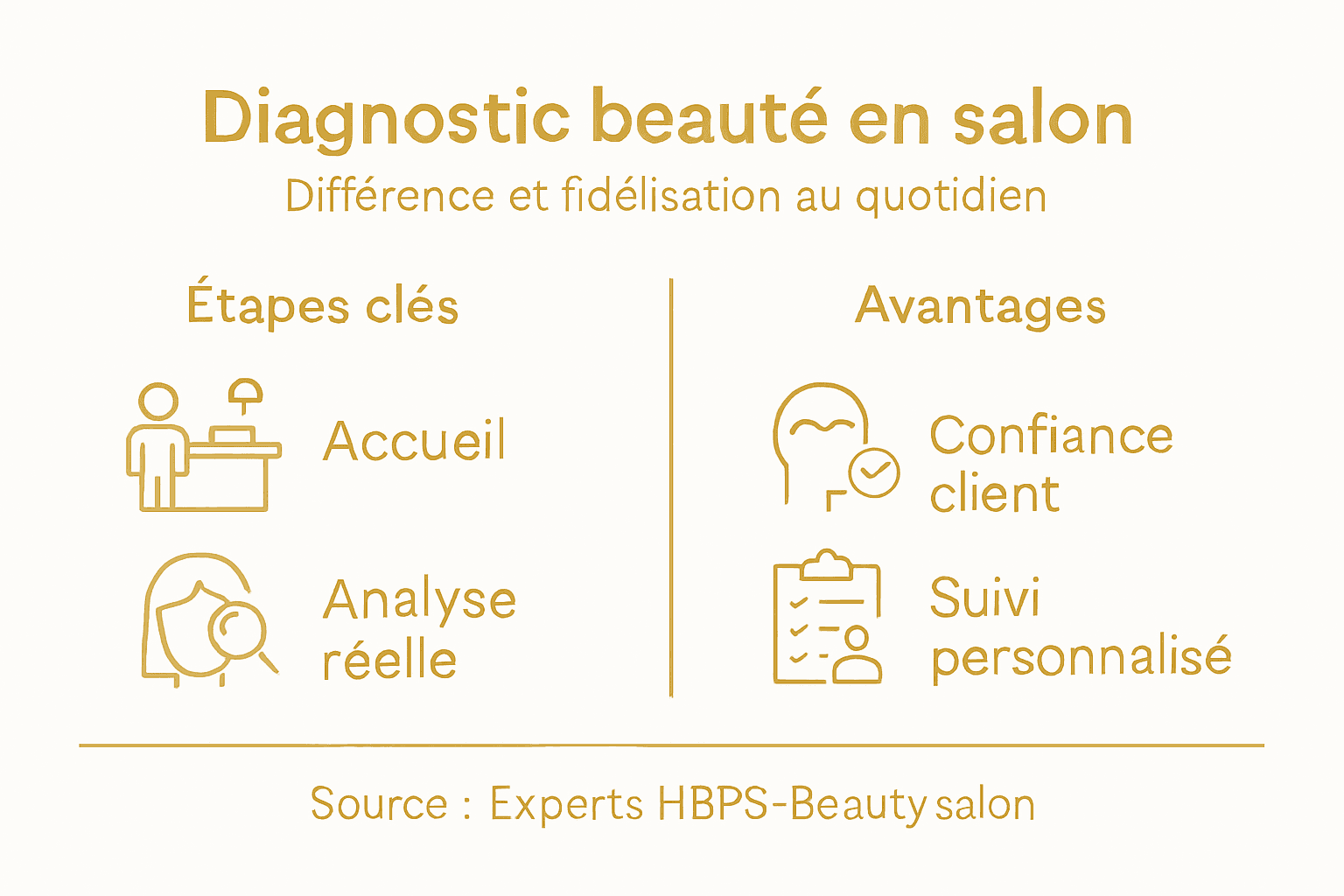
- The different steps and methodologies in the salon
- The welcome: the first crucial step
- Detailed analysis and observation
- Choosing the right treatments
- Execution and documented follow-up
- Personalizing treatments according to the type of assessment
- Adapting treatments to biological characteristics
- Incorporating the client's personal history
- Hair professionals: adapting according to the assessment
- Communicating the reasons for each choice
- Benefits for client retention and experience
- Creating an emotional connection
- Increasing the client portfolio share
- Building a reputation through results
- Increasing long-term retention
- Common mistakes and how to avoid them in practice
- Mistake 1: skipping the assessment step due to lack of time
- Mistake 2: applying the same protocol to all clients
- Mistake 3: neglecting hygiene and safety protocols
- Mistake 4: ignoring the occupational risks of your posture
- Mistake 5: not documenting recommendations
- Mistake 6: making exaggerated promises
Key takeaways
| Point | Details |
|---|---|
| Importance of the assessment | A structured beauty assessment allows you to accurately identify clients' needs and build a lasting relationship of trust. |
| Personalization of treatments | Every client deserves treatments tailored to their skin type and personal history to ensure effective results. |
| Essential documentation | Meticulously documenting assessments and the treatments applied is crucial to ensure precise follow-up and strengthen client loyalty. |
| Active listening | Taking the time to listen to clients' concerns and expectations optimizes the experience and helps formulate relevant recommendations. |
Beauty assessment in the salon: definition and fundamental principles
A beauty assessment in the salon is much more than a simple visual observation. It is a thorough and methodical analysis of the condition of the skin, hair, and the client's overall well-being to offer suitable solutions.
This assessment is based on three fundamental pillars:
- Objective analysis: an in-depth physical examination under appropriate lighting
- Active listening: understanding the client's expectations, concerns, and history
- Professional expertise: using your knowledge to identify real needs
Contrary to what many think, an effective assessment does not consist of selling more products. It is about understanding the client as a whole to build a lasting relationship based on trust.
A well-conducted assessment transforms a one-off purchase into a client relationship lasting several years.
Beauty itself has complex dimensions. Beauty standards vary considerably depending on cultures and social contexts, which means that your role as a professional is to adapt your assessment approach to each client individually.
Why a beauty assessment makes a difference
When a client enters your salon, they bring with them expectations, insecurities, and sometimes inadequate solutions they have already tried. Without an appropriate assessment, you risk offering exactly what they should not.
A structured assessment allows you to:
- Identify real skin problems versus misconceptions
- Detect sensitivities, allergies, or contraindications
- Establish realistic and measurable goals
- Recommend truly relevant products and services
- Document progress for better traceability
When you offer solutions adapted to the real nature of the skin, the client quickly notices tangible results. These results become the foundation of their loyalty.
The key principles of a professional assessment
A professional assessment is based on systematic observation and documentation. You observe the skin type, its thickness, its sensitivity, and its reactivity to different environmental factors.
The assessment must also incorporate the client's personal context:
- Their past dermatological history
- Their lifestyle and daily habits
- Their priority aesthetic concerns
- Their budget and realistic expectations
- Their preferences regarding product textures and formats
Professional expertise allows you to identify not only what the client sees, but also what they do not yet see. Some apparently healthy skin may require specific prevention; other problematic skin may be corrected more easily than we think.
Your assessment is only credible if it is based on systematic observations, not on assumptions.
Pro tip: Create a standardized assessment sheet for each client, including dated reference photos and key observations. This traceability strengthens your credibility and allows for precise follow-up of results over the months.
The different steps and methodologies in the salon
Each salon visit follows a structured process that transforms a simple appointment into a complete diagnostic experience. This methodology ensures that nothing is left to chance and that each client receives truly personalized care.
The welcome: the first crucial step
The welcome is not just a formality. It is the moment when you create a safe and trusting environment so that the client opens up about their real concerns.
The steps of the welcome include:
- Creating a relaxed and professional atmosphere
- Asking open-ended questions about history and habits
- Identifying the client's specific expectations
- Noting priority aesthetic concerns
- Assessing any history of allergies or skin sensitivities
The time invested in this step saves time later and prevents recommendation errors.
Detailed analysis and observation
This is where the real technical work begins. You systematically analyze the skin, hair, and overall appearance under appropriate lighting.
The methodology of aesthetic work in the salon involves a constant quest for authenticity adapted to the client's personal aspirations, not to generic trends.
Your analysis must cover:
- Skin type and hydration level
- Presence of sensitivities, redness, or inflammation
- Skin texture, tone, and firmness
- Imperfections, scars, or visible marks
- Condition of the hair and scalp, if applicable
- Environmental factors affecting appearance
Methodical observation without judgment allows the client to feel understood, not criticized.
Choosing the right treatments
After the assessment, you select the treatments that precisely match the identified needs. It is never a standard protocol applied to everyone.
Personalization takes into account:
- The assessment results
- The client's budget and preferences
- Detected contraindications or sensitivities
- Expected results and timeline
- The client's lifestyle habits that influence results
Each recommended treatment must be justified by your assessment, not by your intention to sell.
Execution and documented follow-up
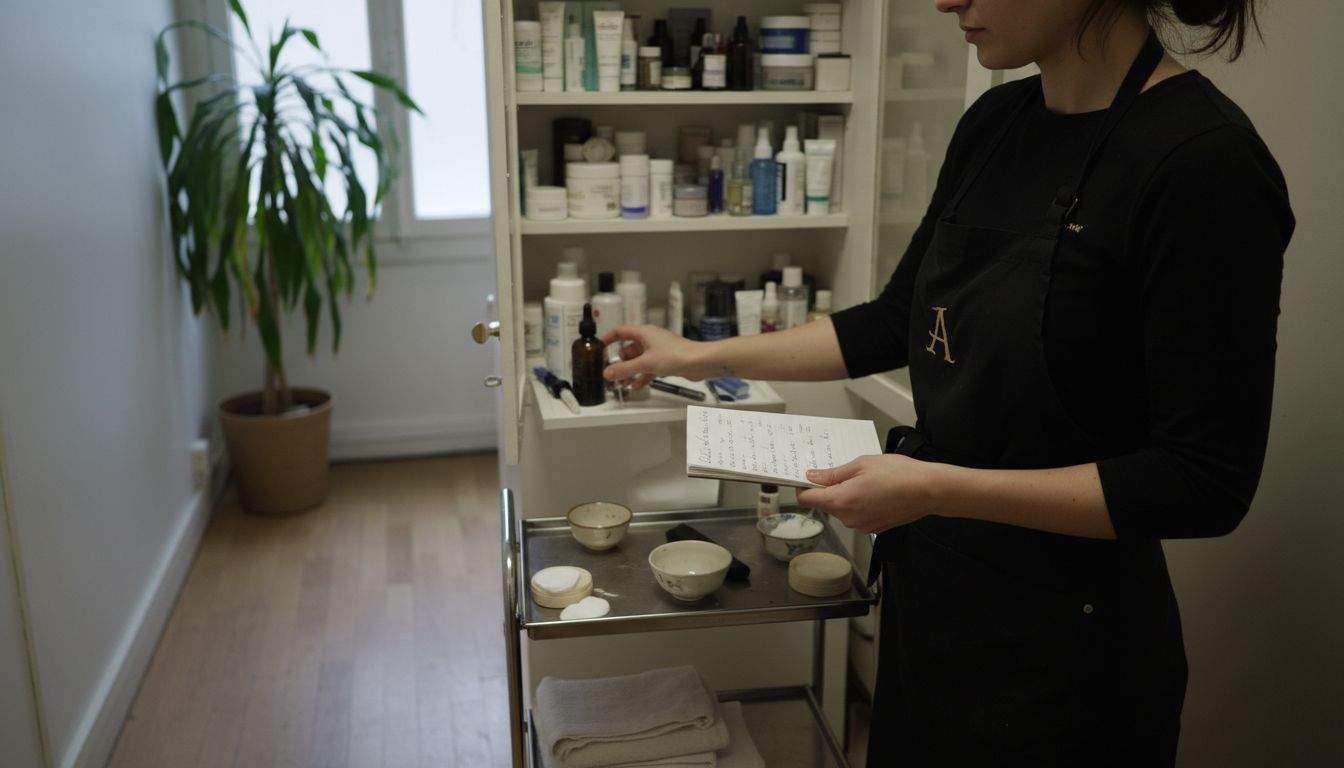
During the treatment, you observe how the skin reacts. Afterward, you document everything: what was done, how the skin reacted, the recommendations given.
This documentation becomes your retention arsenal. At the next visit, you consult these notes to show tangible progress.
Loyal clients are those who see measurable results between visits. Without documentation, these results remain invisible to them.
Pro tip: Discreetly photograph the treated area before and after the treatment (with permission), then show the client the progress at the next appointment. Visual evidence converts occasional clients into loyal clients.
Personalizing treatments according to the type of assessment
Personalization is not a luxury; it is the foundation of a lasting client relationship. Each assessment reveals unique needs that require specific, never standardized, approaches.
Two clients with "oily skin" never receive exactly the same treatments. One may have dehydrated oily skin; the other may have excess sebum production due to stress. The solutions differ completely.
Adapting treatments to biological characteristics
Adapting treatments to skin type, cultural standards, and individual expectations is what transforms a generic service into a custom experience.
Here is how to structure this personalization:
- Dehydrated skin: focus on intense hydration, humectant serums, soothing masks
- Problematic oily skin: prioritize deep cleansing, purifying toners, mattifying treatments
- Sensitive skin: avoid irritating active ingredients, opt for gentle and soothing formulas
- Mature skin: incorporate anti-aging prevention, peptides, antioxidants
- Combination skin: use differentiated protocols by area
Each category requires a precise selection of products and an appropriate treatment duration.
To simplify the choice of treatments in the salon, here is a summary table of recommended adaptations according to different skin types:
| Skin type | Priority goal | Example of targeted treatment |
|---|---|---|
| Oily with acne tendency | Reduce shine, purify | Purifying mattifying treatment |
| Dehydrated | Restore hydration | Deep hydrating mask |
| Mature | Stimulate firmness, anti-aging | Serum with peptides |
| Sensitive | Soothe, limit redness | Gentle fragrance-free treatment |
This guide provides a quick foundation for personalizing each protocol based on the assessment.
Incorporating the client's personal history
The assessment also reveals information invisible at first glance. A stressed client will need a soothing treatment even if their skin appears "normal".
Consider these contextual factors:
- Stress and sleep cycles
- Dietary habits and overall hydration
- Exposure to elements (sun, pollution, air conditioning)
- Preferences regarding textures and fragrances
- Limited budgets or lack of time for a complex routine
- Values (organic, vegan, minimalist)
A client with little time will not benefit from a long and complex protocol. They will quickly give up.
Successful personalization means recommending what works FOR THIS CLIENT, not what works in theory.
Hair professionals: adapting according to the assessment
For hair treatments, the specifics of professional treatments vary considerably depending on the assessment of the scalp and hair fiber.
An oily scalp does not always mean oily hair. Sometimes, sebum overcompensates for local dehydration. Your assessment must distinguish these nuances.
Communicating the reasons for each choice
Never recommend a treatment without explaining it. "You have sensitive skin, so I am using this gentle cleanser" creates immediate credibility.
The client understands that you are truly adapting it for them, not that you are applying a standardized protocol to everyone.
Pro tip: Create a personalized sheet for each client detailing their type of assessment and the recommended treatments with justifications. At each visit, update this sheet to show progress. Clients love seeing that you remember their specifics.
Benefits for client retention and experience
A well-conducted beauty assessment completely transforms the client relationship. It is not just another sale: it is the foundation of a lasting connection based on trust and visible results.
When a client understands that you have taken the time to genuinely analyze their skin instead of applying a generic protocol, their perception of your expertise changes immediately.
Here is a comparison table highlighting the impact of a beauty diagnosis on customer loyalty and the customer experience:
| Aspect | Without a structured diagnosis | With a structured diagnosis |
|---|---|---|
| Visible results | Infrequent, unclear progress | Tracked and demonstrated improvements |
| Customer relationship | Transactional, no connection | Loyal, strong emotional connection, trust |
| Personalization | Generic approach, identical protocol | Tailored treatments and advice |
| Recommendations | Based on intuition or sales | Justified, based on analysis |
This table highlights the crucial role of a diagnosis in differentiating the salon and ensuring lasting customer satisfaction.
Creating an emotional connection
An effective loyalty strategy relies on an emotional connection with the brand and consistent positive experiences, turning clients into enthusiastic ambassadors.
A beauty diagnosis creates this emotional connection by:
- Listening carefully to the client's specific concerns
- Recognizing their uniqueness and particular needs
- Measurable results between visits
- Personalized documentation showing progress
- Honest recommendations, even if they mean fewer immediate sales
When a client feels truly seen, they return. Not out of obligation, but because they want to.
Increasing the client wallet share
Loyalty programs increase the wallet share by strengthening engagement and developing lasting bonds, leading to increased revenue and a better customer experience.
A loyal client buys more, returns regularly, and recommends your salon to their loved ones. It is organic growth without additional marketing effort.
Loyalty generates:
- More frequent visits thanks to tangible results
- Purchases of complementary products recommended with justification
- Additional services discovered during consultations
- Natural referrals to family and friends
- Greater tolerance for legitimate price increases
It costs infinitely less to retain a loyal client than to acquire a new one.
Building a reputation through results
The best advertising is a satisfied client who sees real results. When you document the progress of their skin over three months, this objective proof becomes irresistible to their friends.
Trust in beauty is also built through the quality of the recommended products and demonstrated expertise, which strengthens your credibility with every client.
Every successful diagnosis creates an enthusiastic advocate for your salon. Without a diagnosis, it is just a transactional purchase.
Increasing long-term retention
Clients without a clear diagnosis often drop out after two or three visits. Why? They do not see a logical link between the treatments and the results.
With a structured and documented diagnosis, the client understands exactly why they return: because it works. The results justify every visit.
This long-term retention means stable, predictable, and growing revenue year after year.
Pro tip: Set up a simple follow-up system: before/after photos, notes on progress, and a monthly follow-up showing tangible improvement. Clients love seeing concrete proof. This is what transforms occasional visits into a loyal habit.
Common mistakes and how to avoid them in practice
Even with the best intentions, certain pitfalls constantly reappear in salons. Recognizing and correcting them transforms your beauty diagnosis from a good practice into a real competitive advantage.
Most of these mistakes cost nothing to avoid, but they cost a great deal to ignore.
Mistake 1: Skipping the diagnosis step due to lack of time
This is the most costly. You rush the diagnosis to “save time,” but you end up recommending the wrong thing, the client returns dissatisfied, and you have wasted far more than the time you saved.
Dedicate at least 10 to 15 minutes to the initial diagnosis. Not a minute less. This is the investment that pays dividends.
Mistake 2: Applying the same protocol to all clients
A standardized protocol is a contradiction of a personalized diagnosis. If two clients receive exactly the same treatments, it means the diagnosis did not influence your decision.
The adjustment must be visible: different texture, adapted duration, products varied according to the actual analysis.
Mistake 3: Neglecting hygiene and safety protocols
Common salon mistakes include non-compliance with hygiene rules and poor management of chemicals, risking the health of clients and staff.
Here are the non-negotiable points:
- Correct sterilization of all instruments
- Strict compliance with the usage times of opened products
- Wearing appropriate protection (gloves, masks if necessary)
- Adequate ventilation of the workspace
- Cleaning between each client
These protocols may seem restrictive, but they protect your reputation and your legal liability.
Mistake 4: Ignoring the occupational risks of your posture
Inadequate working postures and prolonged exposure to chemical substances increase occupational risks, affecting your long-term health.
Invest in:
- An adjustable ergonomic stool
- A work surface at the right height
- Less toxic products when possible
- Regular breaks to avoid microtrauma
Your health is your professional capital. Do not sacrifice it.
Mistake 5: Not documenting recommendations
Without notes, you cannot justify your choices at the next visit. The client thinks you are improvising.
Documenting means proving that every decision is based on analysis, not intuition.
Systematically note: type of diagnosis, treatments applied, skin reaction, recommendations given.
Mistake 6: Making exaggerated promises
Beauty does not transform in one visit. An honest diagnosis recognizes realistic timelines: 4 to 8 weeks to see real results.
Promising the impossible destroys your credibility immediately.
Pro tip: Create a diagnostic checklist that you check at each visit: hygiene verified, complete documentation, documented recommendations, realistic goals communicated. This written record protects both your client and your business.
Optimize your Beauty Diagnosis with HBPS-Beauty
The beauty diagnosis in the salon is the key to offering a personalized experience and retaining your clientele long-term. Yet, without the right tools and adapted products, it is difficult to transform a precise analysis into visible and satisfactory results. At HBPS-Beauty.com, we understand these crucial challenges and offer a rigorous selection of professional treatment devices, targeted skincare products, and hair care that respect the specificities revealed by your diagnosis.
Stop wasting time with generic recommendations. Offer your clients the solutions that truly match their skin, their scalp, and their expectations thanks to our trusted brands like Nu Skin or Eternas. Discover how to enrich your practice and guide each client toward a tailored routine by visiting our online store. Take the next step in personalized care on HBPS-Beauty.com and incorporate products today that strengthen your professional expertise and multiply customer loyalty.
Explore our complete range of skincare and hair care products right now to precisely meet the needs identified during your diagnoses. Offer high-quality and visible follow-up, because every skin deserves unique attention.
Frequently Asked Questions
What is a beauty diagnosis in the salon?
A beauty diagnosis in the salon is a complete analysis of the state of the skin, hair, and the client's general well-being, aiming to offer personalized solutions.
Why is it important to perform a beauty diagnosis?
Performing a diagnosis allows you to identify real skin problems, establish achievable goals, and recommend adapted treatments, which fosters a relationship of trust and loyalty with the client.
How can a beauty diagnosis contribute to customer loyalty?
A well-performed diagnosis creates tangible and measurable results that strengthen the client's satisfaction and trust, which encourages them to return to the salon and recommend your services.
What are the key steps of the salon diagnosis process?
The main steps include welcoming the client, a detailed analysis of the skin and hair, the selection of adapted treatments, and a documented follow-up of the results obtained.