

The benefits of skincare layering for hydrated skin
TL;DR:
- Skincare layering involves applying products in a specific order to strengthen the skin barrier and improve hydration. Studies show that it reduces transepidermal water loss by about 12.7% in the first week, significantly increasing hydration. This practice optimizes the synergy between active ingredients and adapts to seasonal needs for visible results over several weeks.
Skincare layering is a technique that involves applying several layers of products in a specific order to maximize their effects on the skin. Popularized by Japanese and Korean beauty routines, this practice is based on sound scientific principles: each layer prepares the skin for the next, enhancing the absorption of active ingredients and strengthening the skin barrier. Recent clinical studies confirm measurable benefits, including a 12.7% reduction in TEWL in the first week and a hydration increase of more than 70%. For dry and combination skin alike, understanding the benefits of skincare layering can dramatically improve the effectiveness of a daily routine.
How does layering improve barrier function and hydration?
TEWL (transepidermal water loss) is the key indicator of skin barrier health. High TEWL means the skin is constantly losing water, causing dryness, discomfort, and sensitivity. Layering acts directly on this mechanism by creating successive layers that retain water in the epidermis.
A four-week clinical study measuring TEWL and hydration using a Corneometer demonstrated that layering skincare products in the right order significantly reduces water loss within the first few days. This reduction is more than cosmetic. It reflects a functional restoration of the skin barrier, protecting the skin from external aggressors over the long term.
The synergy between active ingredients plays a central role in these results. Formulations combining peptides, niacinamide, and plant extracts promote skin repair and protection when applied in successive layers. Each layer creates a favorable environment for the next one to work, which explains why the overall effect far exceeds that of a single product used on its own.
| Indicator | Result observed after layering |
|---|---|
| TEWL (water loss) | Reduction of about 12.7% in the first week |
| Skin hydration | Increase of more than 70% over four weeks |
| Skin microbiome | Increased diversity of beneficial bacteria |
| Skin barrier | Gradual functional restoration |
Pro tip: Measure your hydration levels before and after four weeks of regular layering. Apps like SkinVision or simply taking weekly progress photos can help you track your progress and adjust your products based on actual results.
An often-overlooked benefit relates to the skin microbiome. A 28-day split-face clinical trial showed that layering with suitable complexes increases the diversity of beneficial bacteria and reduces pathogens. A balanced microbiome naturally strengthens the skin’s resistance to irritation and infection.
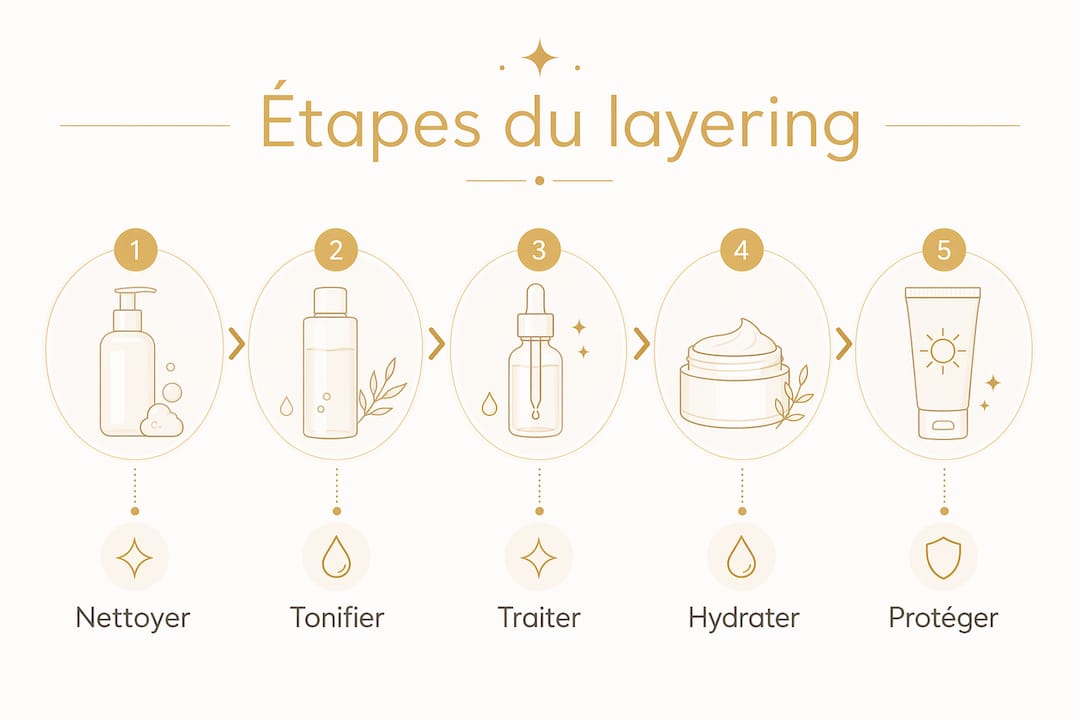
What role does the order of application play in layering?
The order in which products are applied directly affects their effectiveness. The universal rule is based on a simple principle: apply the lightest textures before the thickest, following the sequence of absorption, support, then protection. Texture takes precedence over ingredients when determining the order, because it determines whether a product can penetrate the skin or form a protective film.
Here is the recommended order for a complete routine:
- Cleanser: prepares the skin by removing impurities and excess sebum
- Toner or treatment water: hydrates the skin and balances its pH to optimize the absorption of subsequent steps
- Serum: a concentrated blend of targeted active ingredients (vitamin C, hyaluronic acid, retinol), applied to clean, receptive skin
- Moisturizer: seals in hydration and supports the skin barrier
- Facial oil: a final occlusive layer that locks in all the previous layers
This approach works equally well in the morning and evening, with a few adjustments. The morning routine ends with sun protection of at least SPF 30, applied after moisturizer. The evening routine can include more concentrated active ingredients such as retinol or AHAs, which should be applied to clean skin and are not affected by sun exposure.
Pro tip: Avoid combining vitamin C and niacinamide in the same layer if you have sensitive skin. Apply them at different times (vitamin C in the morning, niacinamide in the evening) to avoid any absorption conflicts and maximize the effects of each.
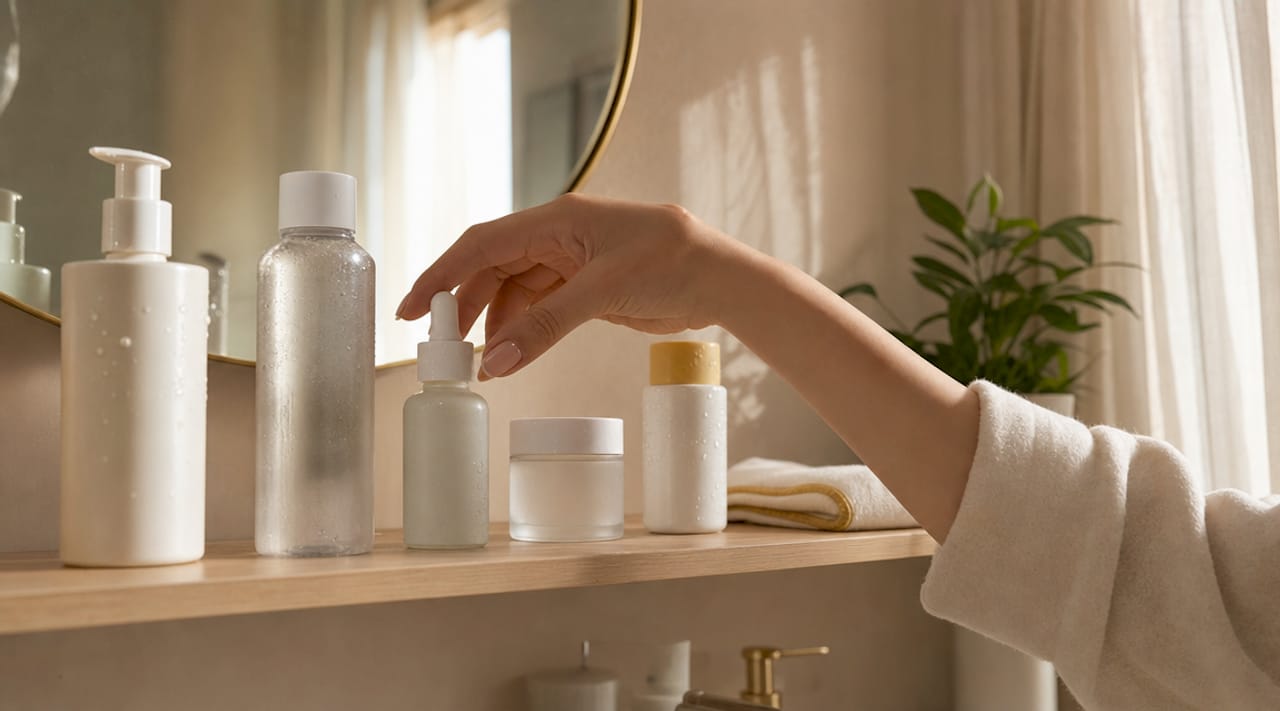
Layering is not about piling on products without any logic. Each layer plays a specific role in overall skin health. Understanding this distinction changes the way you buy and use skincare products.
What are the benefits of layering for dry skin?
Layering for dry skin addresses a specific need: rebuilding and maintaining a compromised skin barrier. Dry skin naturally has higher TEWL, a depleted hydrolipidic film, and a tendency toward tightness and redness. A single moisturizer, however rich, is not enough to address these deficiencies over the long term.
The key products to include in a skincare routine for dry skin using layering are:
- Hyaluronic acid (serum): attracts and retains water in the upper layers of the epidermis
- Ceramides (cream): replenish the intercellular cement and strengthen the lipid barrier
- Shea butter or squalane (oil or balm): a final occlusive layer that prevents water from evaporating
- Niacinamide: reduces water loss and improves the overall texture of dry skin
- Panthenol (provitamin B5): soothes, repairs, and deeply hydrates
Dry skin particularly benefits from a tailored layering strategy that optimizes hydration and comfort. The order matters as much as product selection: applying hyaluronic acid to slightly damp skin, then immediately sealing it in with moisturizer, measurably amplifies its effect.
The link with the microbiome is also relevant for dry skin. A depleted microbiome worsens dryness and sensitivity. Layering with prebiotic active ingredients or fermented complexes helps rebalance this ecosystem, as research on skin microbiome diversity confirms.
How should you adapt your layering routine to the seasons?
Layering should be adjusted to the weather and the skin’s changing needs. A fixed routine used all year produces uneven results. Here is how to make these adjustments in practice.
-
In winter: winter layering strengthens the skin barrier against the cold, wind, and indoor heating, which dries out the air. Add a layer of oil or balm after moisturizer, and choose a serum with a high concentration of hyaluronic acid.
-
In spring and fall: reduce the number of steps if your skin returns to balance. Keep the cleanser, targeted serum, and lightweight moisturizer. Gradually reintroduce exfoliating active ingredients (AHAs, BHAs).
-
In summer: switch to a lighter moisturizer, such as a gel or emulsion. Sunscreen becomes the non-negotiable final layer. Reduce occlusive oils, which can clog pores in hot weather.
-
For sensitive skin: start with no more than two or three steps, then add one layer every two weeks. The clinical effects of layering develop gradually over several weeks. Changing your routine too quickly can lead to unnecessary reactions.
-
For combination or oily skin: focus layering on dry areas (cheeks, eye area) and limit occlusive layers on the T-zone. A mattifying niacinamide serum followed by a gel moisturizer is ideal for this skin type.
Consistency remains the deciding factor. Layering needs to be applied regularly for several weeks before visible, lasting results can be observed. Changing products every two weeks makes it impossible to properly assess their benefits.
Key takeaways
Skincare layering objectively improves skin health through the synergy of its layers, provided you follow the order of textures and stick with the routine for several weeks.
| Key point | Details |
|---|---|
| Reduced TEWL | Layering reduces water loss by about 12.7% in the first week of use. |
| Order based on texture | Applying products from lightest to thickest ensures optimal absorption of each one. |
| Benefits for dry skin | Successive layers of ceramides, hyaluronic acid, and squalane help rebuild the barrier over time. |
| Seasonal adjustments | Lighten your routine in summer and strengthen it in winter, depending on environmental stressors and hydration levels. |
| Patience required | Visible, lasting results appear after several weeks of consistent use. |
What I’ve learned after years of observing skincare routines
The biggest mistake I see repeated is confusing the number of products with the quality of layering. People apply seven or eight layers every morning without understanding what each one does. The result: products that pill and roll off the skin, no absorption, and complete frustration after two weeks.
What really works is understanding what each product is supposed to do, not what it contains. A vitamin C serum is meant to protect and brighten in the morning. Rosehip oil is meant to nourish and repair in the evening. These two products do not belong in the same routine at the same time, regardless of their intrinsic quality.
I’ve also observed that the most damaged skin often belongs to people who have tried too many things too quickly. Introducing one new active ingredient every two weeks, noting any reactions, and making gradual adjustments: this is the discipline that truly transforms skin over six months. There are only a few proven skincare essentials. Mastering four well-chosen products will always outperform a collection of twenty products used incorrectly.
Layering is not a trend. It is a method. And like any method, it requires learning, consistency, and the ability to listen to your skin rather than algorithms.
— JSCC
Strengthen your routine with Hbps-beauty skincare
Hbps-beauty offers products selected for their compatibility with a layered skincare routine, particularly for dry and mature skin. The Beauty Focus MultiBeauty Pharmanex range combines biomimetic active ingredients designed to work in synergy as part of a layered routine, supporting hydration and the skin barrier while delivering anti-aging benefits in a formula designed to fit easily between serum and moisturizer.
Whether you are starting your first layering routine or looking to optimize an existing one, the tailored skincare advice available on Hbps-beauty can guide you toward the products best suited to your skin type and goals.
FAQ
What exactly is skincare layering?
Skincare layering is the technique of applying several skincare products in a specific order, from lightest to thickest, to maximize the absorption of active ingredients and strengthen the skin barrier. This method, rooted in Japanese and Korean beauty routines, is based on the synergy between layers.
How many steps do you need for an effective layering routine?
A three- to five-step routine is enough for most skin types: cleanser, serum, moisturizer, and sunscreen in the morning. Dry skin may benefit from adding an oil or balm as the final layer to boost the occlusive effect.
Is layering suitable for sensitive skin?
Yes, as long as you start gradually with two or three products and introduce one new active ingredient every two weeks. The effects of layering develop over several weeks, so patience and careful observation of your skin’s reactions are essential.
Why is the order of products so important?
The order, based on texture and function, determines whether each product can penetrate properly or form the intended protective film. Applying an oil before a water-based serum blocks the serum’s absorption entirely.
Does layering really improve dry skin?
Clinical data confirm that hydration increases by more than 70% after four weeks of regular layering on dry skin. Active ingredients such as ceramides, hyaluronic acid, and squalane, applied in successive layers, help rebuild the compromised skin barrier over time.