

Master at-home hairstyling tips in 2026
Achieving successful at-home hairstyles requires selecting tools and products suited to your hair type. Regular use of a heat protectant spray can reduce hair damage by 70%, highlighting the importance of being properly equipped. This article guides you through the selection criteria, the best devices of 2026, effective techniques, and essential products to protect your hair while achieving professional results at home.
Table of Contents
- Criteria for choosing your at-home styling tools and products
- The best at-home styling tools in 2026
- Simple and effective techniques for successful at-home hairstyles
- Essential hair products for optimal at-home care
- Hair care tips related to at-home styling
- Comparison table of at-home styling tips
- Which tip for which need? Guide to choosing your at-home styling method
- Discover our exclusive beauty and perfume sets
- Frequently Asked Questions
Key Points
| Point | Details |
|---|---|
| Personalized adaptation | Choose tools and products according to your hair type for optimal results. |
| Protective technology | Ceramic or steam devices significantly limit heat damage. |
| Accessible techniques | Master blowouts and protective braids for stylish hairstyles without damaging your hair. |
| Heat protection | Always apply a heat protectant spray before any heat styling. |
| Regular hydration | Incorporate moisturizing treatments into your routine to maintain hair health. |
Criteria for choosing your at-home styling tools and products
Choosing the right tools begins with understanding your hair type. Fine hair requires devices at moderate and low temperatures, while thick hair benefits from more powerful tools with precise heat control. Curly or coily hair requires specific accessories that respect its natural structure without creating excessive frizz.
The quality and technology of devices directly influence the health of your hair. Ceramic plates distribute heat evenly, avoiding hot spots that burn strands. Steam technology hydrates during styling, reducing dryness caused by heat. Ionic devices eliminate static electricity for a smooth and shiny result.
Protective products are your first line of defense against damage. Look for formulas enriched with proteins and natural oils that create a heat barrier. Check that your products suit your hair texture, as hydration needs vary considerably between straight and curly hair.
Pro tip: Invest in a quality multifunctional device rather than several low-end tools; you will save money while achieving better results.
Here are the essential criteria to consider:
- Realistic budget including tools and regular maintenance products
- Ease of use with an ergonomic handle and balanced weight
- Durability with at least a 2-year manufacturer warranty
- Versatility to create several styles with a single device
- Compatibility with your favorite 2026 styling accessories
Also evaluate the heating speed and adjustable temperature options. A good device reaches its optimal temperature in less than 60 seconds and offers at least three heat levels. The automatic shut-off function adds safety and peace of mind, especially if you style your hair daily.
The best at-home styling tools in 2026
The choice between a ceramic flat iron and a steam iron depends on your hair goals. The ceramic flat iron reduces damage by up to 50% compared to standard materials, offering consistent heat ideal for all hair types. The steam iron incorporates hydration during straightening, which is particularly beneficial for dry or damaged hair that requires extra care.
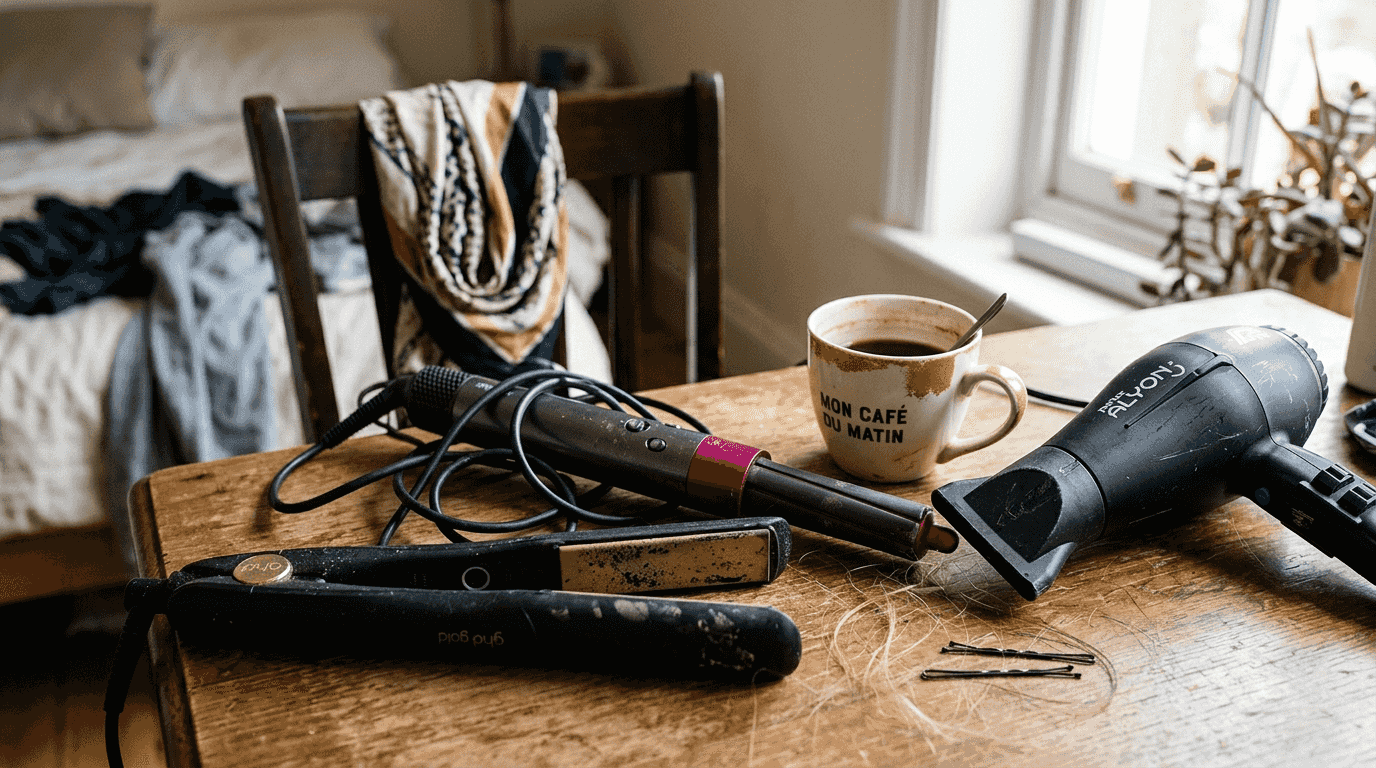
Multifunctional devices are revolutionizing at-home styling in 2026. A single tool combines a curler, flat iron, and heated brush with interchangeable heads. This versatility reduces clutter in your bathroom and simplifies your morning routine. Look for models with automatic temperature adjustment according to the accessory used.
Brushes deserve special attention in your hair arsenal. Natural bristles distribute the oils from the scalp throughout the hair, creating natural shine and protection. Plastic brushes are better suited for wet hair and quick detangling, but lack the nourishing benefits of natural fibers.
Pro tip: Alternate between a natural bristle brush in the evening to nourish and a detangling brush in the morning to save time without breaking your hair.
Here is a comparison of the essential tools:
| Tool | Advantages | Hair type | Average price |
|---|---|---|---|
| Ceramic iron | Even heat, durability | All types | €60-120 |
| Steam iron | Built-in hydration, shine | Dry, damaged | €80-150 |
| Multifunctional | Versatility, space-saving | All types | €100-200 |
| Natural brush | Shine, oil distribution | Normal, thick | €20-50 |
| Ionic hair dryer | Anti-frizz, fast drying | All types | €70-180 |
The benefits of professional styling devices include more powerful motors and higher-quality materials that last for years. If your budget allows, choose reputable brands that offer reliable after-sales service. Check our professional hair dryer comparison to deepen your knowledge.
Accessories suited to your hair morphology make all the difference. Wide clips are suitable for thick hair, while small clips hold fine hair better. Metal-free elastics prevent breakage, and satin bonnets protect your hairstyles during sleep.
Simple and effective techniques for successful at-home hairstyles
Blowouts remain the most versatile technique for achieving volume and movement. Start with clean, slightly damp hair, and apply your heat protectant generously. Divide your hair into sections of no more than 5 cm for optimal control. Direct the air from the hair dryer from the roots to the ends while following the round brush; this method closes the cuticles for maximum shine.
Protective braids are an ideal solution for curly or coily hair that needs a break between heat styling sessions. French, Dutch, or African braids maintain natural hydration while creating soft waves when detangled. This approach reduces hair breakage by 25% according to hair experts.
Online tutorials speed up your learning of advanced techniques. Look for creators specializing in your hair type who explain each step clearly. Practice one new technique per week to gradually build your skills without frustration.
Pro tip: Film yourself during your first attempts to identify your positioning errors and quickly adjust your technique.
Here are the steps for a successful styling:
- Wash and gently detangle your hair with a wide-tooth comb
- Apply heat protection to damp hair, focusing on the lengths and ends
- Dry three-quarters of the way naturally or with a hair dryer on a low temperature
- Divide into logical sections according to the desired hairstyle
- Style section by section using the appropriate temperature
- Let cool completely before touching or brushing
- Set with a light product suited to your final style
Our successful at-home styling guide details these methods with practical illustrations. To learn more about the professional hair styling steps, check out our specialized resources that will transform your daily routine.
Heat management requires discipline and patience. Always wait 48 hours between two intensive heat styling sessions to allow your hair to recover. Incorporate heatless hairstyles such as buns, low ponytails, or decorative accessories into your weekly rotation. This alternation preserves the integrity of your hair fibers while maintaining an impeccable style.
Essential hair products for optimal at-home care
Heat protectant sprays represent the most important investment in your styling routine. Using a heat protectant spray reduces damage by 70% related to excessive heat. Look for formulas containing lightweight silicones or protective polymers that create a barrier without weighing hair down. Spray generously from a distance of 15 cm onto damp hair before any drying.
Moisturizing shampoos must correspond precisely to your hair type. Fine hair benefits from volumizing formulas without harsh sulfates. Thick hair requires creamy shampoos enriched with nourishing oils. Color-treated hair requires specific products that preserve pigments while deeply hydrating.
Nourishing oils and serums provide exceptional shine and softness. Argan oil is suitable for all hair types thanks to its light texture. Coconut oil penetrates deeply to repair structural damage. Silicone-based serums instantly smooth the cuticles for an immediate mirror effect. Apply a few drops to the lengths and ends, never to the roots to avoid a greasy effect.
Suitable anti-frizz products transform rebellious hair into disciplined tresses. Styling creams offer long-lasting control without artificial stiffness. Volumizing mousses add body and hold to fine hair. Gels define natural curls without a cardboard effect if applied in moderation.
Here is your essential hair shopping list:
- High-performance heat protectant spray resistant up to 230°C
- Shampoo and conditioner suited to your specific texture
- Repairing oil or serum for daily application
- Weekly moisturizing mask for intensive treatment
- Styling product according to preferred style with adjustable hold
Our effective hair care routine incorporates these products into a coherent system that maximizes their benefits. Discover the benefits of at-home hair care to understand how these products work together.
The frequency of application varies according to your individual needs. Normal hair tolerates washing every two days with weekly treatment. Dry hair benefits from spacing out washes by three days with daily oil. Adjust your routine according to your scalp's reactions and the appearance of your lengths.
Hair care tips related to at-home styling
Incorporating regular breaks between heat styling sessions is the most effective strategy for maintaining healthy hair. Taking breaks between styling sessions reduces breakage by 25% according to specialized dermatologists. Plan at least two days a week without direct heat, favoring natural hairstyles or decorative accessories that style without damaging.
Avoiding repeated overheating requires vigilance and knowledge of your hair's limits. Always respect the recommended temperature for your hair type without giving in to the temptation to increase it for faster results. This impatience damages the internal protein structure, creating fragility and irreversible breakage. Invest in a device with a digital temperature display to eliminate dangerous approximations.
Regularly hydrating your hair compensates for the dehydration caused by repeated styling. Apply a nourishing mask every week, leaving it on for a minimum of 20 minutes under gentle heat for optimal penetration. Drink enough water daily because hydration starts from within. Complement with a thermal water mister between washes to instantly refresh and rehydrate.
Suitable accessories considerably reduce the nighttime friction responsible for many breakages. Replace your cotton pillowcase with a satin or silk version that glides without snagging. Tie your long hair in a loose braid or very loose high bun during sleep. Avoid tight elastics that create pressure points and permanent marks.
Pro tip: Invest in a satin sleep cap if you move a lot during your sleep; this complete protection preserves your hairstyles and reduces morning tangles.
Recommended daily care practices:
- Brush gently morning and evening with a suitable brush
- Always rinse with lukewarm water, never hot
- Squeeze out water without rubbing with an absorbent microfiber towel
- Detangle from ends to roots to limit breakage
- Cut ends every 3 months to eliminate split ends
To optimize your hair care routine, establish a weekly calendar including hair rest days. This systematic organization ensures that you never forget the essential steps while maintaining flexibility according to your schedule.
Respect the appropriate temperature according to your specific texture to avoid cumulative heat damage. Fine hair cannot withstand more than 180°C, while very thick hair tolerates up to 200°C maximum. Always start at a low temperature and increase gradually only if necessary to achieve the desired result.
Comparison table of at-home styling tips
This table summarizes the main characteristics of the different approaches to facilitate your decision according to your personal priorities.
| Criterion | Ceramic iron | Steam iron | Multifunctional | Natural brushes | Heatless techniques |
|---|---|---|---|---|---|
| Performance | Excellent | Very good | Good to excellent | Good | Average |
| Initial cost | €60-120 | €80-150 | €100-200 | €20-50 | €0-30 |
| Versatility | Average | Average | Very high | High | Very high |
| Fine hair | Excellent | Good | Excellent | Excellent | Excellent |
| Thick hair | Good | Excellent | Good | Good | Average |
| Damaged hair | Average | Excellent | Good | Excellent | Excellent |
| Maintenance | Low | Medium | Medium | Low | None |
| Durability | 3-5 years | 2-4 years | 2-4 years | 1-3 years | Unlimited |
| Time required | 15-30 min | 15-30 min | 10-25 min | 10-20 min | 30-60 min |
| Health impact | Medium | Low | Medium | Very low | None |
| Learning curve | Medium | Medium | Low | Very low | Medium |
Analyze this table based on your budget constraints, available time, and hair goals. Higher initial investments are justified by superior durability and consistent professional results. Budget-friendly solutions are perfect for beginners exploring different styles before making a significant financial commitment.
The versatility of multi-function devices particularly appeals to users seeking styling variety without cluttering their space. This flexibility justifies a slightly higher price for those who like to change their look regularly. Purists prefer specialized tools offering optimal performance in their specific area.
The impact on hair health must remain a priority in your thinking. The savings made on a low-end device quickly turn into hair repair expenses at the hairdresser. Always prioritize quality and adequate heat protection to preserve your hair capital in the long term.
Which tip for which need? Guide to choosing your at-home styling method
For fine hair lacking volume, prioritize heated round brushes and lightweight volumizing mousses. Dry upside down to create natural lift at the roots. Avoid heavy oils that weigh hair down, preferring texturizing sprays that add body without greasing. Small-diameter irons create tight curls that give the illusion of greater density.
Curly or coily hair requires a specialized approach that respects its helical structure. The plopping method with a microfiber t-shirt naturally defines curls without frizz. Diffusers designed for hair dryers preserve the curl pattern while speeding up drying. Always apply products to very damp hair for even distribution and maximum definition.
For damaged hair requiring reconstruction, drastically limit heat exposure during the recovery phase. Focus efforts on weekly protein masks and regular cuts to remove split ends. When heat styling becomes essential, use the lowest temperature with enhanced heat protection and reduced exposure time.
Pro tip: Alternate weeks of intensive heat-free care with weeks of moderate styling to allow your hair to recover while maintaining a satisfying style.
Budget-friendly solutions for small budgets:
- Prioritize a mid-range multi-function iron rather than several low-end tools
- Make your own masks with affordable natural ingredients
- Invest in an excellent brush that will last for years
- Learn free heatless techniques via online tutorials
- Buy professional products in large sizes for the best value for money
Protective techniques are particularly suitable for people looking to preserve hair length and health. Braids, twists, and protective buns maintain natural hydration while creating elegant styles. These methods reduce daily manipulation responsible for mechanical breakage. Renew them every two weeks to avoid sebum buildup and excessive tension on the roots.
For a time-saving morning routine, prepare your hair the day before with overnight techniques. Damp braids create natural waves upon waking. A Bantu bun produces defined curls without heat. Foam rollers generate volume and movement during sleep. These strategies free up 20-30 valuable minutes every morning while protecting your hair.
Discover our exclusive beauty sets and perfumes
After mastering the art of at-home styling, complete your beauty routine with our exclusive selections of high-end perfumes and sets. Our store offers iconic fragrances that enhance your daily style with elegance and refinement.
Discover our Paco Rabanne 1 Million set, which combines sophistication and character for a noticeable presence. For lovers of dynamic freshness, our Paco Rabanne Invictus set offers power and vitality. Complete your collection with Invictus Paco Rabanne eau de toilette in a generous size for daily use.
Our special 2026 offers include fast delivery and personalized advice to guide you toward perfumes that perfectly match your personality. Enjoy competitive prices on major international brands and transform your beauty ritual into a complete sensory experience.
Frequently Asked Questions
What are the common mistakes to avoid when styling hair at home?
Never applying heat without prior heat protection remains the most damaging mistake. This negligence directly exposes keratin to destructive temperatures, causing breakage and extreme dryness. Using a temperature that is too high and unsuitable for your hair type is the second common mistake, especially on fine hair that burns quickly. Styling without taking repeated breaks gradually weakens the hair fiber until it breaks. Finally, neglecting detangling before styling creates knots and snags that pull out hair during the process.
How do I choose the right temperature for heated tools according to my hair type?
Fine hair requires gentle temperatures between 150 and 180°C to avoid instantly burning its delicate structure. Normal hair tolerates 180 to 190°C, offering a good balance between effectiveness and protection. Thick or very resistant hair requires 180 to 200°C to achieve satisfactory results without multiple passes. Always adjust according to your personal sensitivity and reduce it if you notice a burning smell or rough texture after styling.
Which products are essential to protect my hair before heat styling?
A quality heat-protective spray compatible with all hair types is the absolute priority investment. Look for formulas resistant to at least 230°C with nourishing ingredients such as panthenol or silk proteins. Nourishing serums applied before heat protection strengthen the hair fiber from within, creating a double barrier against thermal damage. Complete with a detangling conditioner that facilitates the gliding of tools and reduces mechanical friction during styling.