

Best face sunscreens: guide by skin type
For most skin types, La Roche-Posay Anthelios UVMune 400 Invisible Fluid SPF 50+ remains the most reliable benchmark in French pharmacies: verified SPF, broad-spectrum protection including ultra-long UVA rays, a fragrance-free fluid texture, and an affordable price for 50 ml. It is the starting point of this selection.
Depending on your skin type and usage, here are the standout options:
- Sensitive skin: Avène Ultra Fluid Invisible SPF 50 (TriasorB, fragrance-free, water-resistant, bare-skin finish) or Lancaster Sun Beauty Sensitive Skin SPF 50 (100% mineral, highly tolerant)
- Oily / acne-prone skin: Beauty of Joseon Relief Sun SPF 50+ PA++++ (lightweight texture, niacinamide, non-comedogenic, oxybenzone-free)
- Dry / mature skin: RoC Soleil Protect Smoothing Anti-Aging Fluid SPF 50+ (built-in anti-wrinkle treatment, lightweight texture) or COSRX Aloe Vera SPF 50+ PA+++ (aloe vera, glycerin, intense hydration)
- On-the-go / reapplication: La Rosée Sun Stick SPF 50 (organic apricot oil, biodegradable, water-resistant) or Embryolisse Sun Stick SPF 50+ PA++++ (shea butter, invisible finish)
- K-beauty: Beauty of Joseon or COSRX, both available in France and highly praised for their texture and tolerance
| Product | Best for | SPF | Filter | Finish | Compatible skin | Water resistance | Approximate price |
|---|---|---|---|---|---|---|---|
| La Roche-Posay Anthelios UVMune 400 | Universal daily use | 50+ | Chemical (Mexoryl 400) | Invisible fluid | Sensitive, combination | Yes | affordable price in pharmacy for 50 ml |
| Avène Ultra Fluid Invisible | Sensitive / reactive skin | 50 | Chemical (TriasorB) | Bare skin, light matte | Sensitive, combination | Yes | usual pharmacy price |
| Beauty of Joseon Relief Sun | Oily / acne-prone skin | 50+ PA++++ | Chemical | Lightweight, hydrating | Oily, acne-prone, sensitive | Not specified | usual pharmacy price |
| RoC Soleil Protect Anti-Aging Fluid | Mature skin / anti-wrinkle | 50+ | Chemical | Ultra-lightweight | All skin types, sensitive | Not specified | usual pharmacy price |
| COSRX Aloe Vera Sunscreen | Dry / dehydrated skin | 50+ PA+++ | Mineral | Light cream | Dry, sensitive | Not specified | usual pharmacy price |
| La Rosée Sun Stick | On-the-go / reapplication | 50 | Chemical (clean) | Invisible stick | All skin types | Yes | usual pharmacy price |
| Embryolisse Sun Stick | Sensitive areas / on-the-go | 50+ PA++++ | Chemical | Invisible, non-greasy | All skin types | Not specified | usual pharmacy price |
| SVR Sun Secure Cicavit+ | Irritated / damaged skin | 50+ | Mixed | Invisible | Sensitive, reactive | Not specified | usual pharmacy price |
Table of Contents
- Why does your face deserve dedicated sun protection?
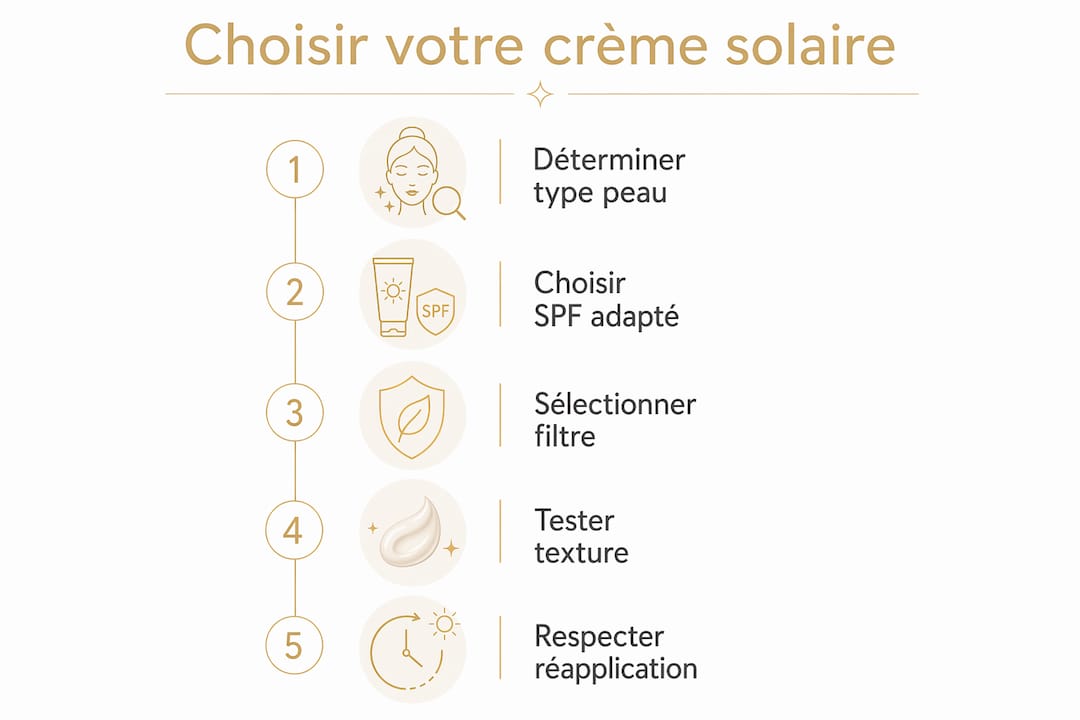
- How to choose your face sunscreen: practical checklist
- What are the best face sunscreens available in France?
- Ingredients, risks, and guidelines for choosing with confidence
- How to correctly apply your face sunscreen?
- Which product to choose in practice?
- Key points
- Hbps-beauty: your selection of face sunscreens in one click
- Useful sources for more information
Why does your face deserve dedicated sun protection?
The face receives a cumulative sun exposure far greater than the rest of the body, in summer and winter. UVA rays penetrate deep into the dermis and break down collagen, leading to wrinkles, sagging, and brown spots long before they should. UVB rays, meanwhile, burn and damage cellular DNA. Blue light (HEV) adds to this: it accelerates photoaging and worsens pigment spots, particularly on darker skin.
A body sunscreen is not formulated for the face. The textures are thicker, often comedogenic, and rarely compatible with makeup. Face formulas are designed for thinner, more reactive skin, with invisible or mattifying finishes and well-tolerated active ingredients.
Key takeaway: applying a face sunscreen daily, even on cloudy days, is the most documented and least expensive anti-aging measure there is. Daily sun protection protects against both visible damage and invisible alterations that accumulate over the years.
The essential points to understand:
- UVA rays pass through glass and clouds: protection is useful all year round, not just in summer.
- Blue light from screens can contribute to brown spots on darker skin.
- A sunscreen does not block tanning: it allows for more even pigmentation and protects against damage.
- Fair, reactive skin, or skin undergoing dermatological treatment (retinoids, acids), is particularly vulnerable.
How to choose your face sunscreen: practical checklist

Which SPF to choose according to your phototype?
Dermatologists recommend SPF 50+ for fair, reactive skin, or during prolonged exposure, especially because the displayed ratings can be optimistic. SPF 30 is sufficient for short daily exposure on darker skin, but as soon as you spend time outdoors or have a history of spots, 50+ is essential.
Mineral, chemical, or mixed filters: which to choose?
Mineral filters (zinc oxide, titanium dioxide) reflect UV rays. They are well tolerated by sensitive skin and children, but can leave a white cast on darker skin. Chemical filters absorb UV rays and offer more fluid and invisible textures. Some new-generation filters like Mexoryl 400 (La Roche-Posay) or TriasorB (Avène) extend protection to ultra-long UVA rays and blue light, which is particularly useful for preventing brown spots. Mixed formulas combine both approaches.
Texture and finish according to your skin type
- Oily or combination skin: favor a mattifying or "bare skin" finish, fluid or serum texture, and a non-comedogenic label.
- Dry or mature skin: opt for a hydrating or anti-aging formula, with hyaluronic acid or nourishing active ingredients.
- Sensitive skin: fragrance-free, alcohol-free, hypoallergenic, tested under dermatological control.
- Under makeup: fluid or invisible texture, fast-drying, non-greasy finish.
Pro tip: for oily skin, a stick or fluid with a matte finish makes reapplication during the day easier without ruining foundation.
5-point purchase checklist
- SPF 50+ and broad spectrum (UVA mention in a circle or PA+++ minimum).
- Texture adapted to your skin type (fluid, cream, stick, mist).
- Fragrance-free if skin is sensitive or reactive.
- Non-comedogenic if skin is acne-prone.
- Independent tests available: check if the product appears in UFC-Que Choisir or RecoMédicales comparisons before buying.
What are the best face sunscreens available in France?
Inclusion criteria for this selection
Each product selected here meets three conditions: verified SPF or consistent with independent test data, confirmed availability in France (pharmacies, parapharmacies, e-commerce), and documented tolerance for at least one specific skin type. RecoMédicales in vitro tests show that several measured SPFs vary from 4 to 77 depending on the product: this is why the selection favors brands with established laboratory consistency.
Quick sheets
La Roche-Posay Anthelios UVMune 400 Invisible Fluid SPF 50+ Most cited pharmacy benchmark in 2026 comparisons. The Mexoryl 400 filter covers ultra-long UVA rays, the texture is fluid and fragrance-free. Suitable for sensitive skin and skin prone to sun intolerances. Affordable price in pharmacy for 50 ml.
Avène Ultra Fluid Invisible SPF 50 TriasorB protects up to HEV blue light, making it a serious option for spot prevention. Water-resistant, fragrance-free, hydrates for up to 4 hours. Immediately reduces shine, ideal as a makeup base.
Beauty of Joseon Relief Sun SPF 50+ PA++++ Very popular K-beauty benchmark in France. Niacinamide evens out the complexion, probiotics and rice extract maintain hydration. Oxybenzone and octinoxate-free, suitable for sensitive and acne-prone skin. Lightweight texture that leaves no white traces.
COSRX Aloe Vera Sunscreen SPF 50+ PA+++ Mineral formula with aloe vera and glycerin. Lightweight cream texture, quickly absorbed, without a greasy finish. Can be used on the face and body, particularly suited for dry or dehydrated skin.
RoC Soleil Protect Smoothing Anti-Aging Fluid SPF 50+ Visibly reduces wrinkles while protecting. Texture as light as a daily moisturizer, without white traces. Suitable for all skin types, including sensitive. Good choice for mature skin that wants to combine protection and anti-aging care.
La Rosée Sun Stick SPF 50 100% natural origin base, clean organic filters, highly biodegradable and water-resistant. Nourishes thanks to organic apricot oil. Practical on-the-go format for outdoor reapplication.
Embryolisse Sun Stick SPF 50+ PA++++ Enriched with antioxidant marula oil and shea butter. Invisible, non-greasy, non-sticky finish. Protects sensitive areas like scars, moles, and tattoos.
SVR Sun Secure Cicavit+ SPF 50+ Formula designed for damaged or irritated skin, with an antioxidant complex targeting visible light and infrared in addition to UV. Accelerates skin repair according to the brand.
Special face formulas can cost 2 to 7 times more than a body sunscreen without systematically offering superiority. It is better to target a benchmark whose SPF is verified than to pay for premium packaging.
Ingredients, risks, and guidelines for choosing with confidence
What independent tests reveal
More than a third of tested face sunscreens do not hold the announced SPF level according to 2026 panels. This gap between display and actual measurement is documented by UFC-Que Choisir and by RecoMédicales, which publish tables of in vitro measured SPF. Some products announced as SPF 50+ measure 30 to 40 in the laboratory; others exceed the displayed index. The practical lesson: high price does not guarantee performance.
UV filters to know
- Mexoryl 400 (La Roche-Posay): covers ultra-long UVA rays, proprietary technology.
- TriasorB (Avène): broad spectrum extended to HEV blue light, relevant for brown spots.
- Zinc oxide: versatile mineral filter, well tolerated, present in clean and organic formulas.
- Classic organic filters (Tinosorb S, Uvinul A Plus): effective, lightweight textures, approved by EU regulations.
Ingredients to watch out for
- Fragrance and allergens: a sunscreen can contain up to 4 declared allergens without being banned, but it is a warning sign for reactive skin. Check the INCI list.
- Oxybenzone and octinoxate: controversial filters for their marine impact and potential endocrine disruption. Some brands (Beauty of Joseon, La Rosée) explicitly exclude them.
- Denatured alcohol at the top of the INCI list: can dry out and irritate sensitive skin.
How to verify the reliability of a product
- Search for the product in the UFC-Que Choisir or RecoMédicales databases before buying.
- Check the expiration date after opening (PAO): a sunscreen opened for more than 12 months loses efficiency.
- The "broad spectrum" mention and the UVA logo in a circle are reliable EU regulatory markers.
- "Tested under dermatological control" is a useful but unregulated mention: it does not replace an independent SPF test.
How to correctly apply your face sunscreen?
The method matters as much as the product. An application that is too thin transforms an announced SPF 50 into protection close to SPF 30 or even less: the quantity reduces protection exponentially.
4-step protocol
- Dosage: apply one level teaspoon of product to cover the face and neck. This is more than what most people spontaneously use.
- Timing: apply 15 to 20 minutes before exposure, after your moisturizer and before makeup.
- Reapplication: every 2 hours in full sun, immediately after swimming or heavy sweating.
- Forgotten areas: temples, eye contour, neck, ears, lips if no SPF lip stick.
Under makeup and on the go
- Favor a fluid or serum texture for fast drying and good foundation adherence.
- For reapplication over makeup, a stick or SPF mist resistant to water is much more practical than a cream.
- On a trip or prolonged outdoor time, slip a stick in your bag: La Rosée and Embryolisse are both compact and resistant.
Pro tip: if you wear foundation with SPF, don't rely on it as your main protection. The amount applied is always insufficient to achieve the stated SPF. Always apply your sunscreen underneath.
The principles of sun care recommend incorporating this step into your morning routine as a reflex, just like cleansing or moisturizing.
Which product to choose in practice?
The main recommendation remains La Roche-Posay Anthelios UVMune 400 for its verified SPF, documented tolerance, and affordable price in pharmacies. For oily or acne-prone skin, Beauty of Joseon Relief Sun offers a texture that few European formulas can match at this price. Dry or mature skin will benefit more from RoC Soleil Protect Anti-Aging or COSRX Aloe Vera.
A few pointers to finalize your choice:
- Check availability and prices on French parapharmacy websites, in pharmacies, or on Hbps-beauty.com.
- If your skin is reactive, start with a sample or a smaller size before investing in a full-size product.
- Switch products if you notice comedones, redness, or persistent discomfort after 2 weeks of use.
- Consult a dermatologist if you have a history of sun allergy or drug-induced photosensitivity.
Key points
The most effective face sun protection combines an SPF 50+ verified by independent tests, a texture suited to your skin type, and application in a sufficient quantity every morning.
| Point | Details |
|---|---|
| Recommended SPF 50+ | Opt for SPF 50+ for fair, reactive skin or prolonged exposure; the stated SPFs can be optimistic. |
| Decisive quantity | One level teaspoon for the face and neck is the standard dose; applying too thinly cuts the actual protection in half. |
| Broad spectrum and tolerance | Check for the UVA circle and prefer fragrance-free for sensitive skin. |
| Independent tests | More than a third of the face creams tested do not maintain their stated SPF; consult UFC-Que Choisir or RecoMédicales. |
| Hbps-beauty | Offers a selection of face sunscreens available in France, including options for sensitive and mature skin. |
What this selection really says about the face sunscreen market
The face sunscreen market suffers from a paradox: the more expensive and beautifully packaged a product is, the more likely it is to be under-dosed by its user, who tries to make the bottle last. Result: the actual protection is often well below what the stated SPF lets you hope for. The tests by RecoMédicales and UFC-Que Choisir confirm this year after year.
What strikes me about this selection is that the best performance does not systematically come from the most premium brands. La Roche-Posay Anthelios keeps its promises at €17.50. Beauty of Joseon, arriving from Korea, outperforms French references twice as expensive in texture. The real variable is consistency in the laboratory, not the price.
The other blind spot of the market: reapplication. Almost no one does it in real conditions. A portable stick in your bag solves this problem better than any SPF 100 applied once in the morning. It is a usage detail that changes everything for effective protection throughout the day.
Hbps-beauty: your selection of face sunscreens in one click
Finding the right face sun protection without multiplying tabs or running between pharmacies is exactly what Hbps-beauty offers. The store brings together tested references available in France, with detailed product sheets to compare SPF, texture, and skin compatibility before buying.

Among the available products, you will find options for sensitive skin like the Lancaster Sun Beauty Sensitive Skin SPF 50, or invisible fluids like the Valquer Face Sunscreen SPF 50+. The selection covers the main needs: daily use, reactive skin, portable format, anti-aging care. Feedback is managed directly by the store, and prices are competitive compared to classic parapharmacies. View the full selection on hbps-beauty.com to check availability and order in a few clicks.
Useful sources to go further
The data and recommendations of this article are based on independent sources and verified comparisons. Here are the main references:
- UFC-Que Choisir — Comparison of undesirable substances in sun products: database on problematic ingredients in sunscreens, useful for checking the INCI composition of your product.
- RecoMédicales — Sunscreens evaluated SPF 50+: table of SPF measured in vitro on dozens of products. The most rigorous source to compare actual performance with marketing claims.
- Top Santé — Summary of the UFC-Que Choisir 2026 comparison: accessible summary of the 2026 panel, with the product at the top of the ranking and the evaluation criteria.
- Vogue France — Best face sunscreens: editorial selections with a focus on blue light and photo-aging.
- Marie Claire Prescription Beauté — Best face sunscreen: ranking by use and texture, useful for stick, fluid, and tinted formats.
| Source | What it brings | Type of data |
|---|---|---|
| RecoMédicales | SPF measured in vitro, comparison table | Laboratory tests |
| UFC-Que Choisir | Overall evaluation (efficacy, composition, labeling) | Independent tests |
| Top Santé | Public summary of the 2026 comparison | Health journalism |
| Vogue France | Editorial selections, HEV focus | Beauty press |
| Marie Claire | Ranking by use and texture | Beauty press |
Note on the interpretation of tests: the in vitro measurements of RecoMédicales give a reliable indication of the filter's performance, but the actual protection also depends on the quantity applied and the frequency of reapplication. A product well rated in the laboratory but poorly applied protects less than an SPF 30 correctly dosed.