

In-office oral care: why should you consider it?
Adopting oral care services in an institute or via professional products sold through e-commerce improves smile aesthetics, enhances daily hygiene, and creates a new revenue stream for institutes. The evidence is concrete.
- An electric toothbrush reduces dental plaque by approximately 21% and the risk of gingivitis by 11% over three months compared to a manual model.
- Recent technologies like PAP and hydroxyapatite make whitening more tolerable without sacrificing effectiveness.
- A pressure sensor protects the gums, a criterion that carries significant weight in the choice of a device.
The following details the products to know, the features that really matter, safety during use, and how to integrate these treatments, whether you are an individual or an institute manager.
Key points
Adopting professional oral care combines rapid aesthetic gains, gum protection via pressure sensors, and a new source of revenue for the institute.
| Point | Details |
|---|---|
| Prioritize the pressure sensor | Choose an electric toothbrush equipped with a pressure switch to protect gums from the very first use. |
| Prefer PAP+ formulas | Whitening kits without traditional peroxide reduce sensitivity while remineralizing the enamel. |
| Respect contraindications | Pregnancy, untreated cavities, or active periodontitis require postponing whitening treatments. |
| Anticipate realistic timelines | Allow 7 to 14 days for visible whitening, one month for an optimized brushing routine. |
| Purchase via a reliable assortment | Hbps-beauty offers recognized brands and guides to help choose the right product at home or in an institute. |
Table of Contents
- Why choose a dental institute for these products and devices?
- Which features to check before buying a device?
- What are the risks and best practices to follow?
- How much do these treatments cost and how long does it take to see results?
- How to integrate these treatments in an institute and get started at home?
- What industry experience really teaches us
- Where to find these products with confidence?
- Frequently asked questions about oral care in an institute
- Sources
Why choose a dental institute for these products and devices?
An institute or specialized boutique provides access to product categories rarely found together elsewhere, with genuine guidance in making a choice. Here are the main categories.
- Electric toothbrushes with replaceable heads: for more efficient daily brushing, especially for people with limited mobility or those wearing orthodontic appliances, who benefit from more targeted automated movement.
- Whitening kits (LED, trays, PAP+ formulas, or hydroxyapatite): for home use between two institute visits.
- Mouthwashes and water flossers: interdental hygiene supplements, often recommended in an institute after a treatment.
- Specialized toothpastes: desensitizing, remineralizing, or gentle whitening.
- Interdental accessories: interdental brushes, dental floss, portable water jets.
- Professional devices: equipment reserved for institutes for more advanced protocols.
Brands like HBPS-Beauty, Nu Skin, Eternas, JRL, GESKE, or Hugo Boss offer these types of products, a signal that these categories are established in the mainstream beauty market as much as in the professional one. For the individual, the benefit can be summed up in one word: autonomy between appointments. For the institute, it is a natural lever for additional sales.
Which features to check before buying a device?
The pressure switch, or pressure sensor, changes everything on an electric toothbrush. It stops or reduces vibration as soon as you press too hard, which limits enamel wear and gum irritation. It is one of the most decisive features on the current market, far more than the number of brushing modes listed on the packaging.
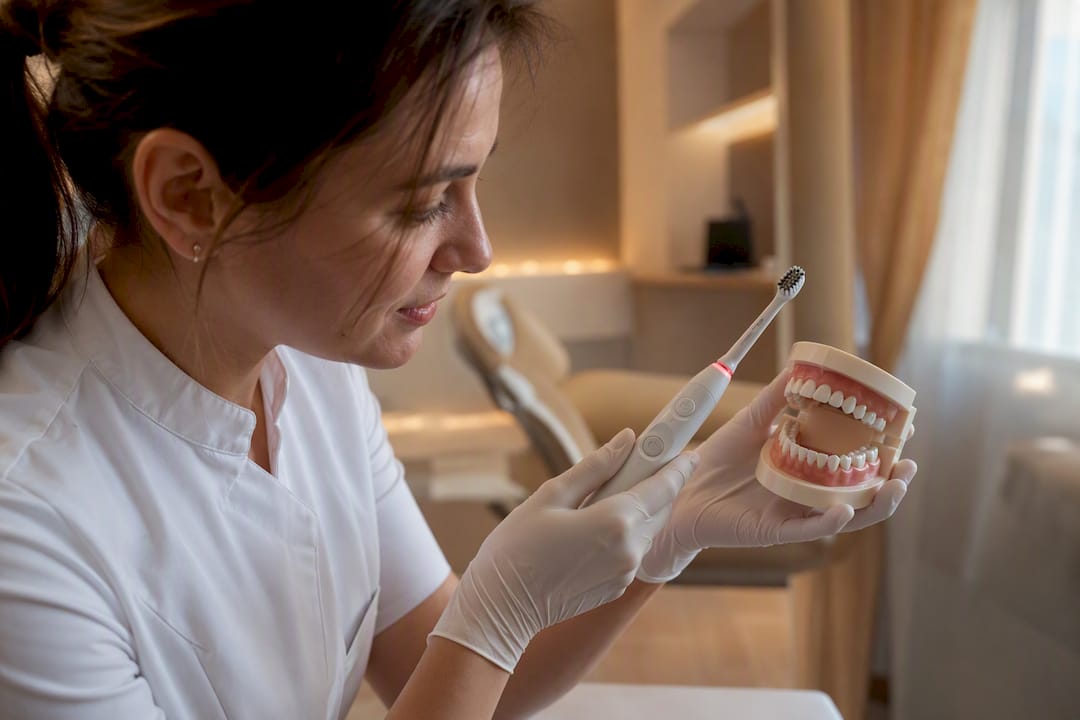
Two technologies dominate: oscillating-rotating, which rotates the head in small circular movements, and sonic, which vibrates at high frequency to propel fluid between the teeth. The sonic technology is often better suited for sensitive gums, while oscillating-rotating is better for stubborn dental plaque.
Regarding whitening, PAP+ (phthalimidoperoxycaproic acid) formulas and hydroxyapatite are gaining ground against traditional peroxide because they protect the enamel while remineralizing the surface. Result: less post-treatment sensitivity for a comparable shade gain.
- Pressure sensor on electric toothbrushes
- Sonic mode for fragile gums
- PAP+ or hydroxyapatite formula for whitening
- Easily available replacement heads
Pro tip: before buying a whitening kit, check that the instructions explicitly mention the absence of peroxide or its exact concentration: this detail will determine your comfort during use.
What are the risks and best practices to follow?
These products remain safe when a few simple rules are followed, but they are not for everyone. Health authorities remind us that at-home whitening kits can be used safely if instructions are strictly followed but that they can cause temporary sensitivity or irritation of the soft tissues.
Certain situations require postponing the treatment or consulting a professional before buying: unmineralized teeth in minors, pregnancy, untreated cavities, active periodontitis. A reputable institute systematically asks these questions before selling a whitening kit.
Anticipating sensitivity works better than enduring it. Using a desensitizing toothpaste for a few days before a session generally reduces the intensity of the discomfort that follows.
For daily use without issues:
- Change the brush head about every three months.
- Clean whitening trays after each use, never with hot water.
- In the institute, systematically disinfect reusable equipment between clients.
- Have a consent form signed before any professional whitening session.
If redness or pain persists beyond a few days, the best practice is to redirect the client to a health professional rather than persisting with the protocol.
How much do these treatments cost and how long does it take to see results?
An at-home whitening kit generally costs between €30 and €80, compared to €300 to €1,300 for an office session, which explains the growing appeal of retail formulas sold in institutes or online.
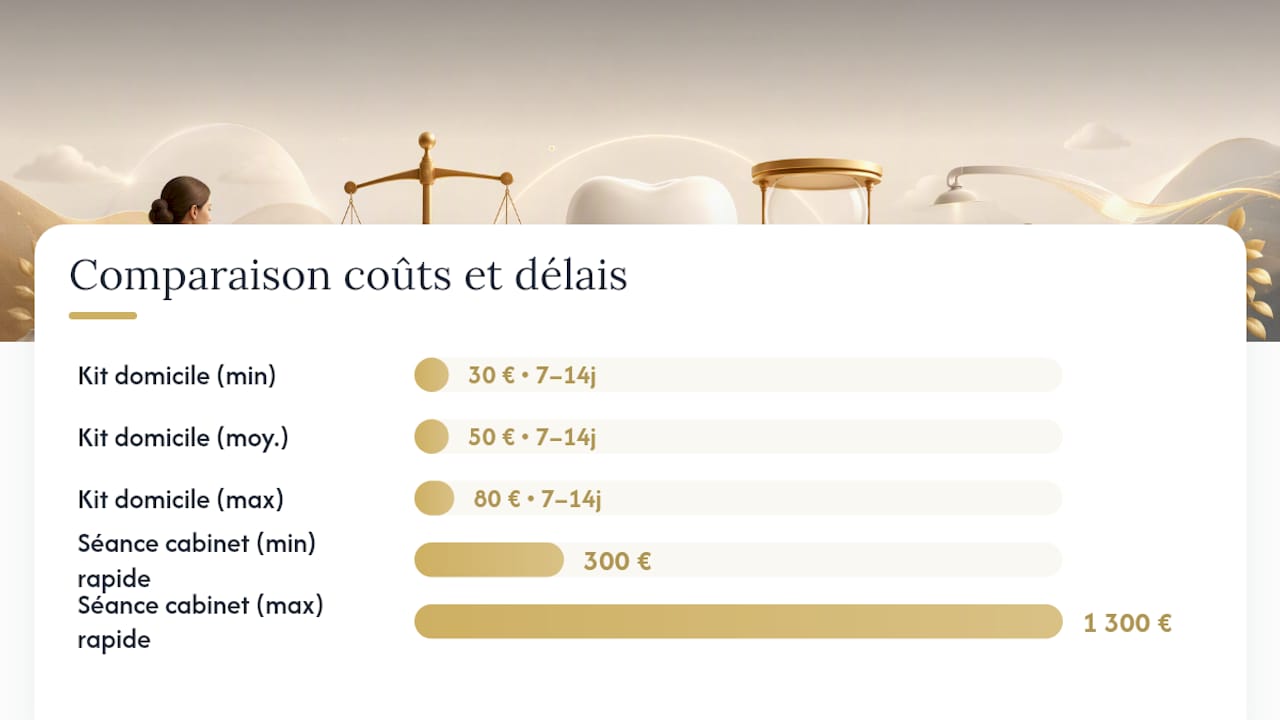
Regarding timelines, an electric toothbrush shows its effects on the hygiene routine in about one month of regular use.
Reference for an institute: a kit sold for €50 on average, with a comfortable margin on this type of accessory, fully justifies its inclusion in the boutique section. Recommend maintenance every four to six months to maintain the result.
- Home kit: €30 to €80, results in 7 to 14 days
- Office session: €300 to €1,300, faster but one-off effect
- Electric toothbrush: amortized over several years, benefit visible from the first month
How to integrate these treatments in an institute and get started at home?
For an institute, integration is built in a few concrete steps.
- Choose reliable suppliers such as HBPS-Beauty, who offer an assortment already designed for professional and domestic use.
- Train staff on pre/post-treatment protocols, a mandatory step to correctly sell a technical device.
- Standardize a treatment protocol, modeling what is already done for other institute services.
- Offer a quick diagnostic in the cabin, as is practiced for other beauty diagnostics.
- Package the offer: an institute treatment plus a take-home maintenance kit, a formula that naturally builds loyalty.
For the individual purchasing a product in an institute or online, the journey remains simple: identify the need (sensitivity, yellowing, daily hygiene), choose the appropriate product, follow the instructions to the letter, then maintain a regular rhythm of use rather than an intensive one.
- Merchandising: place whitening kits near the checkout, an impulsive purchase zone
- Argument: insist on the PAP+ technology rather than price alone
- Packaged offer: cabin treatment + maintenance kit at a reduced price
Pro tip: offer a before/after photo follow-up to your institute clients: it is one of the best levers for loyalty and referrals, far more effective than a simple discount.
What industry experience really teaches us
We often underestimate how much technical functionality takes precedence over marketing in this sector. An institute that sells an electric toothbrush without explaining the role of the pressure sensor misses the essential argument, and a client who buys a whitening kit without understanding the difference between peroxide and PAP+ risks an avoidable bad experience. At HBPS-Beauty, we bet on product education as much as on the assortment, because a well-informed client returns, whereas a client disappointed by poorly anticipated sensitivity never does. The internal literature on advanced benefits confirms this finding: trust is built on the precision of information, not on the promise.
Where to find these products with confidence?
Hbps-beauty brings together in one place what many institutes otherwise have to order from several separate suppliers: whitening devices, electric toothbrushes, and care supplements, with recognized brands and detailed product sheets to guide the choice.

The boutique offers supplements like Beauty Focus MultiBeauty Pharmanex, to be integrated into a global beauty routine alongside oral care. You will also find practical guides on whitening for sensitive teeth and safe at-home methods, to choose without error. Whether you are an individual wanting to complete your routine or an institute looking to expand its offer, check the product sheet now to verify availability and place an order.
Frequently asked questions about oral care in an institute
Why adopt oral care services in an institute rather than just at home?
The institute provides a professional diagnosis, a supervised protocol, and guidance in product selection, while at-home use ensures continuity between sessions. Both approaches complement each other rather than being in opposition.
What is the difference between an institute treatment and an at-home treatment?
The institute treatment uses professional equipment and immediate supervision in case of reaction, with results often being faster. At-home treatment costs less and is suitable for regular maintenance, but requires more rigor in following the instructions.
Are whitening kits sold online as effective as those in an institute?
They offer a real shade gain, generally two to four shades, but over a longer period than a professional session and with less control over the active concentration.
How long does it take to see results with these products?
Allow seven to fourteen days for visible whitening and about a month to feel the improvement from an electric toothbrush routine.
How can a beauty institute build customer loyalty with these treatments?
By offering personalized follow-up, packaged offers combining cabin treatment and maintenance kit, and a technical argument focused on concrete criteria like the pressure sensor or the PAP+ formula.
Sources
- Dental whitening kit: 2026 comparison and buying guide
- Canada
- The benefits of electric toothbrushes: a step-by-step analysis | Medanta