

How to effectively prevent ingrown hairs
To prevent ingrown hairs, the rule can be summed up in one sentence: exfoliate regularly, avoid shaving too close to the skin, and choose a hair removal method adapted to your hair type. Three steps are enough to reduce the majority of cases:
- Exfoliate regularly with an active ingredient like salicylic acid, which penetrates the follicle and dislodges the dead cells that trap the hair.
- Prioritize an electric trimmer or a sharp single-blade razor rather than a multi-blade razor, and shave in the direction of hair growth, never against it.
- Hydrate the skin after each hair removal session to limit friction and follicle inflammation.
If an area becomes red, swollen, or painful to the touch, it is no longer a simple ingrown hair but possibly a developing infection. In this case, it is better to consult a pharmacist or doctor rather than waiting.
Key points
Preventing ingrown hairs relies on three combined levers: regular exfoliation, a hair removal method adapted to the hair type, and systematic post-hair removal care.
| Point | Details |
|---|---|
| Exfoliate before and after | A gentle scrub two to three days before hair removal and light care 24 to 48 hours after reduce ingrown hairs. |
| Choose the right tool | Trimmers or electric epilators pull the hair less at the root than wax poorly applied against the grain. |
| Shave in the direction of hair growth | A clean blade and shaving in the direction of growth limit follicle irritation. |
| Respect a break for severe cases | One to six months without hair removal allow for complete healing according to the Mayo Clinic, with trimming remaining possible. |
| Build your routine at Hbps-beauty | The shop brings together trimmers, exfoliants, and soothing treatments to apply this routine without multiple purchases. |
Table of contents
- What is an ingrown hair and where does it appear most often?
- What factors increase the risk of ingrown hairs?
- What routine should you follow before, during, and after hair removal?
- How to treat an existing ingrown hair?
- When should you consult a doctor for an ingrown hair?
- What do medical authorities really say about prevention?
- Why a combined approach works better than a single tip
- Which products should you choose to apply this routine daily?
- Sources
What is an ingrown hair and where does it appear most often?
An ingrown hair forms when the hair grows back inside or on the surface of the skin instead of emerging freely from the follicle. It curls back on itself, the skin reacts by becoming inflamed, and a small red bump, sometimes topped with a white dot, appears.
Certain areas concentrate the majority of cases:
- The bikini line and underarms, where the skin is thin and hairs are often curly.
- The face, for men who shave daily.
- The legs, especially after repeated shaving in the same direction.
The difference from true folliculitis or a skin infection is based on progression: an ingrown hair remains localized and improves in a few days, whereas an infection spreads, feels hot, and can be accompanied by abundant pus or fever.
What factors increase the risk of ingrown hairs?
The hair removal technique weighs more than genetics in most cases. Shaving too closely, wax pulled in the wrong direction, or repeated hair removal on unprepared skin create the perfect conditions for a hair to grow sideways.
Hair type also plays a real role: curly or thick hair, common in certain hair morphologies, naturally tends to curl under the skin rather than piercing straight through. This is not inevitable, but it justifies a more rigorous routine.
Finally, dry skin accumulates dead cells that clog the pore and mechanically block the hair's exit. This is why exfoliation for ingrown hairs works so well for prevention: it literally clears the path.
Modifiable factors can be summarized as follows:
- The chosen hair removal method and frequency.
- The state of skin hydration and exfoliation before each session.
- Repeated mechanical friction (tight clothing, intensive sports, synthetic underwear).
What routine should you follow before, during, and after hair removal?
Good prevention happens in three phases, and skipping one often cancels out the effect of the other two.
Before hair removal, prepare the skin as recommended by the Cleveland Clinic: clean the area, exfoliate gently with a light physical scrub or a glycolic acid-based treatment two to three days before, then hydrate with warm water to soften the hair. A complete exfoliation guide details frequencies according to skin type.
During hair removal, the choice of tool changes everything. A modern electric trimmer or epilator cuts the hair shorter without pulling it at the root, which significantly reduces the risk compared to wax ripped off against the grain. If you shave, always use a shaving gel or cream, a clean and sharp blade, and shave in the direction of hair growth, never against it.
After hair removal, apply a fragrance-free soothing treatment, then a mild chemical exfoliant within the next 24 to 48 hours to prevent the skin from closing too quickly over the follicle. Finish with a non-comedogenic moisturizing cream.
- Cleanse and exfoliate the skin two to three days before hair removal.
- Choose a trimmer, electric epilator, or razor depending on the area and skin sensitivity.
- Shave or epilate in the direction of hair growth, without going over the same spot multiple times.
- Hydrate immediately after, then reintroduce a mild exfoliant within 48 hours.
Pro tip: Alternate between targeted salicylic acid application on at-risk areas and regular glycolic acid use during the week on the rest of the body. It is this combination, rather than the isolated product, that limits recurrences.
For areas that cause problems season after season, laser hair removal or wider spacing between wax sessions remain the alternatives most cited by practitioners.
How to treat an existing ingrown hair?
Most ingrown hairs resolve on their own with simple care, without resorting to manual extraction. The most reliable protocol relies on heat and salicylic acid.
- Apply a warm compress to the area twice a day for five to ten minutes to soften the skin and facilitate the hair's exit.
- Follow with a local salicylic acid treatment, which penetrates the follicle and reduces inflammation.
- Only introduce a gentle scrub from the third day, once the inflammation has subsided.
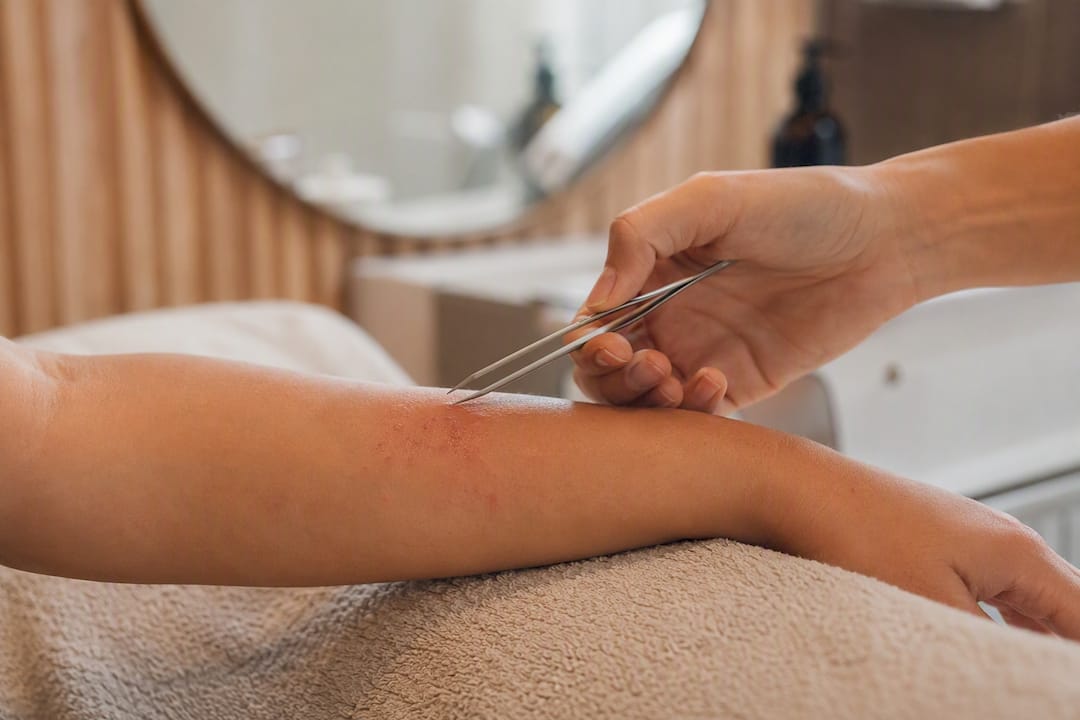
Extraction should only be considered if the hair loop is clearly visible under the skin, using tweezers disinfected with alcohol—never by scraping or squeezing the area. Piercing or scraping with a non-sterile tool is exactly what the NHS advises against, as it increases the risk of scarring and infection.
Pro tip: If you must extract a hair, disinfect the tweezers and skin before and after. A poorly prepared action turns a mundane ingrown hair into a small wound that takes weeks to heal.
When should you consult a doctor for an ingrown hair?
Certain signs go beyond home care. Spreading redness, increasing pain, abundant pus, or a hard lump that does not regress after a week warrant medical advice.
For severe or recurring cases, the Mayo Clinic recommends stopping all hair removal (shaving, waxing, threading) for a period of one to six months to allow the skin to heal completely; trimming remains possible during this break to keep hairs short without pulling them out.
Medically, several options exist depending on severity:
- Topical or oral antibiotics in case of a confirmed infection.
- Retinoids to accelerate skin renewal and limit recurrences.
- Laser hair removal, which sustainably reduces hair density in problem areas.
What do medical authorities really say about prevention?
This Mayo Clinic recommendation illustrates a constant among practitioners: it is better to first test conservative measures, with exfoliation and changing techniques in the lead, before considering a more intense solution like laser. The Cleveland Clinic confirms that most cases resolve with local care and exfoliation, without extraction.
Why a combined approach works better than a single tip
The most common reflex when faced with ingrown hairs is to look for THE miracle solution, a single product that would fix everything. After cross-referencing medical recommendations and field practices for this article, one thing stands out clearly: it is the combination that works, not the isolated tip.
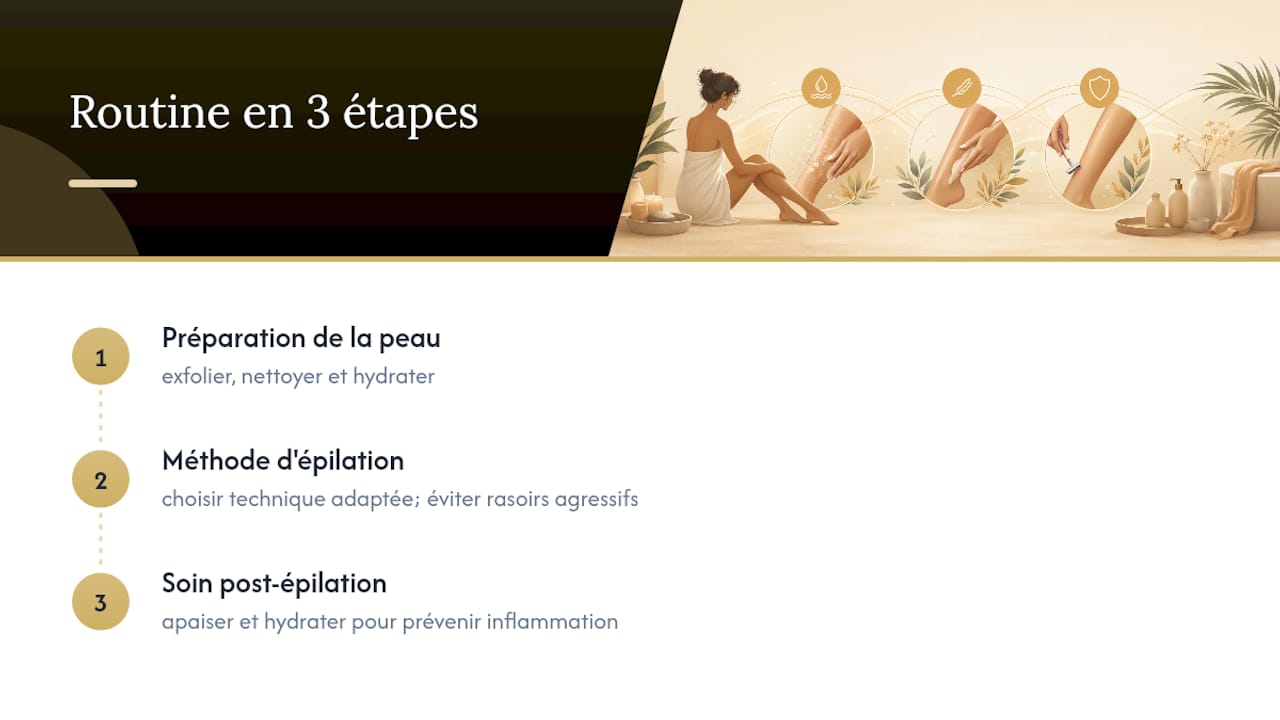
Exfoliating without changing your hair removal technique is not enough. Changing your trimmer without ever hydrating the skin is not enough either. At Hbps-beauty, we see this routine as a three-legged system: skin preparation, adapted hair removal method, post-hair removal care. Remove one leg and the balance tips.
To build this routine concretely at home, our tips for successful hair removal at home detail the actions that make the difference session after session.
Which products should you choose to apply this routine daily?
An anti-ingrown-hair routine rests on three pillars: an adapted exfoliant, a hair removal tool that respects the skin, and a soothing treatment after each session. This is exactly what the Hbps-beauty catalog covers, without having to multiply stores to find each step.

On the shop, you will find electric trimmers and epilators from brands like JRL or GESKE, designed to cut the hair without pulling it at the root, as well as non-comedogenic exfoliating and moisturizing treatments for the before and after hair removal phases. The advantage, compared to making multiple purchases on different sites, is to compose a coherent routine in a single order, with products already designed to work together. Consult the hair removal and skincare categories on Hbps-beauty to identify the references that correspond to your skin type and your usual hair removal method.
Sources
- Ingrown hair - Diagnosis and treatment - Mayo Clinic
- Ingrown Hair - Cleveland Clinic
- Ingrown hairs - NHS
This article provides general information and does not replace the advice of a qualified doctor. Consult a qualified health professional regarding your personal case before acting based on this content.
Recommendation
- Essential tips for successful professional hair removal – HBPS Beauty & Fashion
- At-home hair removal workflow: step-by-step method – HBPS Beauty & Fashion
- At-home hair removal guide: methods and treatments by area – HBPS Beauty & Fashion
- Hair removal devices: how they really work – HBPS Beauty & Fashion