

Oral care procedure: practical guide for home use
Good oral hygiene is based on three daily habits: brushing twice a day for two minutes, cleaning between the teeth every evening, and using a fluoride toothpaste suited to your age. This is the minimum oral care procedure recommended by the WHO and the FDI to prevent cavities, gingivitis, and infections. When followed regularly, it also reduces the risk of systemic diseases associated with poor oral health, such as diabetes or cardiovascular disease.
- Brushing twice a day for two minutes with an age-appropriate fluoride toothpaste
- Daily interdental cleaning with floss or interdental brushes
- Seeing a dentist at the first sign of a warning sign, and a mandatory written quote for treatments over €70
Key takeaway: do not rinse your mouth with water after brushing. Spitting out the excess is enough to allow the fluoride to continue protecting the enamel.
Table of Contents
- What routine should you follow every morning and every evening?
- Which products should you choose for your home routine?
- Children, pregnancy, orthodontics: how to adapt the routine?
- When to see a dentist and what are your rights in France?
- Fluorosis, whitening products, abrasives: what you really need to know
- How much does it cost to get properly equipped in France?
- Key points
- Why this procedure seems the most appropriate to us
- Quality oral care products available at Hbps-beauty
- Official sources and useful documents
What routine should you follow every morning and every evening?
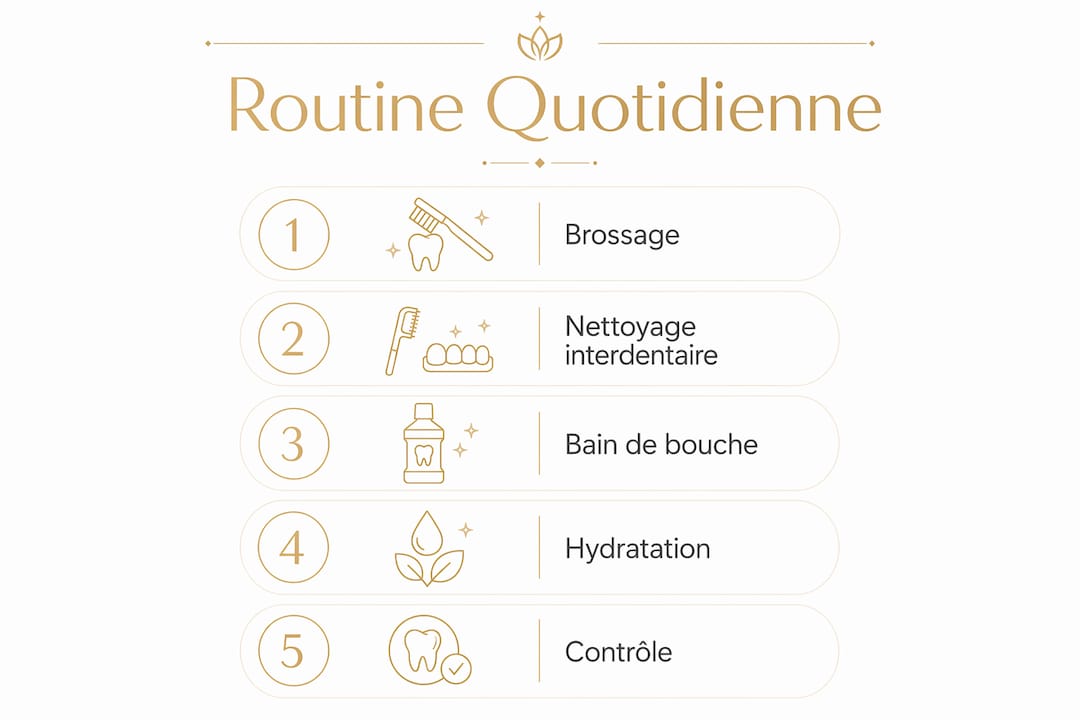
Here are the steps in order, to be repeated morning and evening:
- Prepare your equipment: soft-bristled toothbrush (manual or electric), age-appropriate fluoride toothpaste, interdental brush or dental floss, tongue scraper if you have one.
- Brush using the roll technique: place the brush at a 45° angle against the gum, then sweep from the gumline towards the tooth. Two minutes, covering all surfaces (inside, outside, chewing surfaces). The roll technique protects the gumline and limits gingival recession, unlike repeated horizontal movements.
- Spit out without rinsing: removing the excess toothpaste is enough. Rinsing with water washes away the fluoride deposited on the enamel and reduces its protection.
- Clean between the teeth: floss or interdental brush, once a day, ideally in the evening. Brushing alone does not reach these areas, even when done carefully.
- Scrape the tongue: a gentle pass removes the bacteria responsible for bad breath.
- Mouthwash if necessary: after a procedure or in case of a temporary condition, not as a replacement for brushing.
The ideal time remains after meals, and imperatively in the evening before bedtime. In the morning, brush before or after breakfast according to your comfort, but do not skip the step.
Pro tip: Avoid brushing immediately after an acidic drink (orange juice, soda): wait 30 minutes to avoid abrading the weakened enamel.
Which products should you choose for your home routine?
Toothpaste: fluoride content above all
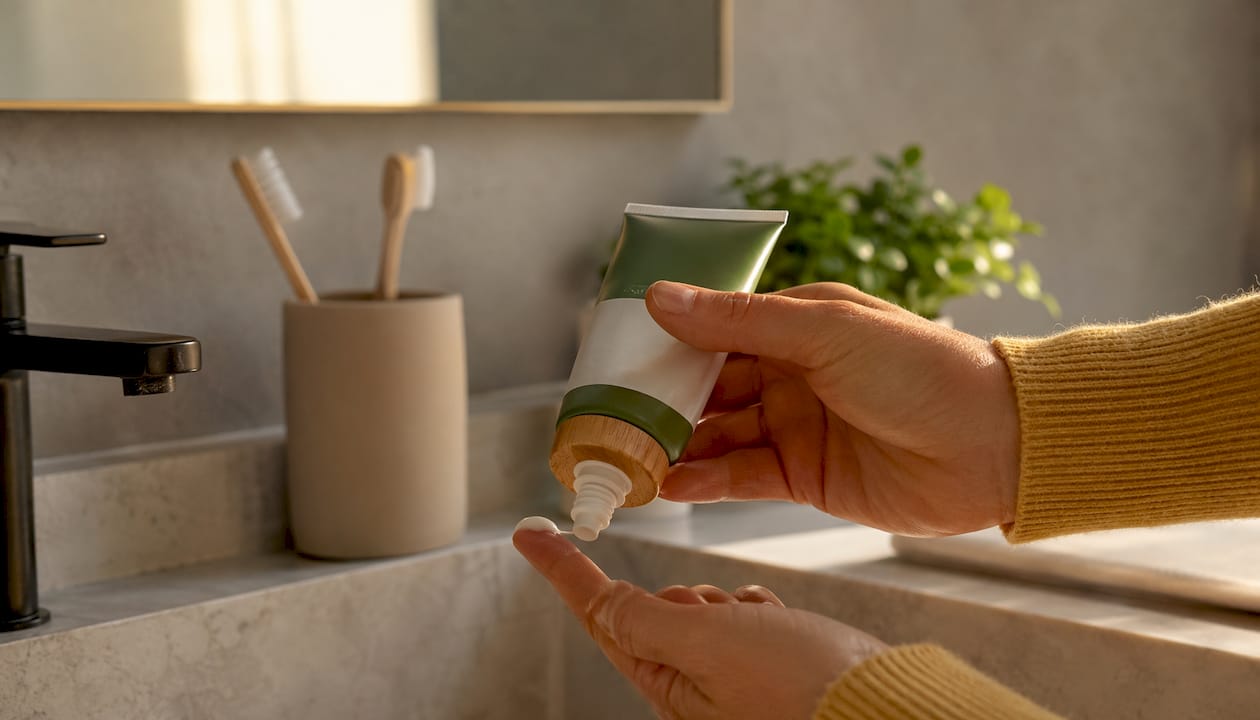
The fluoride concentration is the main criterion. The FDI and WHO recommend 1,000–1,500 ppm for adults and children from 7 years old. Under 3 years, a quantity the size of a grain of rice is enough; between 3 and 6 years, opt for a toothpaste with 1,000–1,500 ppm in a quantity equivalent to a pea. Avoid highly abrasive toothpastes daily, especially those with activated charcoal whose RDA (abrasivity) index often exceeds recommendations for daily use.
Comparison of brush types and accessories
| Product | Advantages | Limitations | For whom |
|---|---|---|---|
| Soft-bristled manual toothbrush | Economical, light, easy to carry | Effectiveness depends on technique | Everyone, good technique required |
| Oscillating/sonic electric toothbrush | Up to 21% reduction in plaque compared to manual | Higher price, replacement necessary | Motivated people, reduced mobility |
| Dental floss | Accessible, precise in narrow spaces | Technique to learn | Tight interdental spaces |
| Interdental brush | More effective when space allows, reusable | Less suited for very tight spaces | Adults with wide spaces, bridge wearers |
| Oral irrigator | Comfort, useful for orthodontics | Does not replace floss or interdental brush | Braces wearers, elderly people |
Mouthwash: a secondary role
An antiseptic mouthwash can help after an extraction or in case of acute gingivitis. A fluoride mouthwash is suitable when brushing is temporarily impossible. Outside of these situations, it remains a complement, not a substitute.
Children, pregnancy, orthodontics: how to adapt the routine?
Adjustments according to profile are often neglected, even though they really change the effectiveness of the routine.
Children:
- Start from the first tooth with a quantity of toothpaste the size of a grain of rice.
- Between 3 and 6 years, move to the size of a pea, 1,000–1,500 ppm toothpaste.
- Supervise brushing until the child sufficiently masters the gesture, generally around 7–8 years.
- Teach them to spit out without rinsing from the beginning.
Pregnant women:
- Pregnancy hormones promote gingivitis. Continue the usual fluoride toothpaste and consult if gums bleed regularly.
- Avoid postponing preventive care: untreated periodontitis during pregnancy can have consequences on general health.
Orthodontics:
- Braces and attachments create plaque retention areas. Use special brushes to clean around each bracket.
- An oral irrigator facilitates the rinsing of hard-to-reach areas.
- Increase the frequency of check-ups with the practitioner during treatment.
Elderly people and removable dentures:
- Remove dentures every night: prolonged nighttime wear compresses the mucous membranes and promotes infections.
- Clean them separately with a soft brush and neutral soap, then soak them in a suitable solution.
- In fragile people, nighttime removal of dentures also reduces the risk of aspiration pneumonia.
Pro tip: For braces wearers, brush first without toothpaste to identify plaque, then start over with fluoride toothpaste.
When to see a dentist and what are your rights in France?
Some signs should not wait until the next annual check-up.
Warning signs requiring a quick consultation:
- Persistent or spontaneous pain
- Abundant or recurring bleeding of the gums
- Tooth mobility or progressive loosening
- Abscess, facial swelling or fever
- Unstable or painful denture
Your rights in France: for any treatment whose cost exceeds €70, your practitioner is legally required to provide you with a written quote before starting. You have a reflection period and no full payment in advance can be required of you. A deposit may be requested, but not full payment. Health authorities also remind that the practitioner must explain the options, alternatives, and risks to you — beware of abnormally low prices without explanation.
Professional scaling remains essential because mineralized tartar cannot be removed by brushing. An annual visit is the minimum; twice a year is often recommended depending on your clinical situation.
Fluorosis, whitening products, abrasives: what you really need to know
Fluorosis: it occurs only in case of excessive fluoride ingestion during tooth formation, especially in young children. Respect the recommended quantities according to age and any risk is controlled.
Whitening products:
- Whitening toothpastes work mainly through light abrasion or through low-concentration oxidizing agents.
- Products based on peroxide for unsupervised home use can irritate the gums and weaken the enamel in the long term.
- Activated charcoal, highly abrasive, is not recommended for daily use despite its popularity.
Abrasivity (RDA index):
- Prefer a low or medium abrasivity toothpaste for daily use.
- An RDA lower than 70 is considered mild; between 70 and 100, moderate. Above 150, reserve it for occasional use.
Myth to correct: rinsing abundantly after brushing to "remove the taste" is counterproductive. Spitting out the excess is enough to preserve the fluoride deposit on the enamel.
How much does it cost to get properly equipped in France?
Here are indicative ranges to help you budget without getting the priority wrong.
Daily products:
- Standard fluoride toothpaste: between €2 and €6 depending on the brand and format; compare the price per milliliter for large formats.
- Soft-bristled manual toothbrush: €1 to €5, to be changed every three months.
- Entry-level electric toothbrush: from €20–30; mid-range oscillating or sonic models are between €50 and €120.
- Interdental brushes: €3 to €8 per pack depending on the brand and size.
- Dental floss: €2 to €5 for several weeks of use.
Visits and treatments:
- Scaling: rate varies depending on the practitioner's sector; find out before the consultation.
- For any treatment exceeding €70, a written quote is mandatory. Ask for it systematically before accepting an expensive treatment.
Budget tip: invest in a good electric toothbrush or quality interdental brushes rather than multiplying small purchases of secondary products. The mechanical effectiveness of brushing and interdental cleaning makes more difference than any premium mouthwash.
Key points
An effective oral care routine is based on brushing twice a day, daily interdental cleaning, and an age-appropriate fluoride toothpaste, complemented by regular visits to the practitioner.
| Point | Details |
|---|---|
| Daily brushing | 2 minutes, 2 times a day, roll technique from the gum towards the tooth. |
| Age-appropriate fluoride | Toothpaste with 1,000–1,500 ppm; grain of rice quantity for under 3 years, pea until 6 years. |
| Do not rinse after brushing | Spitting out the excess is enough to preserve the fluoride on the enamel. |
| Mandatory quote from €70 | In France, any treatment over €70 must be subject to a written quote before intervention. |
| Hbps-beauty for equipment | The store offers oral care products for home use to complete your routine. |
Why this procedure seems the most appropriate to us
What strikes me, after studying the French recommendations and the FDI guides, is how simple an effective oral care procedure is, but rarely applied in its entirety. Most people brush their teeth, but forget interdental cleaning or rinse immediately after brushing, canceling part of the effect of fluoride.
The other often underestimated angle: patient rights. Many ignore that a written quote is a legal obligation in France from €70, not a favor from the practitioner. Knowing this right changes the relationship with the dental office and avoids budget surprises.
At Hbps-beauty, we think that oral hygiene is part of an overall beauty routine — just like facial or hair care. The products we select meet the same criteria: verifiable quality, home use, concrete results.
Quality oral care products available at Hbps-beauty
You have the procedure. It remains to equip yourself with reliable products, without having to run to several stores.
Hbps-beauty offers a selection of oral care products for home use, chosen for their quality and their adequacy with the recommendations presented in this guide. Brushes, interdental accessories, oral care devices: everything is available from the online store, with detailed product sheets to compare characteristics before buying. To start or complete your routine, consult the oral care range available on the site and choose the products suited to your profile.
Official sources and useful documents
French and international institutions:
- WHO — Oral health: recommendations on fluoride and cavity prevention.
- ARS Île-de-France — Oral care: quote obligations, patient rights, price transparency.
- ARS Auvergne-Rhône-Alpes — Oral health: importance of interdental cleaning.
- Government of Quebec — Preventing dental cavities: practical recommendations on brushing and fluoride.
- SOS Ehpad — Oral hygiene procedure: protocols for elderly people and dentures.
Hbps-beauty articles to deepen:
| Subject | Link |
|---|---|
| Home oral care | Uses and benefits |
| Advanced care: complete guide | Benefits and information |
| Home beauty checklist | Effective routine |
This article provides general information. For your personal situation, consult a qualified dental surgeon or contact the National Order of Dental Surgeons.