

Reapplying sunscreen over makeup without ruining everything
Yes, you need to reapply sunscreen even over makeup—the two-hour rule makes no exception for foundation. To avoid turning your face into a stiff paste, skip the regular cream and opt for an SPF powder, a micro-mist, or the tapping technique with a cushion. What matters most is the amount you apply: a generous touch-up with the right tool is better than a quick swipe that offers almost no protection.
In brief:
- Mineral SPF powder applied in small amounts and several layers offers more reliable protection than a single thin application.
- Mist or micro-mist should be sprayed into your palm or from a distance, then pressed on to ensure a sufficient amount without waste or makeup disruption.
- The tapping or cushion technique is often the most effective way to touch up protection without disturbing your makeup, concentrating product on key areas.
- Reapply every two hours during typical sun exposure, or more often after swimming or heavy sweating.
- Choose a sunscreen suited to your skin type, checking the SPF, “broad spectrum” label, and water resistance to avoid pilling or white marks.
Table of contents
- How to reapply sunscreen over makeup without ruining it
- How often to reapply, depending on your situation
- Which sunscreens should you choose to prevent pilling under makeup?
- What to do when your makeup shifts or leaves white marks
- What dermatologists and studies really say about reapplication
- Sun protection or flawless makeup: my firm opinion
- A ready-to-use touch-up kit from Hbps-beauty
- Sources
- Frequently asked questions
How to reapply sunscreen over makeup without ruining it
There are four techniques that really work, each with its own strengths depending on the situation. Your choice mainly depends on where you are and how much time you have.
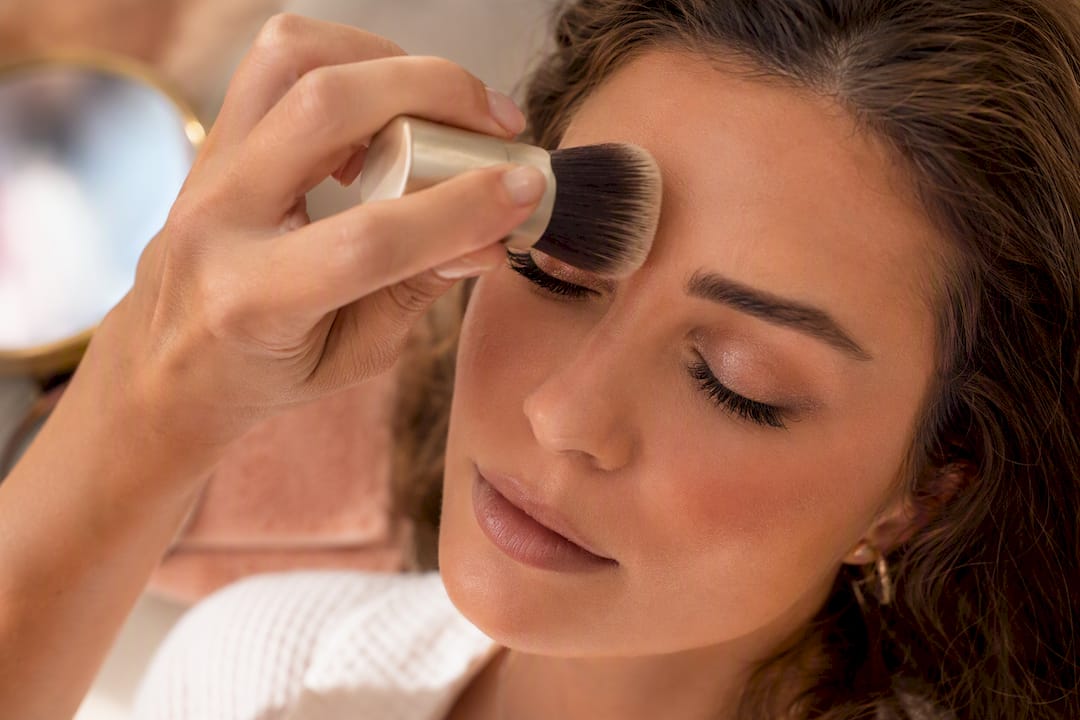
Mineral SPF powder is the easiest option for a quick touch-up. Use a dense kabuki brush and apply with small circular motions, focusing on the T-zone, nose, and upper cheeks, where the sun hits hardest. The classic pitfall is not applying enough. A single thin layer of SPF powder rarely offers as much protection as promised on the label, so tap it on several times rather than sweeping the brush across once and calling it done. Also avoid double-dipping the brush into the compact between faces if you share the product—it’s a matter of hygiene as well as getting the right amount.
Mist or micro-mist is appealing for its speed, but tests of sprays show that a single direct spray often deposits too little product on the skin to match the effectiveness of lotion applied by hand. Close your eyes and mouth, spray from about six inches away, then gently pat it in to spread the product. The best approach, especially outdoors in windy conditions, is to spray into your palm and then press the product onto your face. This gives you better control over the amount and wastes less product in the air.
The tapping or cushion technique is probably the most effective compromise between genuine protection and keeping your makeup intact. Take a small amount of your usual sunscreen, or a portion you’ve set aside in a small container, and press it on rather than rubbing. Focus on your nose, temples, upper cheekbones, and ears, which are often overlooked. Popularized by several skincare content creators, this method lets you apply a useful amount of sunscreen without shifting the foundation underneath.
Tinted SPF compact can come in handy for a cosmetic touch-up later in the day, but be realistic about its limitations: makeup containing SPF is generally applied at just 25% to 50% of the amount needed to achieve the SPF shown on the compact. It supplements sun protection; it never replaces it.
- A small puff or sponge dedicated to touch-ups
- Mineral SPF powder in a travel size
- A mini sunscreen spray for your bag
- Cleansing wipes to blot excess oil before touching up
Pro tip: Keep your touch-up kit in a clear pouch, separate from the rest of your makeup bag. It saves valuable time when you need to reapply between appointments in just ten minutes.
How often to reapply, depending on your situation
The basic rule doesn’t change: reapply every two hours when exposed to the sun, as recommended by the American Academy of Dermatology. After swimming or heavy sweating, reapply right away rather than waiting for the two-hour mark. For prolonged, intense direct exposure, such as a whole afternoon at the beach or in the mountains, some dermatologists even recommend shortening the interval to 30 or 60 minutes.
The method depends on the situation. At the office or during a lunch break on a terrace, SPF powder or mist is enough for a quick touch-up. After swimming or an outdoor workout, a more generous application of water-resistant cream is the better choice.
Sun protection increases in an almost linear way with the amount applied: using half the recommended amount gives you roughly half the expected protection.
In practical terms, the more carefully you touch up, the closer you get to the SPF rating actually printed on the bottle.
- Every 2 hours during typical sun exposure
- Immediately after swimming or heavy sweating
- Every 30 to 60 minutes during prolonged direct exposure
Which sunscreens should you choose to prevent pilling under makeup?
Pilling—those little balls that roll under your fingers—is almost always caused by incompatible textures in the layers you’ve applied. A rich sunscreen under a fluid foundation, or vice versa, can quickly turn into a visual disaster.
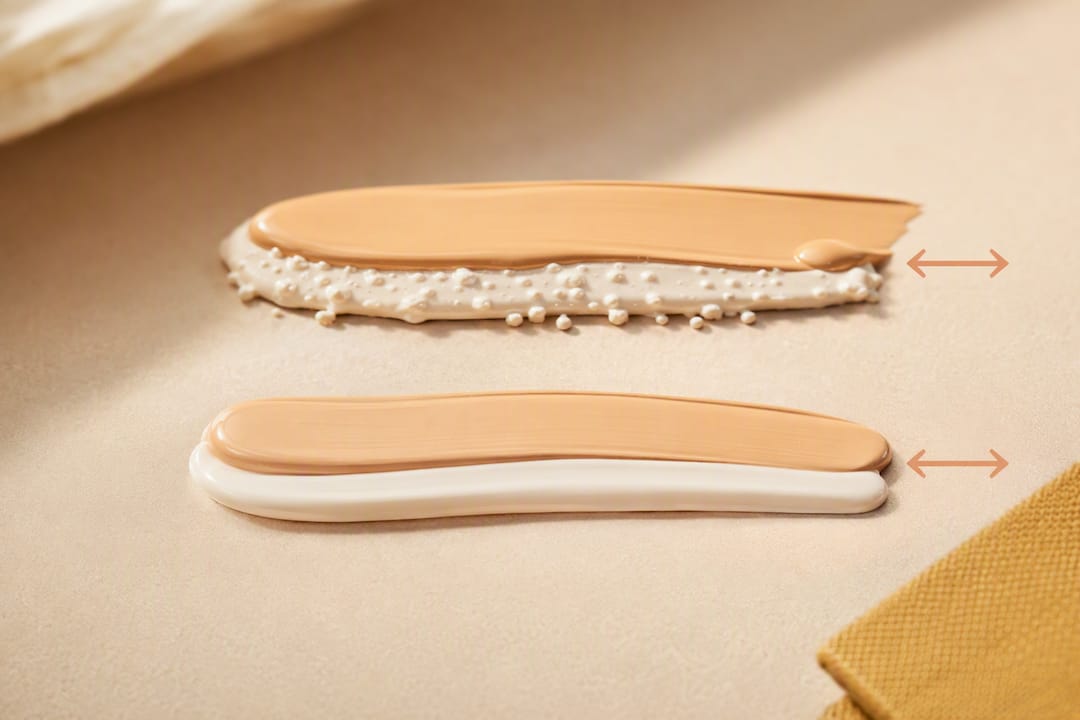
For combination to oily skin, mineral SPF powder remains the best ally during the day: it absorbs excess oil while filtering UV rays. For dry skin, choose a gel or fluid essence in the morning; it absorbs quickly and creates a good base for makeup. Beauty publications also agree on one simple point: letting sunscreen dry for about 60 to 90 seconds before applying foundation significantly reduces the risk of pilling.
Another rule to know is that base formulas need to be compatible. A water-based formula under a silicone-based one (or vice versa) creates friction that may be invisible to the eye but is very real on the skin. Match the textures as much as possible: water with water, silicone with silicone.
Before buying, check the label for:
- At least SPF 30, ideally SPF 50 for extended daily use
- The words “broad spectrum”
- Water resistance if you plan to swim or sweat
- A texture described as “non-comedogenic” or designed to be worn under makeup
To fine-tune your choice for your skin type, the guide to the best facial sunscreens details formulas suited to different skin types, while the article on mineral versus chemical sunscreen explains the differences in feel and finish between the two types of filters.
What to do when your makeup shifts or leaves white marks
Pilling most often occurs for three reasons: mismatched textures, too much product applied too quickly, or rubbing instead of patting. Prevention comes down to allowing enough time for products to set and pressing them on rather than rubbing back and forth.
- Right away, gently wipe the affected area with a soft wipe, without rubbing further.
- Touch up with SPF powder, patting it on to conceal minor imperfections while filtering UV rays.
- Touch up your makeup locally if needed, using eyeshadow or blush on areas where the touch-up has slightly shifted the color.
On darker skin, white marks left by some mineral filters remain the number-one problem. Universal tinted formulas or translucent powders largely avoid this ashy effect, while regular SPF powders can sometimes look different depending on your skin tone.
Pro tip: Always test a new SPF powder on the back of your hand before using it on your face in the middle of the day. You’ll immediately see whether it leaves a whitish cast that doesn’t suit your complexion.
What dermatologists and studies really say about reapplication
The American Academy of Dermatology is unequivocal: reapplying every two hours is not optional—it’s the foundation of effective protection. A study published on PMC confirms that the amount applied matters as much as how often you reapply, with an almost linear relationship between dose and actual protection. Tests by Harvard Health on sprays point to the same conclusion: spraying isn’t always enough; you often need to compensate by patting the product on or applying multiple passes.
SkinCancer.org also reminds us that sunscreen never works alone: it’s part of a broader strategy involving protective clothing, shade, and sunglasses.
| Recommendation | Key takeaway |
|---|---|
| Frequency | Every 2 hours, more often if swimming or sweating |
| Amount | Protection is almost proportional to the amount applied |
| Sprays | Often under-applied when sprayed directly just once |
| SPF makeup | A supplement, never a substitute for your morning sunscreen |
The guide to everyday sun protection and the one comparing SPF 30 and SPF 50 explore these guidelines in greater detail based on your level of sun exposure.
Sun protection or flawless makeup: my firm opinion
For a full day outdoors, protection wins, hands down. Keep your makeup simple on those days—light foundation and minimal layering—and you can touch up without stress every two hours. In the city, where sun exposure is more intermittent, opt for discreet powder or cushion touch-ups, and save a full makeup redo for when a proper layer of cream is needed.
— JSCC
A ready-to-use touch-up kit from Hbps-beauty
Putting together an effective touch-up kit takes only three or four well-chosen products, but finding them across several brands can be time-consuming. Some online stores offer facial sunscreens designed to be worn under makeup, water-resistant body sunscreens for beach days, as well as accessories to complement a complete skincare routine.

For a morning base that creates a smooth canvas under foundation, Valquer SPF 50+ Facial Sunscreen has an invisible texture and absorbs quickly. For longer outings, outdoors or at the pool, Valquer SPF 50 Body Sunscreen holds up better against water and perspiration. And if you’re looking for another facial option to switch things up with the seasons, Beauté Mediterranea SPF 50 Sun Protection rounds out the range.
Browse the full selection at the Hbps-beauty store to put together your touch-up kit before summer.
Sources
To verify these recommendations, consult the American Academy of Dermatology, Harvard Health’s analysis of sunscreen sprays, the PMC study on sunscreen quantity, advice from SkinCancer.org, and Lab Muffin Beauty Science’s video demonstration.
- American Academy of Dermatology — sunscreen recommendations
- The truth about sunscreen in makeup — CU Anschutz news
- Harvard Health — Does spray-on sunscreen work as well as lotion?
- PMC — Sunscreen quantity and application
Frequently Asked Questions
Can you reapply sunscreen over foundation?
Yes, as long as you adjust your technique: opt for SPF powder or pat it on with a cushion rather than rubbing a regular cream over your face, which can disturb your makeup.
How long should you wait after reapplying sunscreen before touching up your makeup?
Wait about 60 to 90 seconds for a fluid formula to dry before applying eyeshadow or blush over it, giving the powder or cream time to set on the skin.
How do fans of Korean skincare routines reapply sunscreen over makeup?
The most commonly cited method is to spray sunscreen mist into the palm of your hand, then pat it onto your face. This limits waste and helps more product actually reach the skin than spraying it directly.
Do you really need to wait 15 minutes after reapplying sunscreen?
The 15-minute waiting period mainly applies to the first morning application on bare skin with a chemical sunscreen filter; when touching up over makeup with powder or a cushion, waiting one to two minutes for it to dry is generally enough.