

Role of natural oils in beauty: 70% proven effectiveness
Natural oils play an increasing role in beauty routines, but not all are suitable for every skin or hair type. Many consumers confuse essential oils with carrier oils, which can lead to irritation or disappointing results. This guide clarifies the fundamental differences between these two categories of oils, their respective bioactive properties, and the best practices for safely incorporating them into your daily care.
Table of Contents
- Introduction to Natural Oils in Beauty
- Bioactive Properties and Benefits of Natural Oils for the Skin
- Specific Benefits of Oils for Hair
- Safety and Best Practices
- How to Choose and Apply Natural Oils
- Common Misconceptions and Realities of Natural Oils in Beauty
- Conclusion and Perspectives for Effective Natural Beauty
- Discover Our Natural Solutions for Your Beauty Routine
- Frequently Asked Questions
Key Takeaways
| Point | Details |
|---|---|
| Essential personalized choice | Each skin and hair type requires a tailored selection of oils to avoid irritation and maximize benefits. |
| Scientifically proven benefits | Natural oils provide hydration, antioxidant protection, and anti-inflammatory action validated by clinical studies. |
| Essential oils must be diluted | Recommended concentration is between 1 and 2% in a carrier oil to prevent skin reactions and allergies. |
| Regular application is necessary | Visible results appear after several weeks of consistent use tailored to your personal profile. |
| Quality is crucial | Origin, extraction method, and purity directly influence the effectiveness and safety of the oils used. |
Introduction to Natural Oils in Beauty
Essential oils are concentrated aromatic extracts obtained by distilling or cold-pressing plants. Carrier oils come from pressing seeds, fruits, or nuts and primarily contain fatty acids. These two categories share natural origins but differ radically in their chemical composition and cosmetic uses.
Historically, ancient Egyptian and Greek civilizations already used oils for skincare and beauty rituals. Today, modern research confirms their bioactive properties and their increasing integration into cosmetic formulations. The global essential oil market is experiencing significant expansion, driven by growing demand for natural and effective beauty solutions.
The main differences lie in their practical use:
- Essential oils must always be diluted before topical application due to their high concentration of active molecules.
- Carrier oils can be applied directly to the skin and hair as basic moisturizing and nourishing agents.
- Essential oils provide targeted therapeutic properties, such as antibacterial action or circulatory stimulation.
- Carrier oils restore the lipid barrier and protect against dehydration.
Understanding these distinctions helps avoid common application errors and optimizes the results of your skincare. The synergy between carrier oils and active essential oils forms the basis of many effective cosmetic formulations.
Bioactive Properties and Benefits of Natural Oils for the Skin
Carrier oils rich in unsaturated fatty acids penetrate the superficial layers of the epidermis and rebuild the protective hydrolipidic film. This action strengthens the skin's barrier function and limits transepidermal water loss. Fat-soluble vitamins such as A, E, and K naturally present in these oils contribute to cell regeneration and protection against oxidative stress.

Essential oils concentrate phenolic and terpenic compounds with powerful anti-inflammatory and antimicrobial effects. Tea tree oil has clinically proven efficacy against acne thanks to its antibacterial properties, which reduce populations of Cutibacterium acnes. Essential oils of lavender and rosemary improve collagen production and reduce free radicals, thus slowing down the visible signs of skin aging.
Specific benefits include:
- Visible reduction of inflammation and redness thanks to the soothing properties of chamomile and calendula.
- Improved skin elasticity by stimulating the synthesis of collagen and elastin.
- Protection against environmental aggressors through antioxidant action that neutralizes free radicals.
- Accelerated healing and repair of damaged tissues.
Certain types of facial care incorporate these natural oils to maximize results and meet the specific needs of each skin type. Clinical studies on essential oils document their efficacy but also emphasize the importance of following recommended dosages to avoid skin sensitization.
“Essential oils demonstrate remarkable anti-aging, antibacterial, and anti-inflammatory properties, but their high concentration requires careful and diluted use to ensure safety and skin tolerance.”
Specific Benefits of Oils for Hair
Essential omega-3, omega-6, and omega-9 fatty acids contained in carrier oils deeply nourish the hair fiber. These lipids penetrate the cuticle and strengthen the hair's internal structure, reducing breakage and split ends. Naturally present vitamins E and B provide visible shine and suppleness after regular application.
The choice of oil must match the hair type and its particular needs. Dry hair benefits from rich oils such as coconut or avocado, which seal in moisture and limit dehydration. Oily hair requires light oils such as jojoba or hazelnut, which regulate sebum production without weighing it down. Hair damaged by coloring or chemical treatments responds well to argan and castor oils, which repair and protect.
| Hair Type | Recommended Oils | Main Benefit |
|---|---|---|
| Dry and brittle | Coconut, avocado, argan | Intense hydration and repair |
| Oily | Jojoba, hazelnut, grape seed | Sebum regulation without weighing down |
| Normal | Sweet almond, macadamia | Balanced maintenance and shine |
| Damaged or colored | Castor, argan, wheat germ | Reconstruction and protection |
The scalp also benefits from the stimulating properties of certain essential oils such as peppermint or rosemary, which activate blood microcirculation. This stimulation promotes hair growth and follicle health. Ideally, the application is done with a gentle massage before shampooing to optimize penetration.
Pro tip: Apply the oils to slightly damp hair, from the mid-lengths to the ends, then wrap in a warm towel for 20 to 30 minutes before rinsing. This technique improves absorption and maximizes nutritional benefits. Incorporate this routine into your weekly hair care workflow for optimal results.
Safety and Best Practices
The recommended concentration for the cosmetic use of essential oils is between 1 and 2% in a carrier oil. This dilution considerably reduces the risks of irritation, skin sensitization, or allergic reactions. Pure essential oils applied directly to the skin can cause chemical burns and contact dermatitis.
Before any first use of a new essential oil, perform a skin test following these steps:
- Dilute 1 drop of essential oil in 1 teaspoon of a neutral carrier oil such as sweet almond.
- Apply this preparation to the inside of your forearm.
- Cover the area with a bandage and wait 24 hours without getting it wet.
- Check for redness, itching, swelling, or a burning sensation.
- If no reaction appears, the oil can be used according to the appropriate dilution.
Always avoid applying essential oils to mucous membranes, the eye area, and sensitive areas. Pregnant women, nursing mothers, and young children require additional precautions because some oils have specific contraindications. Consult a healthcare professional before use in these situations.
Pro tip: Store your essential oils in amber glass bottles, away from light and heat, to preserve their active properties. Always check the expiration date and the appearance of the oil before use. Respect the risks and precautions associated with the use of essential oils to ensure optimal safety.
Choose first cold-pressed, organic carrier oils without additives to dilute your essential oils. The quality of the carrier oil directly influences skin tolerance and the effectiveness of the final mixture.
How to Choose and Apply Natural Oils
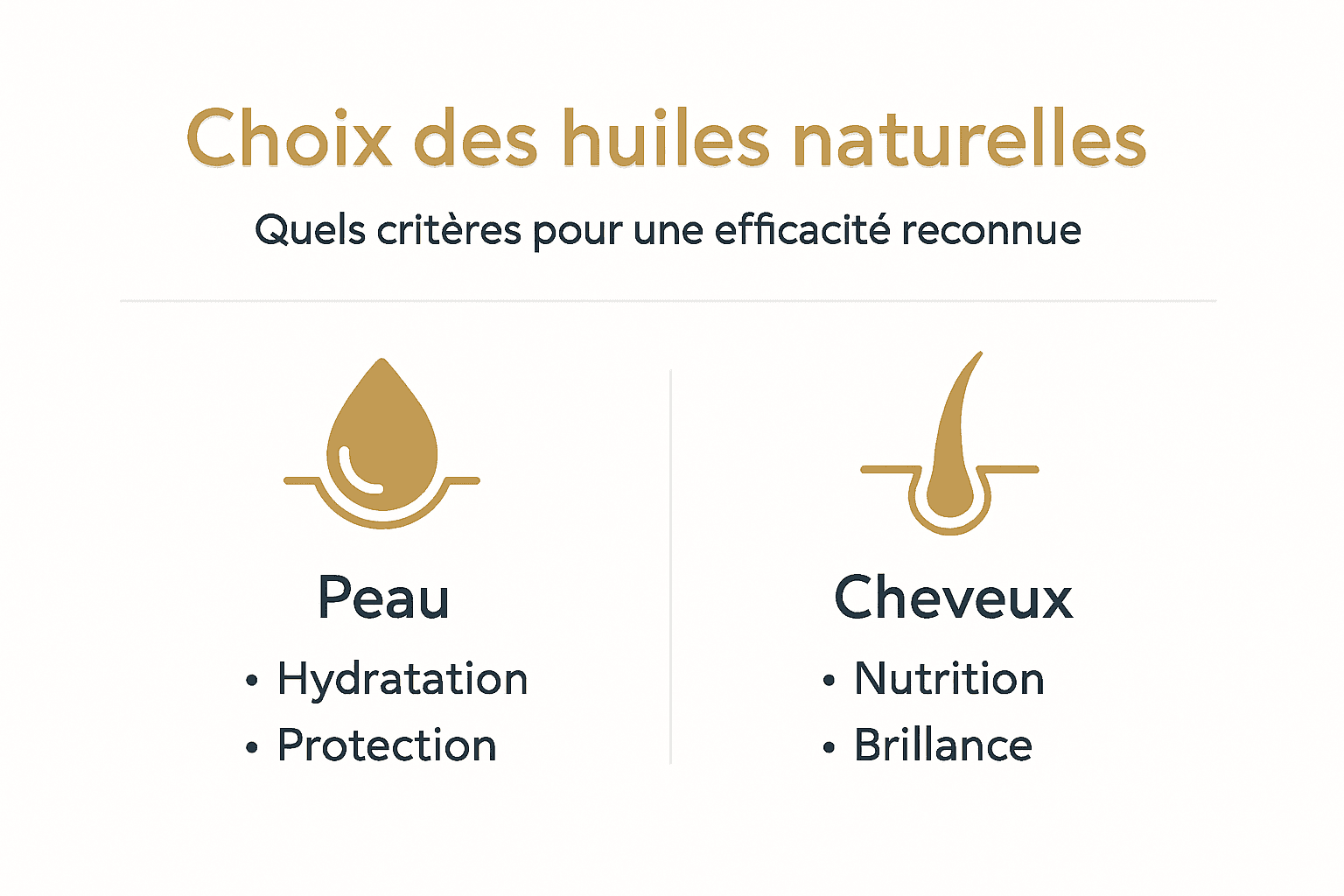
The selection of suitable oils depends on an analysis of your specific skin and hair profile. First, identify your skin type by observing areas of shine, dryness, sensitivity, or imperfections. Acne-prone skin requires non-comedogenic oils with antibacterial action, such as jojoba or hazelnut. Dry skin benefits from oils rich in omega fatty acids, such as borage or evening primrose.
| Skin Type | Carrier Oils | Essential Oils (diluted 1-2%) |
|---|---|---|
| Acne-prone | Jojoba, hazelnut, black seed | Tea tree, lavender, geranium |
| Dry | Avocado, borage, evening primrose | Rose, sandalwood, chamomile |
| Mature | Argan, rosehip, fig seed | Frankincense, immortelle, carrot |
| Sensitive | Calendula, sweet almond, apricot | Roman chamomile, fine lavender |
For hair, consider texture, porosity, and the overall condition of your hair. Fine and flat hair prefers light oils that are quickly absorbed without a greasy residue. Thick and curly hair tolerates heavier oils that provide definition and frizz control.
Simple DIY formulations to get started:
- Dry skin face serum: 30 ml argan oil + 3 drops rose essential oil.
- Damaged hair mask: 2 tablespoons coconut oil + 2 drops ylang-ylang essential oil.
- Anti-acne treatment: 10 ml jojoba oil + 2 drops tea tree essential oil.
Pro tip: Introduce a new oil gradually into your routine, starting with application every two days. Observe skin reactions and adjust the frequency according to tolerance and the results obtained. This gradual approach minimizes risks and allows for the quick identification of potential incompatibilities. Consult our guide for choosing beauty products according to your unique profile.
Record your observations in a beauty journal to track the evolution of your skin and adjust your oil selection over the seasons and hormonal changes.
Common Misconceptions and Realities of Natural Oils in Beauty
Many wrongly believe that all natural oils universally suit all skin types. In reality, the chemical composition varies considerably between oils, and some can worsen existing skin problems. Coconut oil, for example, is highly comedogenic and may clog pores in people with acne-prone skin despite its antibacterial properties.
The pure application of essential oils represents a dangerous practice spread by misinformation. These concentrated extracts contain powerful molecules that irritate, burn, or sensitize the skin without proper dilution in a plant-based carrier. Even oils reputed to be gentle, such as lavender, require strict adherence to dilution ratios.
Expectations of instant results constitute another frequent source of disappointment. Natural oils act gradually by supporting natural skin biological processes. Visible benefits generally appear after 4 to 6 weeks of regular and appropriate use. Patience and consistency are essential to observe lasting improvements.
Common myths to debunk:
- “The more oil I use, the better the results will be”: Excess clogs pores and creates an unpleasant greasy effect.
- “Carrier oils alone are enough to treat severe skin problems”: Certain conditions require professional dermatological interventions.
- “All essential oils are safe during pregnancy”: Several have formal contraindications for pregnant women.
- “A high price guarantees superior quality”: Criteria such as origin, extraction, and organic certification matter more.
“The quality, purity, and origin of natural oils directly determine their cosmetic efficacy and safety. Always favor certified, traceable products adapted to your individual profile to guarantee optimal results and safety of use.”
Inform yourself through reliable scientific sources and consult qualified professionals before incorporating new oils into your beauty routine.
Conclusion and Perspectives for Effective Natural Beauty
Natural oils offer effective beauty solutions when selected and applied according to established scientific principles. The distinction between essential and carrier oils, adherence to recommended dilutions, and personalization according to skin or hair type constitute the foundations of successful use. An informed and gradual approach maximizes benefits while minimizing risks.
The future of natural cosmetics incorporates promising technological innovations. Nanolipid formulations increase penetration and reduce the skin toxicity of essential oils, optimizing their efficacy while improving their safety profile. These innovations in nanoencapsulation will allow for even more effective and better-tolerated skincare in the future.
Discover Our Natural Solutions for Your Beauty Routine
Are you looking for products adapted to your specific needs in natural care? HBPS Beauty offers a rigorous selection of premium beauty solutions to optimize your daily routine. Our platform guides you toward informed choices, combining proven efficacy and certified quality.
Explore our comprehensive guide to choosing beauty products for a routine tailored to your skin type and beauty goals. Discover our at-home hair care procedure for nourished and radiant hair. HBPS Beauty supports you on your journey toward effective natural beauty.
Frequently Asked Questions
What are the benefits of vegetable oils compared to essential oils?
Vegetable oils moisturize, nourish, and restore the skin's lipid barrier thanks to their richness in essential fatty acids. Essential oils provide targeted therapeutic properties such as antibacterial, anti-inflammatory, or stimulating actions, but always require dilution in a carrier oil before application.
How do I know if a natural oil is suitable for my skin or hair type?
First, identify your skin type by observing oily, dry, or sensitive areas, then select oils whose chemical composition matches your specific needs. Always perform a patch test before widespread use and consult our guides for products suited to your type. Adjust your choices based on reactions observed after the first applications.
Why is it important to dilute essential oils before use?
Essential oils contain highly concentrated active molecules that cause severe irritation, chemical burns, or allergies without proper dilution. A recommended concentration of 1 to 2% in a carrier oil guarantees therapeutic effectiveness while ensuring optimal safety and skin tolerance.
What is the ideal application frequency for oils to see visible results?
Regular application several times a week over a prolonged period of at least 4 to 6 weeks is necessary to notice visible and lasting improvements. The effects of natural oils are gradual because they support natural biological skin regeneration processes. Patience and consistency guarantee optimal results.