

Balanced Hair Care Routine: Complete 2026 Guide
A hair care routine tailored to your hair texture reduces breakage by 40% in four weeks. Balancing hydration and nourishment transforms dull hair into a radiant mane. This guide helps you create a routine tailored to your specific needs, with simple steps and expert tips for quickly achieving visible results.
Table of Contents
- Understanding Your Hair: Type, Texture, and Porosity
- The Key Role of the Scalp in Hair Balance
- Essential Steps: Washing and Detangling
- Hydration and Nourishment: Finding the Perfect Balance
- Common Mistakes to Avoid in Your Hair Care Routine
- Discover Our Solutions for an Ideal Hair Care Routine
- What Is a Balanced Hair Care Routine?
Key Takeaways
| Point | Details |
|---|---|
| Essential Personalization | Tailoring your routine to your hair type, texture, and porosity ensures optimal results. |
| Scalp Health | A healthy scalp is the foundation of strong, balanced hair growth. |
| Hydration-Nourishment Balance | Distinguishing and combining these two types of care prevents dryness and weakness. |
| Gentle, Infrequent Washing | Washing two to three times a week preserves the scalp's natural balance. |
| Avoid Overloading | Simplifying your routine with targeted products limits irritation and buildup. |
Understanding Your Hair: Type, Texture, and Porosity
Identifying your hair type is the first step toward an effective, balanced routine. Hair is classified into four main categories: straight, wavy, curly, and coily. Each type has distinct characteristics that directly influence your hair care needs.
Texture determines the structure of your hair fiber. Straight hair reflects light better but accumulates sebum more quickly. Wavy hair offers a balance of shine and volume. Curly and coily hair requires more hydration because natural sebum has difficulty traveling down the coils.
Porosity measures your hair's ability to absorb and retain moisture. Low porosity means tightly closed cuticles that repel water. Medium porosity effectively absorbs and retains hair care products. High porosity absorbs quickly but loses moisture just as fast.
To test your porosity, place a clean strand of hair in a glass of water. If it floats, your porosity is low. If it sinks slowly, it is medium. If it sinks immediately, it is high.
Your hair care tips should take these factors into account:
- Low-porosity hair: prioritize lightweight products and gently warm masks to facilitate penetration
- Medium-porosity hair: use a balanced routine with weekly masks
- High-porosity hair: seal in moisture with oils and avoid excessive heat sources
This knowledge allows you to precisely tailor your products and techniques. Reviewing a complete healthy hair care routine helps you refine your approach based on these fundamental criteria.
The Key Role of the Scalp in Hair Balance
Your scalp plays a fundamental role in the overall health of your hair. Neglecting this area compromises all your hair care efforts, regardless of the quality of the products used on the lengths.
The scalp serves three vital functions. It protects the scalp from external aggressors and regulates sebum production. It houses the hair follicles that ensure the growth of new hair. A healthy scalp promotes better growth and prevents problems such as dryness or excess sebum.
Scalp imbalance manifests through several signs. Itching indicates irritation or dryness. Dandruff reveals excessive cell turnover. Excess sebum makes the roots quickly greasy. Sensitivity to the touch signals inflammation.
To maintain a balanced scalp, adopt these practices:
- Gently massage the scalp while shampooing to stimulate blood circulation
- Choose products with a suitable pH between 4.5 and 5.5
- Space out washes to respect the natural sebum production cycle
- Rinse thoroughly to remove all product residue
Pro tip: massage your scalp three times a week with your fingertips for five minutes. This simple technique increases blood flow to the follicles, promoting more vigorous growth and reducing hair loss.
Your scalp requires as much attention as your hair lengths. Caring for your scalp is the first pillar of a truly balanced and sustainable hair care routine.
Essential Steps: Washing and Detangling
Washing is the most crucial step in your hair care routine. Improper cleansing compromises the balance of your scalp and weakens your hair lengths, regardless of the care applied afterward.
Choose a gentle shampoo without harsh sulfates. Sulfates such as sodium lauryl sulfate strip away the natural protective sebum. Prioritize formulas with gentle surfactants such as coco-betaine or decyl glucoside.

The ideal frequency according to hair type varies between two and three washes per week. Washing daily stimulates excessive sebum production, creating a vicious cycle. Spacing out shampoos allows the scalp to naturally regulate its production.
Follow this optimal washing method:
- Brush your hair before shampooing to remove dust and superficial knots
- Thoroughly wet your hair with lukewarm, never hot, water
- Emulsify the shampoo in your palms before applying it to the scalp
- Gently massage the scalp with the pads of your fingers for two minutes
- Let the product glide over the lengths without rubbing vigorously
- Rinse thoroughly with lukewarm water, then finish with a blast of cool water to tighten the cuticles
Detangling requires as much gentleness as washing. Always start with the ends and gradually work your way up to the roots. This technique limits breakage and prevents pulling out fragile hair.
Use a wide-tooth comb on wet hair. Brushes can create too much tension on the water-saturated hair fiber. Apply a conditioner or leave-in product to make detangling easier.
Pro tip: detangle your hair before shampooing to reduce post-wash knots by 50%. This preventive step protects the hair structure and speeds up your routine. An effective at-home routine incorporates these simple steps for professional results.
Hydration and Nourishment: Finding the Perfect Balance
Understanding the difference between hydration and nourishment radically transforms the effectiveness of your hair care routine. These two complementary concepts address distinct needs and require specific approaches.
Hydration provides water to the hair fiber. It maintains suppleness, elasticity, and shine. Dehydrated hair becomes rough, dull, and brittle. Nourishment provides lipids and proteins. It strengthens the internal structure and fills gaps in the cuticle.
An imbalance between these two types of care creates visible problems. Hair that is over-hydrated without sufficient nourishment becomes limp and lacks hold. Hair that is over-nourished without hydration appears heavy, greasy, and flat.
| Need | Signs | Solutions | Frequency |
|---|---|---|---|
| Hydration | Rough, frizzy, dull hair | Hydrating spray, aloe vera gel, water-based mask | 2-3 times a week |
| Nourishment | Brittle, split, porous hair | Vegetable oils, butters, protein masks | Once a week |
| Balance | Supple, shiny, resistant hair | Alternating hydration and nourishment | Personalized program |
Products suited to your hair type contain specific ingredients. For hydration, look for:
- Vegetable glycerin, which attracts and retains moisture
- Hyaluronic acid for deep hydration
- Aloe vera with soothing and hydrating properties
- Honey for its natural humectant properties
For nourishment, prioritize:
- Coconut oil, which penetrates the hair fiber
- Shea butter to seal in moisture
- Avocado oil, rich in essential fatty acids
- Keratin to rebuild the structure
Tailor your routine to your hair type. Fine hair requires more lightweight hydration and less nourishment. Thick and curly hair needs a balance leaning toward nourishment. Color-treated or damaged hair requires regular alternation.
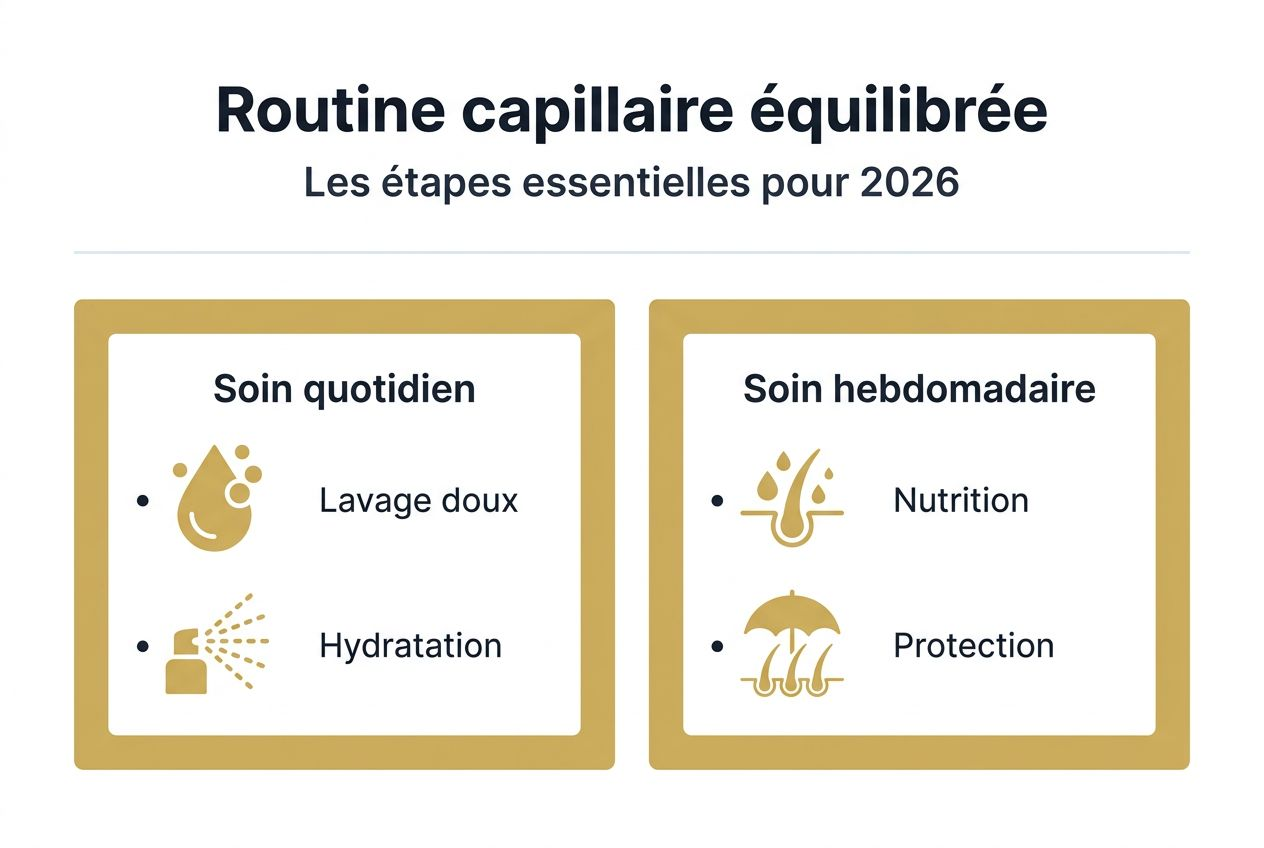
Pro tip: test your hair's porosity every month. If your hair absorbs water quickly but dries fast, increase nourishment to seal in moisture. This dynamic adjustment ensures optimal balance.
Choosing beauty products suited to these specific needs maximizes results. Observing how your hair reacts and gradually adjusting your approach leads to the perfect balance.
Common Mistakes to Avoid in Your Hair Care Routine
Some common practices sabotage your efforts to maintain a balanced hair care routine. Identifying and correcting these mistakes significantly improves your hair's health in just a few weeks.
Harsh shampoos containing sulfates are the number one mistake. These powerful detergents imbalance the scalp and worsen dryness by 35%. They strip away the protective lipid film, forcing the scalp to overproduce sebum to compensate.
Washing too frequently is the second major mistake. Washing more than three times a week disrupts the natural sebum regulation cycle. Your scalp enters a state of permanent overproduction, creating a vicious cycle of increasingly frequent washes.
Overloading your routine with too many products paradoxically harms your hair. Layering serums, oils, mousses, and sprays weighs down the hair fiber. Residue builds up, suffocates the scalp, and causes irritation and dandruff.
Other common mistakes to avoid:
- Neglecting to test new products that may trigger allergic reactions
- Applying nourishing treatments directly to the scalp, clogging pores
- Using water that is too hot, which excessively opens the cuticles
- Rubbing vigorously with a towel, creating frizz and breakage
- Ignoring signs your hair is sending, such as changes in texture or increased hair loss
Personalization remains the key to a successful balanced routine. Blindly copying an influencer's routine or following generic advice without considering your hair type leads to disappointment. Your hair has unique needs that evolve with the seasons, your diet, and your stress levels.
A professional hair care routine simplifies your approach while maximizing results. Fewer targeted products are better than a cabinet full of unsuitable bottles. Focus your efforts on the fundamentals: gentle cleansing, tailored hydration, and balanced nourishment.
Carefully observe how your hair reacts for four weeks after each change. This period allows your scalp to adapt and reveals the true effects of a new product or modified technique.
Discover Our Solutions for an Ideal Hair Care Routine
Optimizing your hair care routine requires products suited to your specific needs. Our selection combines expertise and innovation to transform your hair from within.

The GESKE vitamin anti-aging mask provides intense nourishment enriched with essential vitamins. Its innovative formula strengthens the hair fiber while protecting against external aggressors.
Protect your skin and scalp from UV rays with Lancaster's spf50 sensitive face cream. This high-performance sun protection preserves the natural balance of sensitive skin and scalps.
Also discover the Nu Skin ageLOC galvanic spa face care essentials system, a professional galvanic technology for revitalizing at-home care. This approach complements your overall beauty routine.
What Is a Balanced Hair Care Routine?
What Is a Balanced Hair Care Routine?
A balanced hair care routine combines gentle cleansing, tailored hydration, and targeted nourishment according to your hair type. It respects the scalp's natural cycle while providing the necessary care to the lengths. Balance is achieved by alternating types of care and adjusting the frequency according to your hair's evolving needs.
How Often Should You Wash Your Hair for a Balanced Routine?
Two to three washes a week are sufficient for most hair types. This frequency allows the scalp to naturally regulate its sebum production without being irritated. Adjust according to your physical activity and environment.
What Types of Products Should You Prioritize According to Your Hair Type?
Fine hair requires lightweight, volumizing products. Thick hair requires formulas richer in nourishment. Products suited to your hair type contain specific ingredients that meet hydration or nourishment needs.
How to Avoid Common Mistakes in a Hair Care Routine
Avoid shampoos containing harsh sulfates that imbalance the scalp. Do not wash your hair daily to preserve the protective lipid film. Simplify your routine by using only the products essential to your specific needs.
Can You Tailor Your Hair Care Routine to the Seasons?
Yes, adjusting your routine according to the seasons optimizes results. In winter, increase hydration to counteract heating and dry air. In summer, protect your hair from the sun and chlorine with specific treatments. Autumn and spring allow you to gradually rebalance your approach.