

Teeth whitening for sensitive teeth: a safe and painless method
Yes, you can safely whiten sensitive teeth, provided you choose the right method and consult a dentist before starting. The key: a low peroxide concentration, two weeks of preparation with a desensitizing toothpaste, and professional follow-up if the pain persists.
Priority actions before starting:
- Step 1: Consult a dentist to rule out cavities, gum recession, or tooth fractures.
- Safest option: Custom-made trays with low-concentration gel, prescribed by a professional.
- Fastest option: In-office whitening with a protocol adapted for sensitive teeth (gingival barrier, controlled gel).
Pro tip: Start using a potassium nitrate toothpaste two weeks before your whitening session. This preparation reduces the nerve reactivity of the dentinal tubules and significantly decreases discomfort during treatment.
Key points
Safe whitening for sensitive teeth depends on three conditions: a prior dental exam, an appropriate peroxide concentration, and two weeks of preparation with a desensitizing toothpaste.
| Point | Details |
|---|---|
| Confirmed feasibility | Whitening sensitive teeth is possible provided that cavities and gum recession are ruled out beforehand. |
| Two-week preparation | A potassium nitrate or fluoride toothpaste reduces nerve reactivity before treatment. |
| Low concentration, better comfort | Hydrogen peroxide levels of 6 to 10% provide good results with less pain. |
| Typically short-lived sensitivity | Post-whitening sensitivity generally lasts 24 to 72 hours; beyond that, consult a dentist. |
| Hbps-beauty for maintenance | AP 24 Whitening Fluoride Toothpaste is available on Hbps-beauty to maintain results without harsh peroxide. |
Table of contents
- What options do dentists recommend for sensitive teeth?
- How does each method affect sensitivity?
- When should whitening be postponed?
- How to reduce sensitivity before, during, and after whitening
- What professional options are available for highly sensitive people?
- How to read a label and choose the right product?
- What to expect: results and duration of sensitivity
- Why does whitening cause sensitivity?
- Our view on whitening for sensitive teeth
- Hbps-beauty products adapted for sensitive teeth
- Sources
What options do dentists recommend for sensitive teeth?
Not all methods are equal when your teeth react to hot or cold. Here are the most common options, with their real advantages and limitations.
- Fluoride whitening toothpaste: gradual action over 4 to 8 weeks, very well tolerated, ideal for maintenance. Modest results but without the risk of increased sensitivity if the formula contains potassium nitrate.
- Low-concentration whitening strips: convenient, accessible, but contact with the gums can cause irritation. Choose strips formulated for sensitive teeth with a reduced peroxide level, as reported by Forbes product reviews.
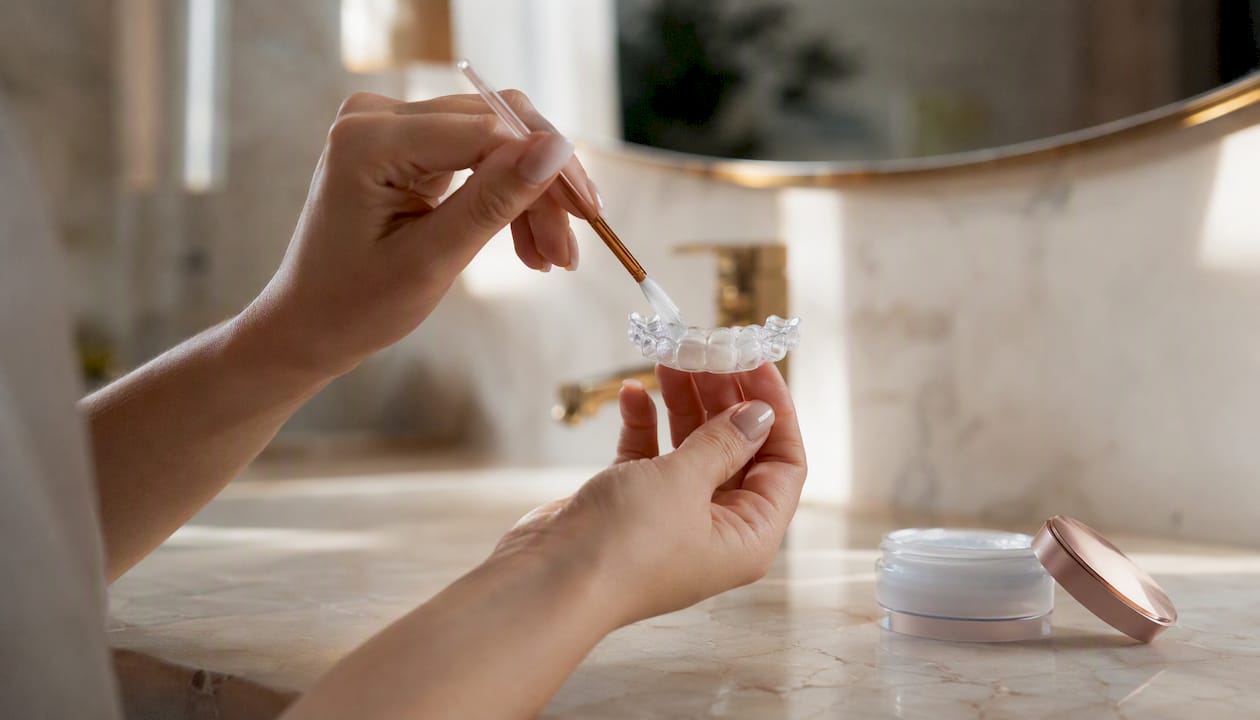
- Custom-made trays (prescription): best comfort/result ratio. The gel does not overflow onto the gums, the concentration is controlled, and the pace adapts to your tolerance.
- In-office whitening: immediate results in one session. Modern protocols include a gingival barrier and moderate-concentration gels, making them compatible with sensitive teeth.
- Peroxide-free formulas (PAP): phthalimidoperoxycaproic acid (PAP) whitens without penetrating the dentin, which reduces the risk of sensitivity. An option to consider if you have reacted strongly to classic products.
How does each method affect sensitivity?
Hydrogen peroxide, carbamide peroxide, and PAP: three different logics
Hydrogen peroxide works quickly but penetrates deeply. A review indexed on PubMed Central shows that whitening agents cross the enamel and reach the dentin, which explains the temporary sensitivity felt after treatment. The higher the concentration and the longer the application time, the more pronounced this penetration is.
Carbamide peroxide breaks down more slowly: it releases about one-third active hydrogen peroxide, which gives it a generally gentler sensitivity profile.
PAP, on the other hand, oxidizes color molecules without penetrating the dentinal tubules. Peroxide-free formulas based on PAP represent a serious alternative for highly reactive people, as noted by Coursdentaires.
What makes generic kits riskier
| Criterion | Custom-made trays | Generic strips/kits |
|---|---|---|
| Fit to teeth | Precise, no overflow | Approximate, frequent gum contact |
| Gel concentration | Controlled by the dentist | Variable, sometimes not indicated |
| Application time | Adapted to your tolerance | Fixed, often too long |
| Professional follow-up | Yes | No |
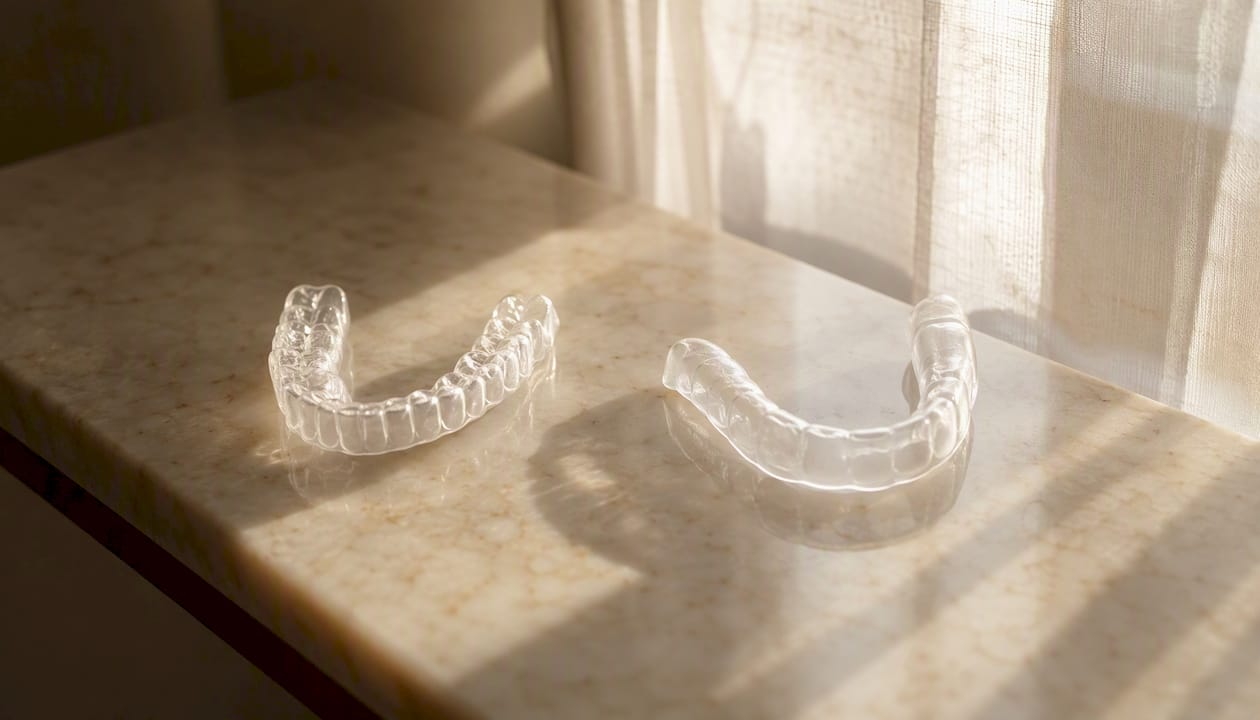
Kits sold online without a prescription may display high concentrations without clear warnings. Gel that overflows onto the gums irritates the soft tissues and amplifies the pain, a problem that custom trays almost entirely eliminate.
When should whitening be postponed?
Certain situations make whitening contraindicated until treated. Whitening despite these signs can worsen an existing lesion and turn temporary sensitivity into chronic pain.
Signs that require a dental consultation before anything else:
- Spontaneous or persistent pain in a tooth (possible sign of a deep cavity or pulpitis)
- Visible gum recession: the exposed root is not protected by enamel
- Swollen, bleeding, or touch-sensitive gums
- Cracked tooth or recent dental restoration (crown, bridge, composite)
- Already very marked sensitivity to cold or hot before any treatment
The American Dental Association recommends a dental exam before any cosmetic whitening. Dental insists on the same point: treating underlying causes such as cavities or gum recession before starting whitening avoids worsening the situation.
Pro tip: Ask your dentist to check the condition of your existing restorations. Composites and ceramics do not whiten with peroxide: if you have visible veneers or crowns, asymmetrical whitening can create an undesirable contrast.
How to reduce sensitivity before, during, and after whitening
Before treatment
- Use a potassium nitrate or fluoride toothpaste for two weeks before the first session. These agents partially block nerve transmission in the dentinal tubules.
- Use a soft toothbrush and a brushing technique without excessive pressure to avoid worsening existing gum recession.
- Do a daily fluoride rinse to strengthen the enamel.
During treatment
- Choose the lowest concentration that gives acceptable results. Levels of 6 to 10% hydrogen peroxide are often sufficient and significantly less irritating, according to Verywell Health's practical recommendations.
- Reduce the application time if you feel discomfort: 20 minutes instead of 30 may be enough.
- Space out sessions by at least 48 hours to allow the tubules to close.
- If you use strips, avoid any contact with the gums by trimming them slightly if necessary.
After treatment
- Avoid very hot or very cold foods and drinks for 24 to 48 hours.
- Continue the desensitizing toothpaste after each session.
- In case of acute pain, an analgesic such as ibuprofen taken one hour before the next session can alleviate discomfort, with medical advice.
Pro tip: If the pain lasts more than 48 hours or intensifies between sessions, stop the treatment and consult. Sensitivity that worsens is not normal and may indicate an underlying lesion.
What professional options are available for highly sensitive people?
The dental office offers a level of control impossible to reproduce at home. Protocols adapted for sensitive teeth combine several measures simultaneously.
In-office:
- Application of a gingival barrier (photopolymerizable resin) before the gel to protect the soft tissues.
- Use of moderate-concentration gels with built-in breaks during the session.
- Application of a desensitizing agent (potassium nitrate, fluoride) directly on the teeth at the end of the session.
- The Academy of General Dentistry offers detailed clinical resources on these protocols for practitioners and patients.
Prescription trays:
- The dentist takes an impression to make a tray perfectly fitted to your arch.
- The prescribed gel (generally 10–16% carbamide peroxide) is precisely dosed.
- The treatment pace adapts to your tolerance, with the possibility of taking breaks without losing the results achieved.
- To learn more about professional options, the Hbps-beauty advanced oral care guide details the differences between at-home and in-office approaches.
Questions to ask your dentist before starting:
- What peroxide concentration do you use for sensitive patients?
- Do you apply a gingival barrier during the session?
- What should I do if sensitivity persists more than 48 hours after treatment?
- Are my existing restorations likely to create a color contrast?
How to read a label and choose the right product?
What to look for on the packaging
- Peroxide percentage: prefer 3 to 10% hydrogen peroxide or 10 to 16% carbamide peroxide for sensitive teeth.
- Explicit mention: "for sensitive teeth", "sensitive formula", or equivalent.
- Desensitizing agents: potassium nitrate, sodium fluoride, or hydroxyapatite in the ingredients list.
- PAP formula: indicated if you have reacted strongly to peroxide-based products.
What to avoid
- Concentrations higher than 15% hydrogen peroxide without dental supervision.
- Promises of results "in 24 hours" or "ultra-fast": they generally involve high concentrations.
- Kits without certification or concentration indication.
- Products containing abrasive activated charcoal, which erodes enamel without whitening effectively.
Which format to choose?
Whitening toothpastes are suitable for daily maintenance and preparation. Low-concentration strips are convenient for a first try. Custom-made trays remain the best choice if you have a history of marked sensitivity, as they limit gel/gum contact, as confirmed by Hollywood Family Dentistry dental guides.
What to expect: results and duration of sensitivity
Sensitivity related to whitening is in the vast majority of cases temporary. It generally lasts between 24 and 72 hours after a session, then disappears without special treatment.
- Whitening toothpaste: first results visible after 4 to 8 weeks of regular use. Sensitivity is rare if the formula contains fluoride.
- At-home strips or gel: noticeable improvement in 2 to 3 weeks. Sensitivity possible after each session, disappearing in 24 to 48 hours.
- In-office whitening: immediate results after a single session. Sensitivity possible in the following 24 to 48 hours, generally more intense but shorter.
Signs that require a consultation:
- Pain lasting more than 72 hours after the last session.
- Spontaneous pain (without hot or cold stimulus).
- Gums that bleed or remain swollen several days after treatment.
- Electric shock sensation on a specific tooth.
Why does whitening cause sensitivity?
The mechanism in brief
Hydrogen peroxide is a small molecule that crosses the enamel relatively easily. Once in the dentin, it comes into contact with the dentinal tubules, these micro-channels that connect the surface of the tooth to the nerve. The stimulation of these tubules triggers a nerve reaction perceived as pain or sensitivity to cold. The review published on PubMed Central precisely documents this penetration mechanism and the temporary nature of the reaction.
The American Dental Association makes the same recommendation: a preliminary dental check-up is essential to ensure that the enamel and gums are in a condition to withstand the treatment.
What research confirms:
- Sensitivity is directly linked to the concentration of peroxide and the duration of exposure.
- Desensitizing agents (potassium nitrate, fluoride) reduce nerve transmission and alleviate pain.
- Low-concentration protocols spread over several sessions yield results comparable to intensive protocols, with much less discomfort.
Our view on whitening for sensitive teeth
Most guides on this subject focus on products. What is often missing is the preparation logic: whitening sensitive teeth without preparing them is like running a half-marathon without training. Two weeks of desensitizing toothpaste is not an option; it is a condition for the treatment to be bearable.
The other underestimated point: concentration is not an indicator of quality. Intense pain is not a sign that the product is "working"; it is a warning sign.
At Hbps-beauty, we always recommend consulting a dentist before using any whitening product, especially if you have a history of sensitivity. The products we offer are selected for their gentle formulation and compatibility with regular use. For complex cases, a professional remains irreplaceable.
Hbps-beauty products adapted for sensitive teeth
For people looking for a daily maintenance option after professional whitening, or who wish to whiten gradually without risking marked sensitivity, the AP 24 Whitening Fluoride Toothpaste available on Hbps-beauty is a practical option. Its sodium fluoride formula supports enamel remineralization while acting on surface stains, without high-concentration peroxide.

For those who prefer a bulk purchase, the 4-pack of AP 24 Whitening Fluoride Toothpaste represents an economical solution to maintain results over time. Hbps-beauty also offers practical guides on at-home oral care to accompany every step of the process.
Consult your dentist before starting any whitening protocol, then explore the oral care range on Hbps-beauty to find the product suited to your routine.
Sources
- Pmc
- Ada
- Strategies to Cope With Teeth Whitening Pain
- Best Whitening Products For Sensitive Teeth 2026
- Dental
This article provides general information and does not replace the advice of a qualified medical professional. Consult a qualified healthcare professional about your personal case before taking action based on this content.