

Anti-aging skincare: definition, effectiveness, and right choices
TL;DR:
- Anti-aging products work mainly on the surface, with wrinkle reduction limited to 10-20%.
- Effectiveness depends more on the concentration of proven active ingredients than on price or luxurious packaging.
- A regular routine tailored to your skin, combined with a healthy lifestyle, optimizes results.
Anti-aging products are subject to persistent confusion: does a high price necessarily mean effectiveness? Independent 2025 tests show that affordable creams rival luxury formulas, with a visible wrinkle reduction capped at 10-20% maximum. In other words, the golden packaging does not make the product. This article explains what anti-aging products really cover, what studies prove, how to choose according to your skin and your goals, and how to maximize results daily without breaking the bank.
Table of Contents
- What are anti-aging products really?
- The real effectiveness of anti-aging products: evidence and limits
- The criteria for choosing an effective anti-aging product
- Practical tips to reinforce the anti-aging action daily
- Our analysis: untangling the promises of anti-aging marketing
- Accessible anti-aging solutions on HBPS-Beauty
- Frequently asked questions about anti-aging products
Key Points
| Point | Details |
|---|---|
| Clear definition | Anti-aging products aim to prevent and reduce the effects of skin aging, not to miraculously rejuvenate. |
| Proven effectiveness | Tests show that affordable products are sometimes as high-quality as luxury products. |
| The choice of active ingredients takes precedence | The concentration of key ingredients (retinol, vitamin C) matters more than the brand or the price. |
| Essential overall routine | Better results are obtained by combining care, lifestyle, and regularity of application. |
What are anti-aging products really?
The term "anti-aging" is everywhere, but it covers very different realities. Before choosing a product, you need to understand what this word really means, and especially what it does not mean.
According to the Le Robert dictionary, anti-aging products are cosmetic products intended to fight skin aging, in particular wrinkles, loss of firmness, and skin dryness.
This definition is important because it sets clear limits. An anti-aging product is not a medicine. It does not change the deep structure of the skin. It works on the surface to improve appearance, slow down certain visible signs of aging, and maintain skin comfort.
Many consumers confuse "anti-aging" and "anti-wrinkle". The difference is real. An anti-wrinkle product mainly targets fine lines and expression lines. An anti-aging product, on the other hand, tackles several fronts simultaneously. The benefits of anti-aging products include notably:
- Deep hydration: it maintains the hydrolipidic film and reduces the dull appearance of the skin.
- Plumping: certain active ingredients like hyaluronic acid temporarily plump the tissues to smooth fine lines.
- Antioxidant protection: it neutralizes free radicals responsible for premature aging. The role of antioxidants is often underestimated in a beauty routine.
- Prevention of loss of firmness: certain active ingredients stimulate collagen production to maintain elasticity.
- Fighting skin dryness: particularly important after 40, when the skin naturally produces less sebum.
One often ignored point: anti-aging products are as preventive as they are corrective. Starting a suitable routine before the appearance of the first visible signs is much more effective than waiting for wrinkles to settle in. Prevention remains the most profitable strategy in the long term, both for your skin and your budget.
The real effectiveness of anti-aging products: evidence and limits
The promises of brands are often spectacular. The reality of independent tests is more nuanced, but not disappointing for that.
The UFC-Que Choisir comparative tests confirm it: the visible reduction of wrinkles after regular use of an anti-aging cream is between 10 and 20% maximum. It is measurable, it is real, but it is not the radical transformation suggested by certain advertisements. And above all, creams costing less than twenty euros achieve results comparable to formulas sold ten times more expensive.
Why? Because effectiveness depends on the active ingredients present and their concentration, not on the displayed price. Studies show that price is not correlated with effectiveness: what matters is the concentration of recognized active ingredients.
| Active ingredient | Main function | Effective concentration |
|---|---|---|
| Retinol | Cell renewal | > 0.3% |
| Vitamin C | Antioxidant, radiance | > 5% |
| Hyaluronic acid | Hydration, plumping | Varies by molecular weight |
| Peptides | Collagen stimulation | Depending on formulation |
| Niacinamide | Skin tone evening, pores | > 2% |
Proven active ingredients such as retinol and vitamin C have been the subject of numerous clinical studies. Their effectiveness is documented, provided that the formula is stable and correctly dosed. A product that lists vitamin C in tenth position in its composition will not bring you much.
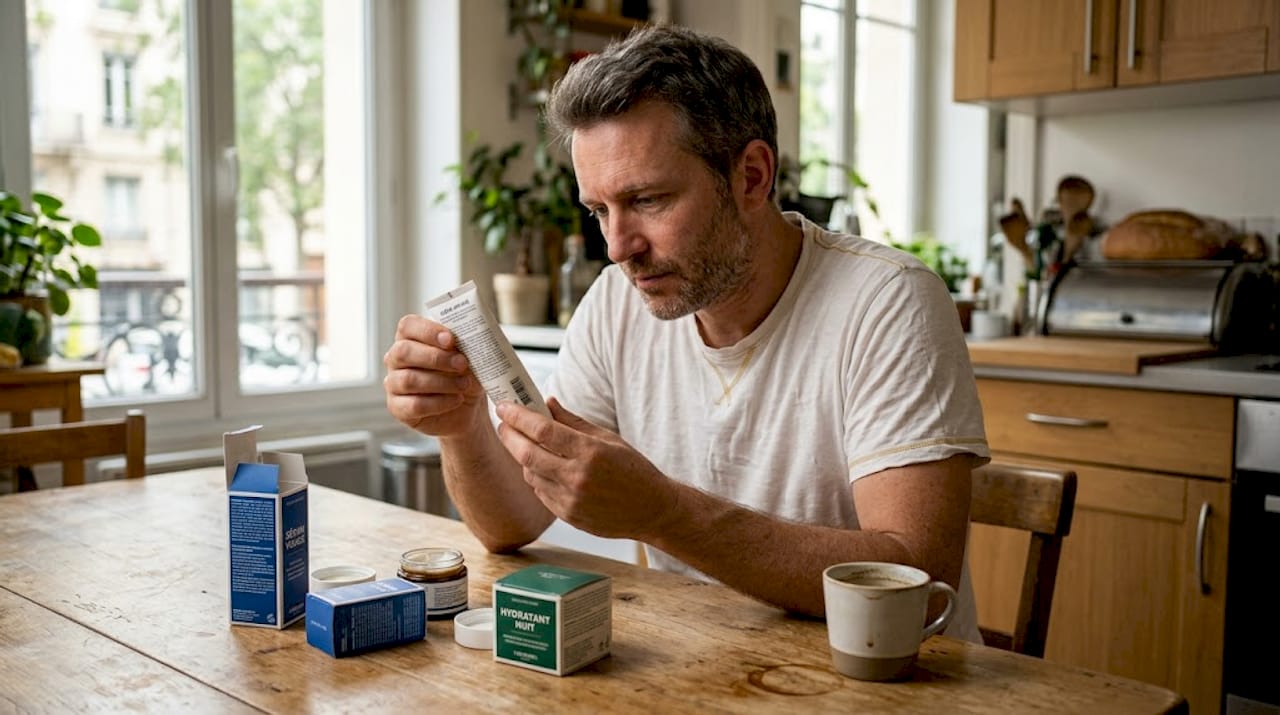
Pro tip: Always read the list of ingredients (INCI) before buying. Ingredients are listed in descending order of concentration. If your star active ingredient appears at the bottom of the list, move on. Face mask tests follow the same logic: formulation takes precedence over marketing.
Another determining factor: regularity of use. An effective product applied twice a week will yield worse results than an average product used every evening. Consistency is often more important than the formula itself. The benefits of natural active ingredients also manifest over time, not overnight.
The criteria for choosing an effective anti-aging product
Now that real effectiveness is clarified, how to make a choice suited to your skin and your expectations?
Choosing an anti-aging product should not look like a lottery. Here is a four-step method to decide with discernment.
- Analyze your skin and your priority needs. Is your skin dry, combination, sensitive? Do you want to target wrinkles, firmness, or radiance? Each goal corresponds to different active ingredients. Choosing your face care always starts with this honest self-assessment.
- Decipher the composition (INCI list). Identify the key active ingredients in the first positions of the list. Avoid formulas overloaded with fragrances or alcohol if you have reactive skin.
- Choose the suitable texture. Oily skin tolerates gels and light fluids better. Dry skin will benefit from a rich cream or an oil. The types of face care also vary according to the time of application (morning or evening).
- Check the tolerance/effectiveness ratio. A powerful active ingredient that is poorly tolerated will yield no results. Always test on a small area before adopting a new product.
The most effective creams at a low price are often those that rely on simple, well-dosed active ingredients, without marketing frills.
| Active ingredient | Recommended minimum concentration | Ideal skin type |
|---|---|---|
| Retinol | > 0.3% | Normal to combination |
| Vitamin C | > 5% | All, except very sensitive |
| Hyaluronic acid | Low and high molecular weight | All |
| Niacinamide | > 2% | Combination to oily |
| Peptides | Depending on formulation | Dry to mature |
Pro tip: If you are starting with retinol, start at a concentration of 0.1% twice a week. Increase gradually over several weeks. An introduction that is too fast causes irritation and desquamation that often discourages beginners, while tolerance is acquired over time.
Practical tips to reinforce the anti-aging action daily
After selecting the suitable product, how to obtain the best anti-aging result daily?
The application of an anti-aging product is not limited to spreading cream on your face. The method matters as much as the product.
- Always clean your skin before applying a product. Residues of pollution, sebum, and makeup form a barrier that reduces the penetration of active ingredients.
- Apply in gentle and upward movements. Avoid pulling the skin downwards. A light massage promotes microcirculation and improves absorption.
- Respect the recommended frequency. Certain active ingredients like retinol are used in the evening only. Vitamin C, on the other hand, is more effective in the morning to protect against oxidative aggressions of the day.
- Do not forget the SPF. Sun protection is the most effective anti-aging product that exists. Without it, all your other products lose part of their impact.
But cosmetic products have very real limits. Cosmetics hydrate and plump but do not "rejuvenate" in the biological sense of the term. A dermatologist clearly reminds us: creams work on the surface and do not change the deep structure of the dermis.
This is why lifestyle plays a fundamental role. Sleep promotes nocturnal cellular regeneration. A diet rich in antioxidants (berries, colored vegetables, olive oil) supports the skin from the inside. Tobacco, on the other hand, significantly accelerates skin aging and largely cancels out the benefits of applied products. The most effective home anti-wrinkle routine always combines topical products and a healthy lifestyle.
Pro tip: Combine your cosmetic routine with three simple habits: 7 to 8 hours of sleep, sufficient hydration (1.5 liters of water per day), and a varied diet. The most advanced dermocosmetic will never compensate for a lifestyle unfavorable to skin health.
Our analysis: untangling the promises of anti-aging marketing
The cosmetic industry is an expert at creating desire. Terms like "bio-regenerating", "cellular active", or "youth complex" sound scientific but do not correspond to any precise regulatory standard. This vocabulary is mainly used to justify high prices to consumers who associate complexity with effectiveness.
Our experience in the beauty sector has taught us one thing: the regularity of a simple routine almost always surpasses the irregular use of a 200-euro miracle product. The consumers who obtain the best results are those who understand recognized anti-aging active ingredients, choose well-dosed formulas, and stick to them for several months.
Patience is the most underestimated ingredient of any anti-aging routine. Visible results take between 4 and 12 weeks depending on the active ingredients. Who gives up after two weeks will never see the difference. Inform yourself, choose with discernment, and cultivate consistency: that is the real anti-aging formula.
Accessible anti-aging solutions on HBPS-Beauty
You now have the keys to read a label, choose a suitable active ingredient, and build a coherent routine. The next step is to find products that really correspond to these criteria.
On HBPS-Beauty, we have selected targeted anti-aging products to meet specific needs. The Beauty Focus MultiBeauty Pharmanex is formulated to support the skin from the inside with recognized active ingredients. For a complete approach, the Levissime Beauty Bag anti-aging brings together several complementary products designed for an effective routine. Each product is chosen for the quality of its formulation, not for the thickness of its packaging.
Frequently asked questions about anti-aging products
What is the difference between an anti-aging cream and an anti-wrinkle cream?
The anti-aging cream works on several signs simultaneously (wrinkles, firmness, dryness, radiance), while the anti-wrinkle mainly targets fine lines. Anti-aging products therefore cover a broader range of action.
Is an expensive product more effective?
No. Studies show that effectiveness depends on the active ingredients present and their concentration, without a link to the price. Affordable formulas regularly rival luxury creams in comparative tests.
Should anti-aging products be combined with other habits?
Yes, results are significantly better when products are part of a healthy lifestyle. Cosmetics alone do not reverse biological aging, but their action is multiplied by sleep, nutrition, and sun protection.
Which active ingredients are essential in an anti-aging product?
Retinol (> 0.3%), vitamin C (> 5%), hyaluronic acid and antioxidants are the most scientifically recognized ingredients. The concentration of active ingredients in the formula is the decisive criterion for judging the actual effectiveness of a product.
Recommendation
- Anti-aging facial actives: role and proven effects – HBPS Beauty & Fashion
- Anti-aging treatments in the salon: 5 proven benefits – HBPS Beauty & Fashion
- How to choose a facial treatment suited to your skin in 2026 – HBPS Beauty & Fashion
- Anti-wrinkle facial routine at home: complete guide – HBPS-Beauty