

Specifics of Professional Hair Care: Excellence and Performance for Hairstylists
Finding the ideal hair treatment for every client can sometimes be a challenge in a European salon. Between aesthetic requirements and the specificities of each hair type, selecting a suitable routine requires expert knowledge. Professional hair treatments comply with strict standards that guarantee their safety and effectiveness, thus offering hairdressers an essential guarantee of quality. This approach makes it possible to meet clients' expectations while enhancing professional performance on a daily basis.
Table of Contents
- Definition and objectives of professional hair treatments
- Typologies and advice according to hair types
- Key techniques and recent salon innovations
- Selection criteria and regulatory requirements
- Common risks and mistakes to avoid in practice
Key Points
| Point | Details |
|---|---|
| Professional Hair Treatments | They include techniques and products to ensure the health and appearance of hair. |
| Personalization of Treatments | Hairdressers must adapt their treatments according to each client's hair type. |
| Technological Innovations | The use of advanced techniques such as follicular extraction and digital diagnostics improves aesthetic results. |
| Regulatory Compliance | Professionals must choose products that comply with strict standards to guarantee the safety of hair treatments. |
Definition and objectives of professional hair treatments
Professional hair treatments represent a set of techniques and products specifically designed to guarantee the health, beauty, and aesthetic performance of hair. These treatments go far beyond simple cleansing; they constitute a scientific and technical approach to hair management in a professional environment.
From a regulatory standpoint, professional hair treatments must comply with strict standards regarding safety and formulation. They are defined as cosmetic products intended to cleanse, perfume, protect, and modify the appearance of hair, with specific and measurable objectives.
The main objectives of professional hair treatments include:
- Deep cleansing and scalp detoxification
- Repair and regeneration of hair fibers
- Hydration and nourishment of hair
- Protection against external aggressors (heat, pollution)
- Styling and aesthetic control
These treatments aim to deliver fast and lasting results by meeting the specific needs of different hair types. They allow hairdressers to offer tailor-made services that align with each client's precise expectations.
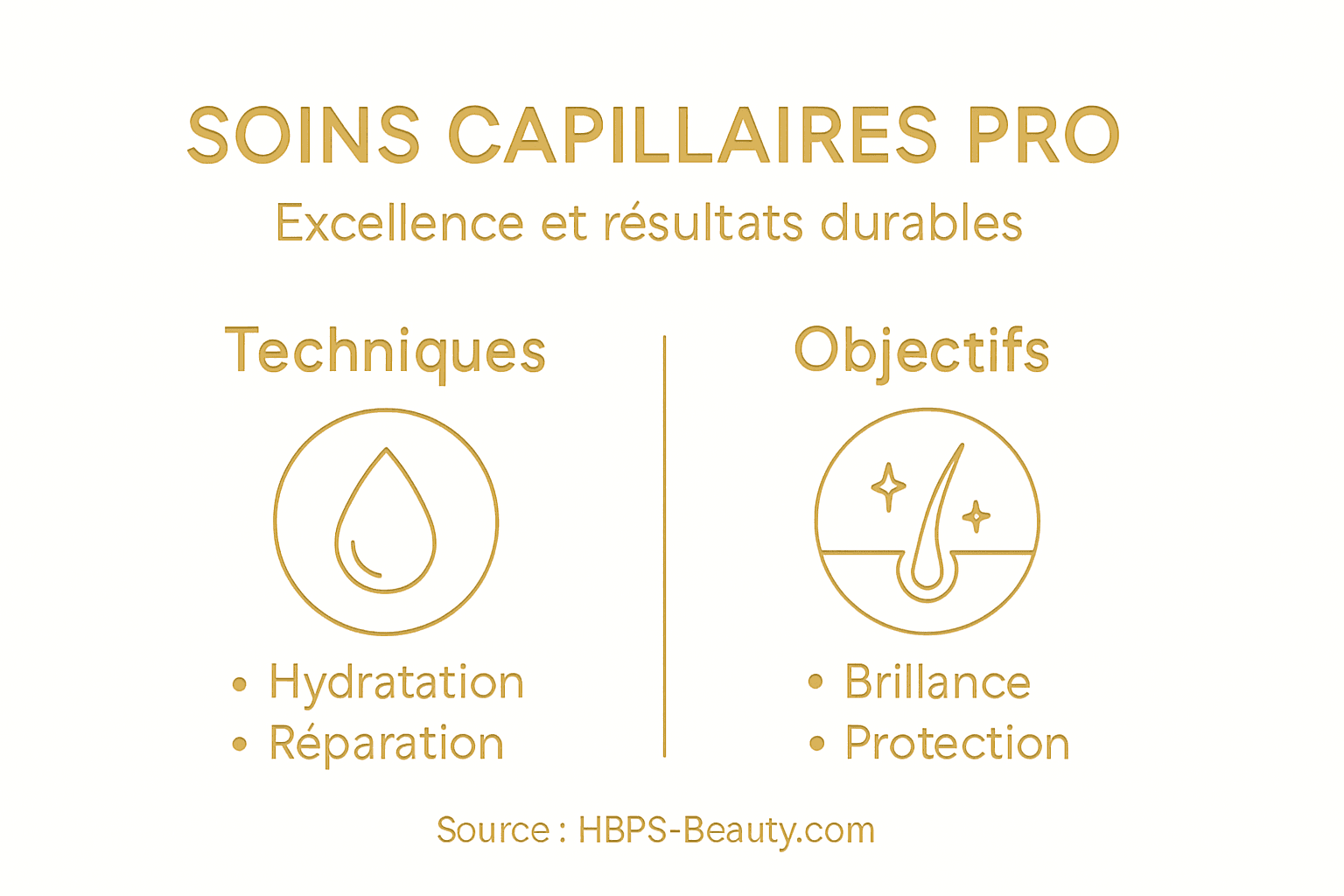
Pro tip: Invest in professional hair treatment products that meet the most demanding quality standards and are suitable for different hair and scalp types.
Typologies and advice according to hair types
Hair exhibits a remarkable diversity of structures and textures, requiring highly personalized treatment approaches. Hair texture is divided into several categories, ranging from straight to curly hair, each type requiring a specific treatment strategy to maintain its beauty and health.
The main hair typologies include:
- Straight hair: fine, smooth, requiring little volume
- Wavy hair: soft texture with slight waves
- Curly hair: defined curls and pronounced volume
- Coily hair: very tight and voluminous texture
Each category has unique characteristics in terms of porosity, density, and fragility. Curly hair types, in particular, offer a great diversity of subcategories, from light waves to very tight curls, involving nuanced treatment needs.
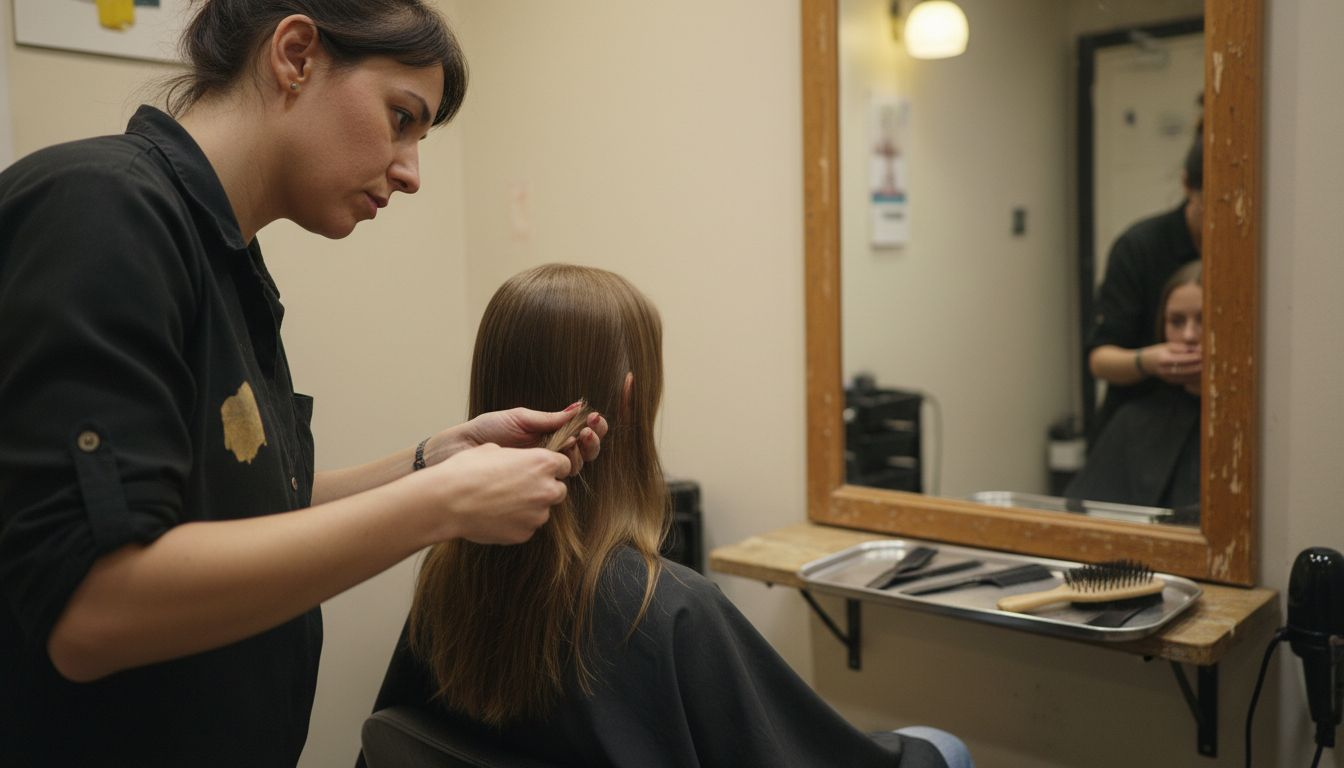
Professional hairdressers must therefore adopt a precise diagnostic approach, assessing the exact structure of each head of hair to offer truly personalized treatments. This approach guarantees not only aesthetics but also the intrinsic health of the hair.
Pro tip: Develop a keen expertise in hair analysis to precisely adapt your treatments to each hair type.
Key techniques and recent salon innovations
The world of professional hairdressing is undergoing constant technological revolution, with innovations that are radically transforming traditional practices. Hair transplant techniques have evolved particularly, offering increasingly precise and minimalist solutions for clients.
The main technological innovations in salons include:
- Robotic techniques: use of surgical robots for maximum precision
- Follicular extraction methods: FUE (Follicular Unit Extraction) and DHI (Direct Hair Implantation)
- Non-invasive technologies: treatments with rapid recovery and minimal scarring
- Digital hair diagnostics: precise analysis of hair structure and health
These advances allow professional hairdressers to offer less invasive procedures with exceptional aesthetic results. Robotics and new technologies now guarantee surgical precision and unparalleled quality of service.
This table provides an overview of innovative techniques applied in salons and their professional impact:
| Salon innovation | Brief description | Benefits for the client |
|---|---|---|
| Surgical robotics | Hair transplant automation | Precision and reduced risks |
| Advanced follicular extraction | FUE/DHI, minimally invasive methods | Virtually invisible scars |
| Digital hair diagnostics | Analysis by sensors and software | 100% personalized treatments |
| Non-invasive technologies | Laser, microcurrents, LED | Ultra-fast recovery |
The integration of these innovations requires continuous training and constant technological monitoring, allowing professionals to stay at the forefront of modern hair techniques.
Pro tip: Regularly invest in technological training to master the latest innovations in hair treatments.
Selection criteria and regulatory requirements
Professional hair treatments are subject to particularly strict regulatory standards that guarantee the safety and quality of products. Standardization criteria define precise requirements for each stage of the design, manufacture, and marketing of hair products.
The main selection criteria and regulatory requirements include:
- Chemical composition: rigorous control of ingredients
- Safety: exhaustive safety tests
- Traceability: complete technical documentation
- Standard compliance: compliance with NF EN ISO 22716 standards
- Risk assessment: thorough analysis before marketing
Professional hair products must meet complex standards, notably for hair prostheses and accessories. These regulations aim to protect both professionals and clients by ensuring high-quality practices.
Regulatory compliance involves detailed technical documentation, rigorous safety tests, and continuous performance assessment of products. Professional hairdressers must therefore be particularly vigilant in the choice and use of their hair treatments.
Pro tip: Stay constantly informed about regulatory developments and maintain an up-to-date technical file for each product used in the salon.
Common risks and mistakes to avoid in practice
Hair treatment professionals face multidimensional risks that require constant vigilance. Occupational disorders in the hair care field can significantly affect the health and safety of hairdressers if not properly managed.
The main risks and mistakes to avoid include:
- Physical risks: musculoskeletal disorders due to repetitive postures
- Chemical risks: exposure to potentially harmful products
- Allergic risks: skin reactions related to hair treatments
- Ergonomic risks: physical stress during prolonged handling
- Health risks: potential contamination
Smoothing products containing glyoxylic acid represent a particular danger, with potential risks of kidney failure and other health complications. The National Agency for Health Safety recommends a rigorous assessment before any use.
To minimize these risks, hairdressers must adopt strict protocols including the wearing of personal protective equipment, systematic product verification, and compliance with professional safety standards.
Here is a summary table of common risks in hair practice and their prevention protocols:
| Identified risk | Main source | Effective precaution |
|---|---|---|
| Musculoskeletal disorder | Repetitive posture in the salon | Ergonomics of workstations |
| Allergic reaction | Chemical products or dyes | Preliminary tests, wearing gloves |
| Health contamination | Poorly disinfected tools | Strict daily sterilization |
| Chemical toxicity | Glyoxylic acid or strong smoothing treatments | Limited use, organic alternative |
Pro tip: Regularly check your equipment and products, and stay constantly informed about the latest health safety recommendations.
Offer Your Clients the Excellence of Professional Hair Treatments
In a world where hair needs vary according to texture and hair health, it is essential for professional hairdressers to use products suited to the strictest requirements. Faced with the complexity of personalized treatments, the need to comply with regulatory standards, and the mastery of technological innovations, the careful selection of your hair treatment products becomes a major asset to guarantee visible and lasting results.
Discover on HBPS-Beauty.com a wide range of professional products designed to meet these specific challenges. Whether for moisturizing, repairing treatments, or cutting-edge styling devices, each solution is designed to optimize the health and beauty of hair while respecting safety and regulatory compliance. Leave nothing to chance and offer your clients the best with renowned brands and concrete technological innovations. To perfectly master every step of your service, visit our online store now and transform your expertise into an experience of excellence.
Frequently Asked Questions
What are the objectives of professional hair treatments?
Professional hair treatments aim to cleanse, repair, hydrate, and protect hair while ensuring its appearance. They also meet the specific needs of different hair types.
How to determine a client's hair type for suitable treatments?
It is essential to adopt a diagnostic approach by observing the texture, porosity, and density of the hair in order to offer a personalized hair treatment that meets each client's unique needs.
What are the recent innovations in professional hair treatments?
Innovations include the use of robotic techniques for hair transplants, follicular extraction methods such as FUE and DHI, and digital hair diagnostics for precise hair analysis.
What is the impact of regulations on professional hair products?
Products must comply with strict standards regarding composition, safety, and traceability, thus guaranteeing the safety and quality of the hair treatments offered in salons.
Recommendation
- Comparison: Professional vs. Classic Hair Dryers – Beauty-Privée
- Kerastase Specific Bain Vital Dermo-Calm Hydrating and Soothing Shampoo – Beauty-Privée
- Kerastase Masquintense - Very Dry, Fine to Medium Hair 500ml – Beauty-Privée
- L’Oréal Expert Rich Expression Curl Mask 500 ml – Beauty-Privée
- Blogs | My Hair | MyHair
- Precision Cutting: Sculpting Sleek, Elegant Hair - Joel C Ma Hair Studio