

Vitamin C: Morning or Evening for Your Skin?
Use vitamin C in the morning: when paired with sunscreen, it protects your skin from daily aggressors. You can still apply it in the evening if your skin tolerates it well or if you prefer to reserve it for a restorative nighttime routine. In either case, always apply the serum to clean skin, before your moisturizer and, in the morning, before SPF.
In brief:
- Applying vitamin C in the morning boosts protection against UV damage and pollution, particularly when its antioxidant properties are combined with sunscreen.
- The ideal concentration for daily use ranges from 10% to 20%. Gentler forms are better tolerated by sensitive skin, while higher concentrations may cause irritation.
- Used regularly in the morning, vitamin C can improve skin radiance and firmness over time, but it takes several weeks to see the first visible results.
- Apply the serum after cleansing, while your skin is still slightly damp, then wait a minute before applying moisturizer and SPF.
- If you apply vitamin C in the evening, keep it separate from potentially irritating actives such as retinol or certain acids to reduce the risk of irritation and preserve its effectiveness.
Table of contents
- Vitamin C morning or evening: why morning is still the best choice
- Can you apply vitamin C in the evening?
- How to apply vitamin C step by step
- What concentration of vitamin C should you choose to avoid irritating your skin?
- How often should you use it, and when will you see the first results?
- What HBPS-Beauty’s editorial experience reveals about vitamin C
- What daily use of vitamin C really reveals
- Finding the right vitamin C serum on HBPS-Beauty
- Sources
- Frequently asked questions
Vitamin C morning or evening: why morning is still the best choice
Vitamin C acts as an antioxidant, neutralizing the free radicals generated by UV rays and pollution before they damage collagen. In the morning, this antioxidant action works in tandem with your sunscreen: one absorbs and reflects UV rays, while the other neutralizes the oxidative damage that still gets through. This complementary action is why most dermatologists recommend applying it in the morning rather than at night.
The experts interviewed by Today confirm this: vitamin C complements SPF’s protective effect against sun-induced damage, and daily use maximizes its long-term benefits. It’s no coincidence that almost all dermatologists’ morning routines follow the same pattern.
In practice, an effective morning routine looks like this:
- Cleanse your face with a gentle cleanser suited to your skin type.
- Apply a few drops of vitamin C serum to skin that is still slightly damp.
- Wait a minute to let the serum absorb.
- Apply a lightweight moisturizer.
- Finish with a broad-spectrum sunscreen, even on cloudy days.
This sequence isn’t arbitrary. A serum applied after moisturizer barely penetrates, as the Cleveland Clinic notes in its guidance on the order of skincare application. Skipping a step or reversing the order means wasting a product that is often expensive without getting the expected benefits.
Can you apply vitamin C in the evening?
Yes, and it can make sense in certain cases. At night, the skin regenerates more actively, and some people prefer to use this window to combine restorative actives. Others simply choose the evening because their skin doesn’t tolerate vitamin C as well during the day, particularly when the effects of sun exposure and sweating combine.
The key thing to watch is what you combine with vitamin C in your nighttime routine. Some combinations significantly increase the risk of irritation:
- Retinol: both actives are potent, and using them together can cause redness and tightness.
- AHA and BHA acids (glycolic and salicylic acids): their low pH can conflict with that of vitamin C.
- Benzoyl peroxide: this combination can even deactivate vitamin C.
Glamour magazine recommends alternating these actives rather than mixing them on the same evening—for example, vitamin C in the morning and retinol at night. If you prefer to apply vitamin C at night, alternate evenings with retinol, or choose a gentler, lower-concentration formula on days when you use several actives.
How to apply vitamin C step by step
How you apply the product matters almost as much as which one you choose.
- Cleanse your face with a suitable product, without scrubbing.
- Pat your skin dry, or leave it slightly damp.
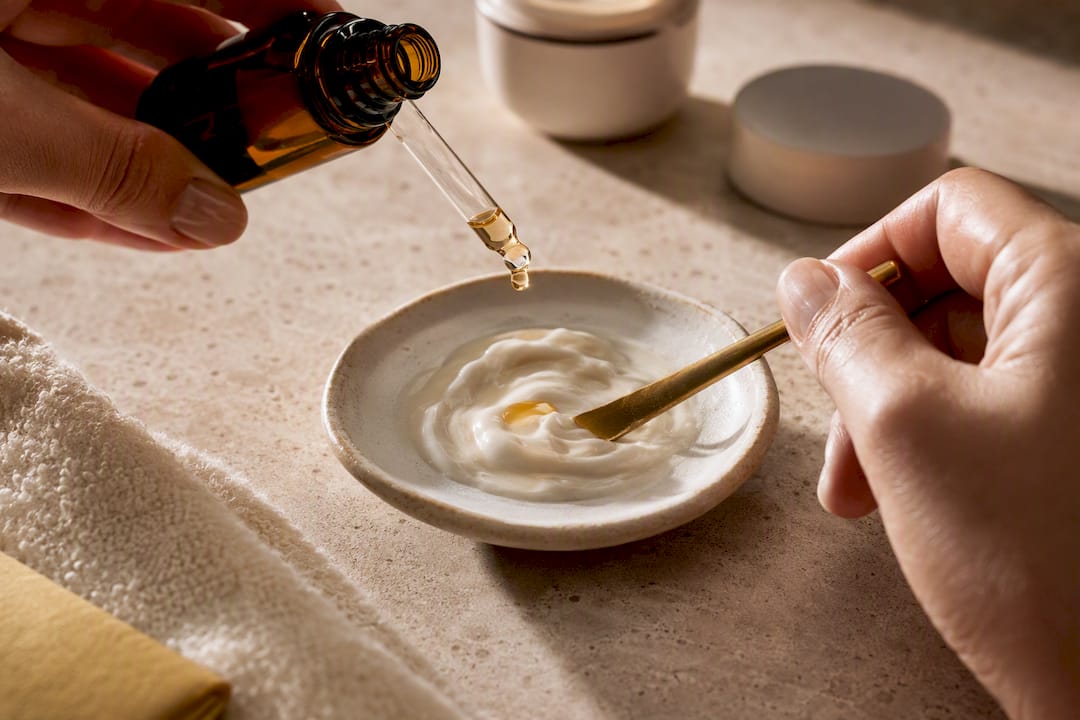
- Apply three to four drops of vitamin C serum across your face and neck.
- Wait 30 to 60 seconds for the product to absorb before moving on.
- Apply your usual moisturizer.
- In the morning only, finish with a broad-spectrum sunscreen.
This order, from the lightest to the richest texture, is recommended by the dermatologists cited by Prevention. If you have dry skin, you can add a thin layer of hyaluronic acid between the serum and moisturizer to boost hydration. For oily skin, a gel formula instead of an oil helps prevent a shiny finish by late morning. If you wear makeup, always allow the product to fully absorb before applying foundation; otherwise, it may pill.
Pro tip: if your serum stings or feels tight as soon as you apply it, don’t rinse it off right away. Instead, dilute your next application by mixing one drop of serum with your moisturizer while your skin adjusts.
What concentration of vitamin C should you choose to avoid irritating your skin?
Choosing the right concentration can make the difference between radiant skin and redness. A concentration of 10% to 20% L-ascorbic acid is generally recommended for daily use, while above a certain threshold, the risk of irritation increases considerably, as the Cleveland Clinic points out.
Not all forms of vitamin C behave the same way on the skin:
- Pure L-ascorbic acid: the most widely studied and effective form, but also the most unstable and most likely to irritate sensitive skin.
- Stabilized esters (such as ascorbyl palmitate): gentler and better tolerated, but generally absorbed into the skin more slowly.
- Combinations with vitamin E and ferulic acid: these combinations improve product stability and enhance its antioxidant effect, as DermaQuest explains.
Before trying a new serum, do a patch test: apply a small amount to the inside of your wrist or behind your ear, then wait 24 hours. Persistent redness, a burning sensation, or itching are clear signs that you should stop using it and switch to a lower concentration.
How often should you use it, and when will you see the first results?
Daily use delivers the best results, and some people whose skin is well adjusted to it can even apply it twice a day, morning and evening, without any particular problems. Above all, consistency matters more than the exact frequency.
Patience is the real challenge here. It usually takes several weeks of continuous use to see a noticeable improvement in skin tone, radiance, or dark spots, according to data reported by the Cleveland Clinic. Many people give up after two or three weeks because they see no results, when their skin simply needs more time to renew itself.
To track progress without relying only on your impressions, take a monthly photo of your face, always in the same lighting and without makeup. This simple method helps you spot improvements objectively and detect signs of intolerance quickly if your skin reacts badly to a new formula.

What HBPS-Beauty’s editorial experience reveals about vitamin C
JSCC, who wrote this analysis for HBPS-Beauty, draws on editorial tracking of skincare trends and feedback gathered from the online store’s customers. This editorial work has already explored in detail the order of application for serum and moisturizer, a question that comes up time and again from readers unsure about their routine.
A dedicated article on the real benefits of cosmetic vitamin C also details the conditions for using it to achieve lasting benefits without unnecessary irritation. For those looking to incorporate vitamin C into a broader strategy, the guide to the best anti-aging tips for youthful skin puts its role in context alongside other complementary actives.
Customer feedback gathered over the seasons confirms a simple trend: people who incorporate vitamin C early in their morning routine, rather than saving it for the end of their evening regimen, report using it more consistently—and therefore getting better long-term results.
What daily use of vitamin C really reveals
The most striking observation isn’t scientific; it’s behavioral: people who apply vitamin C in the morning stick with their routine much longer than those who save it for the evening. At night, fatigue, the urge to remove makeup quickly, and the desire to go to sleep often take priority over skincare discipline.
For sensitive skin that feels tight or turns red when exposed to a concentrated formula, the solution isn’t to give up the active ingredient, but to lower the concentration or alternate every other day with a soothing formula. Consistency matters more than product strength.
The only advice that really matters: test, observe, adjust. No generic routine can replace what your own skin shows you over three months of regular use.
— JSCC
Finding the right vitamin C serum on HBPS-Beauty
Choosing a vitamin C serum on the market often means comparing dozens of formulas without clear guidance on their actual concentration or stability. This platform brings together a selection of skincare products with an emphasis on ingredient quality and transparency about the brands on offer, rather than leaving you to guess what a bottle really contains.

On the store, look for serums that clearly state their percentage of L-ascorbic acid or their combination with vitamin E and ferulic acid—two indicators of better product stability over time. Complete your morning routine with a lightweight moisturizer and suitable sunscreen, available in the same skincare categories. Find all these products, along with at-home skincare devices and complementary accessories, on the Beauty Devices, Skin Care, Hair Care and More category page to put together a well-balanced morning and evening routine today.
Sources
To learn more about using and choosing vitamin C, consult the Cleveland Clinic’s practical guide to vitamin C serum, Today’s interview with dermatologists, Prevention’s detailed protocol, and DermaQuest’s analysis of active ingredient combinations.
- Vitamin C serum — Cleveland Clinic
- When To Use Vitamin C Skin Care: Experts Reveal Best Choice — Today
- Exactly When to Use Vitamin C Serum, Per Dermatologists — Prevention
Frequently asked questions
What should you never mix with vitamin C?
Avoid combining vitamin C with retinol, AHA/BHA acids, or benzoyl peroxide in the same application, as these combinations increase the risk of irritation and can reduce vitamin C’s effectiveness, according to recommendations cited by Glamour. It’s better to use these actives at different times of day.
Does vitamin C really firm sagging skin?
Vitamin C stimulates collagen production and can improve skin firmness over several months of regular use, but it cannot replace medical treatment for significant skin laxity.
Does vitamin C affect anxiety?
Vitamin C applied to the skin has no proven effect on anxiety: its cosmetic role is limited to antioxidant protection and a radiant complexion. Any potential link between dietary vitamin C and overall well-being falls under nutrition, not topical skincare.
Does vitamin C help you sleep better?
No evidence links the topical application of vitamin C to improved sleep. If you use it in the evening, the benefit remains cosmetic and restorative for the skin, with no effect on falling asleep.
Should you apply vitamin C before or after moisturizer?
Vitamin C should always be applied before moisturizer, to clean skin, because applying a richer-textured product first prevents the serum from penetrating, as the Cleveland Clinic explains. HBPS-Beauty’s guide to the order of serum and moisturizer details this sequence step by step.